 editor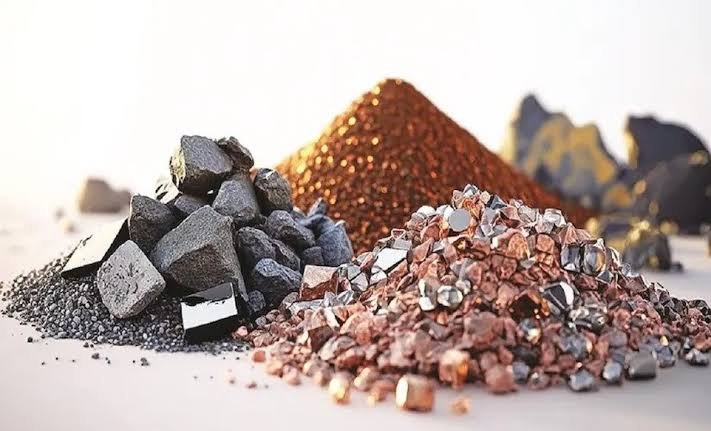
For decades, Africa has exported its mineral wealth while importing finished products at far higher prices a cycle that enriched foreign industries far more than the continent that supplied the raw materials. Today, that model is facing its strongest challenge yet.
Across the continent, African governments are forging a coordinated strategy to ensure that lithium, cobalt, copper, graphite, manganese and rare earth minerals are no longer simply extracted and shipped overseas. Instead, they want these strategic resources processed, refined and manufactured within Africa, transforming mineral wealth into industries, jobs and economic power.
The shift comes at a pivotal moment in global geopolitics.
Critical minerals have become the backbone of the modern economy, powering electric vehicles, artificial intelligence infrastructure, renewable energy systems, semiconductors and advanced military technologies. As demand accelerates, competition among the United States, China, the European Union and other major powers has intensified, placing Africa—home to roughly 30 percent of the world’s critical mineral reserves—at the center of a new geopolitical contest.
During the Ministerial Forum on Critical Minerals, Value Chains and Beneficiation held in Abidjan earlier this month, African ministers, the African Development Bank (AfDB), the African Union Commission and other continental institutions adopted a common message: Africa must stop being merely a supplier of raw materials and instead become a manufacturing and industrial powerhouse built around its own resources.
The declaration represents more than an economic policy.
It reflects a growing belief among African leaders that the global energy transition should not repeat the historical pattern in which Africa exported natural wealth while industrial development occurred elsewhere. Participants called for investment in mineral processing plants, battery manufacturing, regional value chains, technology transfer and financing mechanisms capable of keeping more wealth inside the continent
The urgency is driven by rapidly changing global supply chains.
China remains the dominant force in mineral refining and processing across much of the world, having built extensive mining, logistics and industrial networks throughout Africa over the past two decades. Meanwhile, the United States has significantly expanded its own strategy through infrastructure investments, development finance and partnerships designed to diversify supply chains away from Chinese dominance. Projects such as the Lobito Corridor connecting Angola, Zambia and the Democratic Republic of Congo have become strategic components of this competition.
For Africa, however, the debate is no longer about choosing between competing global powers.
Also Read. Africa’s Minerals Fuel New Global Rivalry
Increasingly, policymakers argue that the continent should leverage competition among external partners to negotiate better investment terms, higher local content requirements and greater domestic industrial capacity rather than simply signing new extraction agreements. This marks a significant evolution from traditional resource diplomacy toward what many describe as resource sovereignty.
The Democratic Republic of Congo, Zambia, Zimbabwe, Namibia and several other resource-rich nations have already begun introducing policies encouraging local processing before export. Governments argue that exporting refined minerals, battery components and industrial products can generate far greater economic returns than exporting unprocessed ore alone.
Yet the opportunity carries serious risks.
The World Trade Organization has warned that soaring global demand for critical minerals could deepen instability if governance remains weak. In countries where armed groups operate around mining regions, competition over strategic resources may intensify conflict unless transparency, security and equitable revenue-sharing improve. The Democratic Republic of Congo remains one of the clearest examples of how mineral wealth can become both an economic blessing and a source of prolonged insecurity.
Economists estimate that the global race for critical minerals will shape international trade for decades, much as oil dominated the twentieth century. The question confronting Africa is therefore no longer whether its minerals are valuable—the world has already answered that—but whether the continent can finally capture a larger share of the wealth created from them.
For African policymakers, July 2026 may be remembered as more than another ministerial meeting. It may represent the moment when Africa collectively declared that the age of exporting raw strategic minerals without industrial transformation should come to an end.