MWE Correspondent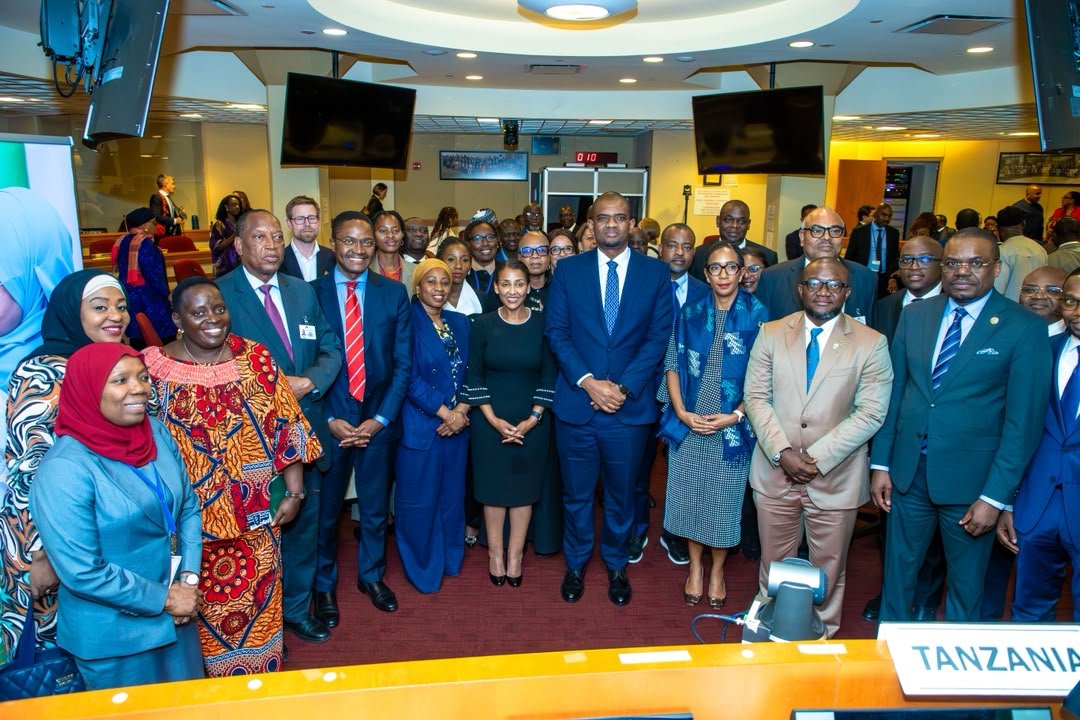
Tanzanian President Samia Suluhu Hassan has been praised for her leadership in advancing Africa’s agenda to eliminate preventable maternal, newborn and child deaths, as the continent continues to account for nearly 70 percent of maternal deaths globally and about two-thirds of deaths among children under five.
As the African Union Champion for Maternal and Child Health, President Samia is spearheading the “Three Zeros” agenda, which seeks to achieve zero home deliveries, zero preventable maternal and newborn deaths, and zero children missing essential vaccinations.
The initiative received renewed momentum during a high-level Heads of State meeting on maternal, newborn and child health held on the sidelines of the 81st United Nations General Assembly (UNGA81).
The meeting brought together African heads of state and government, African Union officials, international health organisations and development partners to discuss practical measures for reducing preventable deaths across the continent.
Delivering President Samia’s message at the meeting, Tanzania’s Vice President Deogratius Ndejembi said the scale of the challenge requires Africa to move beyond commitments towards concrete and measurable action that can be reflected in the lives of women and children saved.
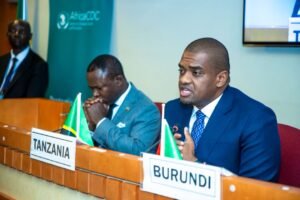
He said that despite progress made across the continent, Africa still accounts for nearly 70 percent of maternal deaths worldwide and approximately two-thirds of deaths among children under five, many of which are preventable.
Ndejembi said President Samia’s agenda focuses on strengthening health systems across African countries, increasing domestic health financing, improving emergency and referral services, expanding access to skilled health workers and ensuring reliable data is used to monitor results and identify areas requiring further intervention.
Highlighting Tanzania’s experience, the Vice President pointed to investments in primary and emergency maternal and newborn health services, as well as strengthened referral systems such as M-Mama, as examples of how political leadership, technology and service delivery can be combined to save lives.
The efforts have coincided with a significant increase in the proportion of women giving birth in health facilities, from 51 percent in 2015 to 81 percent in 2022.
Also Read: Copper Prices Surge as Global Demand Outpaces Supply
Ndejembi said the agenda also places emphasis on Africa’s ability to achieve greater health self-reliance, arguing that success should not only be measured by the continent’s ability to finance, produce or purchase health commodities, but also by whether essential services reach every mother and child at the right time and place.
African countries have therefore been urged to strengthen political accountability, increase domestic investment in life-saving health services and ensure that resources reach frontline health facilities and communities.
“The commitment is to ensure that no mother loses her life because of lack of transport, blood, a skilled health worker or emergency care; no newborn dies because of lack of a life-saving service; and no child remains unvaccinated because the health system failed to reach the family,” Ndejembi said.
He said protecting the lives of mothers and children is not only a health issue but also an investment in human capital, economic development and Africa’s future, as well as an important component of implementing the continent’s Agenda 2063.
Africa Centres for Disease Control and Prevention (Africa CDC) Director General Jean Kaseya also praised President Samia’s leadership and reaffirmed the institution’s commitment to supporting her role as African Union Champion for Maternal and Child Health.
Kaseya cited Tanzania’s progress as an example of what can be achieved through sustained investment and stronger health systems.
According to figures presented by Africa CDC, Tanzania reduced its maternal mortality ratio by about 80 percent, from 556 deaths per 100,000 live births in 2016 to 104 in 2022. The progress has been associated with improvements in emergency maternal and newborn care, referral systems, the availability of health workers and monitoring of maternal and child deaths.
World Health Organization Director-General Tedros Adhanom Ghebreyesus also commended President Samia for convening the meeting and taking on the continental leadership role on maternal and child health.
Tedros said Tanzania had reduced maternal mortality by 81 percent over a six-year period, describing the launch of the Three Zeros strategic initiative as an example that other countries could learn from and support.
He said WHO remained committed to supporting member states according to their individual circumstances and helping them achieve their health targets by strengthening standards of clinical care used by frontline health workers to save the lives of mothers and newborns.
Through her role as African Union Champion for Maternal and Child Health, President Samia is promoting a continental commitment to ensure that preventable maternal, newborn and child deaths are no longer accepted as inevitable.
The campaign, under the theme “Jiongeze, Tuwavushe Salama”, calls for greater action to protect every mother, newborn, child and adolescent.
The meeting was attended by leaders from several African countries, WHO Director-General Tedros Adhanom Ghebreyesus, Africa CDC Director General Jean Kaseya, First Lady of Benin Nathalie Vilette Wadagni, and representatives of development partners including the Gates Foundation, Global Fund, Gavi, UNFPA, UNICEF, Susan Thompson Buffett Foundation, Beginning Fund and the African Union.