MWE Correspondent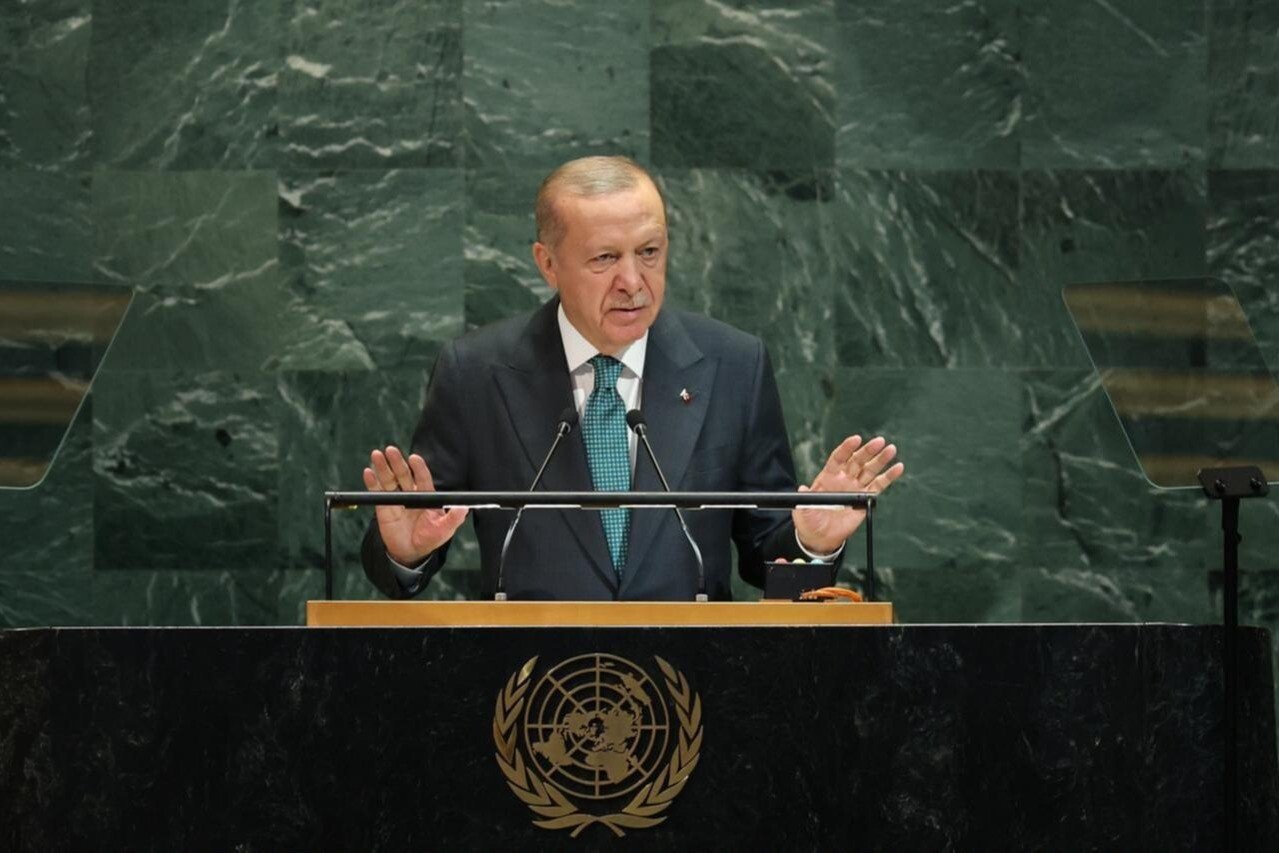
Turkish President Recep Tayyip Erdogan has called for comprehensive reform of the United Nations Security Council, arguing that the current structure gives disproportionate decision-making power to five permanent members and does not adequately reflect today’s global realities.
Addressing the 81st session of the UN General Assembly in New York on September 22, 2026, Erdogan renewed his long-standing call for a more representative international system, saying that “the world is bigger than five.”
He argued that a system in which the will of more than 190 countries can depend on decisions taken by five countries is neither fair nor capable of fully building international trust.
The five permanent members of the Security Council — China, France, Russia, the United Kingdom and the United States — hold veto power, while the Council also includes 10 non-permanent members elected by the General Assembly for two-year terms.
Erdogan has called for the veto privilege to be abolished and for the Council to move away from permanent membership. In a policy article published ahead of the General Assembly, he proposed a system in which all Security Council members would be elected by the General Assembly for fixed terms, with countries seeking another term required to win renewed support.
He also called for a stronger role for the General Assembly and greater accountability of the Security Council to the wider UN membership.
Read More: Tanzania Bids for UN Security Council Seat
The Turkish president said simply adding more permanent members would not adequately address the concentration of power within the Council, arguing instead for a broader redistribution of responsibility in global decision-making.
His remarks come amid renewed international debate over reforming the Security Council, particularly as the UN faces conflicts, humanitarian crises, climate change, energy challenges and rapid technological developments.
The issue of representation has also been highlighted by African countries, which have long called for greater representation in the Security Council. The President of the 81st General Assembly, Khalilur Rahman, said in his opening remarks that Africa’s continued underrepresentation after eight decades raises questions of fairness, justice and the credibility of the UN system.
The reform debate also intersects with Tanzania’s campaign for a non-permanent seat on the Security Council for the 2029–2030 term. Tanzania has said it would use such a position to advance Africa’s voice, conflict prevention, peaceful settlement of disputes, women’s participation in peace and security, youth involvement and reforms to UN peacekeeping operations.
Tanzania has further argued that reform of the international system is necessary to ensure greater fairness, equality and balanced representation in global decision-making.
The question of Security Council reform has nevertheless attracted different positions among the permanent members. Following Erdogan’s call to abolish permanent membership and veto rights, Russia said it supports expanding permanent membership but considers the existing veto an important element of the UN system.
The debate therefore extends beyond the number of countries represented on the Council to questions of veto power, accountability, regional representation and the balance between the Security Council and the General Assembly.
As world leaders gather for the 81st General Assembly, calls for reform are placing renewed attention on whether the UN’s decision-making structures, largely shaped after the Second World War, can adequately reflect the political and economic realities of the 21st century