MWE Correspondent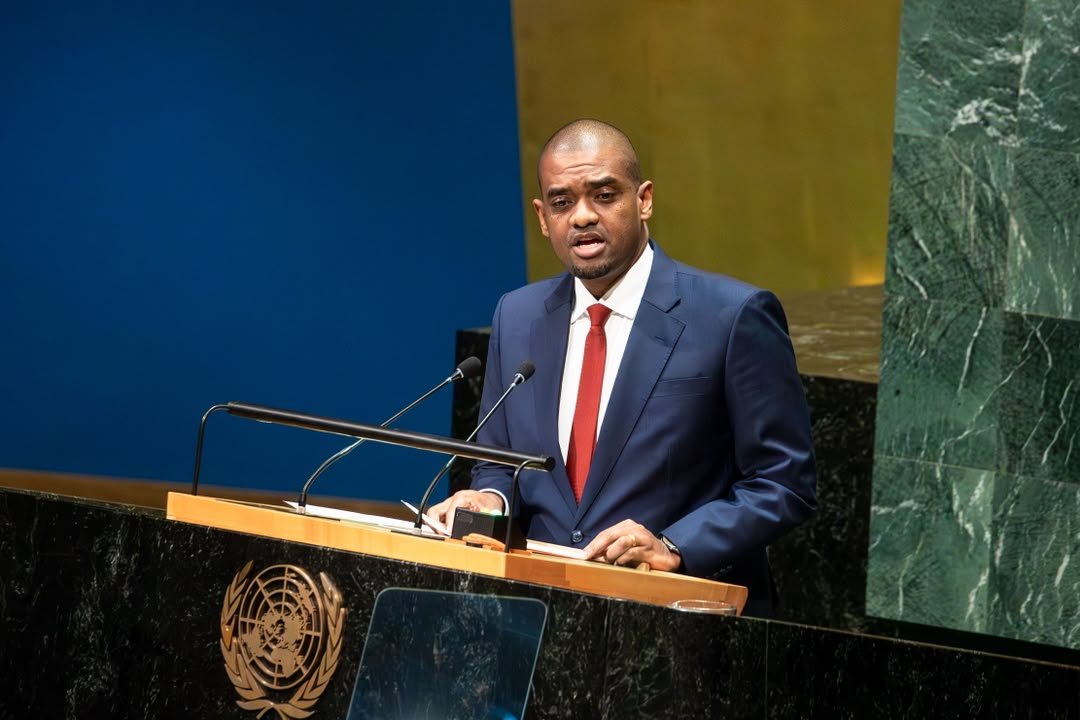
Tanzania has formally advanced its bid for a non-permanent seat on the United Nations Security Council for the 2029–2030 term, pledging to champion Africa’s voice while promoting conflict prevention, peaceful resolution of disputes and reforms to UN peacekeeping operations.
The position was outlined by Vice President Deogratius Ndejembi, who represented President Samia Suluhu Hassan during Tanzania’s participation in the high-level General Debate of the 81st session of the UN General Assembly in New York.
The 81st session opened on September 8, 2026, while the high-level General Debate is being held from September 22 to 28 under the theme, “Restoring Trust, Managing Transformation: A United Nations That Delivers for All.”
Ndejembi said that if elected to the Security Council, Tanzania would prioritize diplomacy aimed at preventing conflicts before they escalate into wars, peaceful settlement of disputes, greater participation of women in peace and security efforts, increased involvement of young people in peacebuilding and reforms to UN peacekeeping operations.
Tanzania’s candidacy has received the backing of the African Union, with the election for the 2029–2030 non-permanent seats expected to take place in June 2028.
Tanzania also used the UN platform to call for reforms of the international organization, arguing that the global system should provide more equitable representation and reflect the interests of developing countries.
According to Ndejembi, such reforms are increasingly important as the international community confronts armed conflicts, climate change, disease outbreaks, rapid advances in artificial intelligence and energy-security challenges.
The Vice President also highlighted Tanzania’s experience in maternal and child health as an example of how investment in public services can translate into measurable development outcomes.
He said the proportion of births taking place in health facilities increased from 51 percent in 2015 to 81 percent in 2022, while Tanzania had also made significant progress in reducing maternal deaths.
Ndejembi said President Samia accepted the role of championing maternal and child health on behalf of the African Union, adding that Tanzania is pursuing the “Three Zeros” agenda — preventable maternal and newborn deaths, home deliveries and children missing essential vaccinations.
He called for stronger international cooperation, political commitment and adequate financing to help African countries advance the agenda.
Also Read: EAC Moves to Remove Trade Barriers Across Region
On economic development, Tanzania called for greater participation of developing countries in international financial institutions and decision-making systems that affect their long-term development.
Ndejembi pointed to the Tanzania Development Vision 2050 as a framework for building an inclusive and competitive economy through investment in people, productive infrastructure, technology, innovation, women and youth.
He also called for reforms to the global financial system to make concessional financing more accessible, encourage private-sector investment and improve access to development and climate finance for developing countries.
On climate change, Tanzania raised concern over the gap between global greenhouse-gas emissions and the financing available to vulnerable countries dealing with climate impacts.
The country argued that states responsible for higher levels of emissions should assume greater responsibility for financing measures to address climate-related impacts.
Tanzania also outlined its clean-energy transition, citing the Julius Nyerere Hydropower Project, with an installed capacity of 2,115 megawatts, solar and wind projects with a combined capacity of 650 megawatts, and plans to develop 130 megawatts of geothermal power.
The country also highlighted investment in electric railway infrastructure and its target of increasing access to clean cooking energy to 80 percent of households by 2034.
On international diplomacy, Tanzania reiterated its opposition to unilateral sanctions imposed by individual countries, arguing that such measures can affect national sovereignty, economic development and citizens’ access to essential opportunities.
Tanzania expressed solidarity with countries including Cuba and Zimbabwe that face such sanctions and called for measures toward their removal.
On the situation in Gaza and the wider Middle East, Tanzania emphasized the protection of civilians, unhindered humanitarian assistance and the restoration of diplomacy as the principal means of pursuing lasting peace.
Tanzania has previously used its UN statements to emphasize its participation in peacekeeping, peacebuilding and mediation, including through the UN Security Council and African regional peace and security mechanisms.
The country’s current campaign for the 2029–2030 Security Council term therefore combines its peace and security agenda with calls for broader reform of global governance, greater representation for Africa and developing countries, and stronger international cooperation on development, climate change, health and energy.
The UN General Assembly is responsible for electing the Security Council’s non-permanent members, while the Council itself has primary responsibility within the UN system for maintaining international peace and security.