
 MWE Correspondent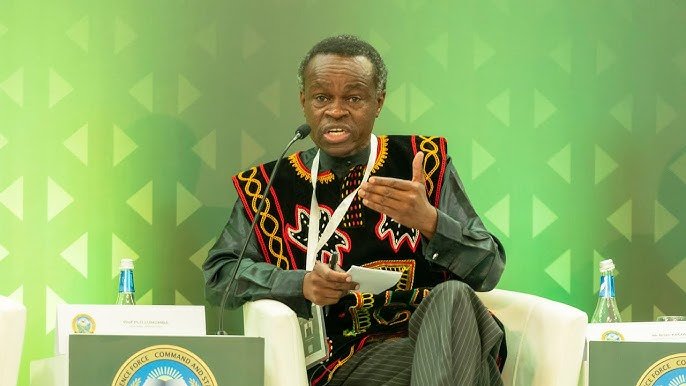
Kenyan lawyer and Pan-African scholar Prof. Patrick Loch Otieno (PLO) Lumumba has launched a strong criticism of the International Monetary Fund (IMF) and the World Bank, accusing the two global financial institutions of contributing to a cycle of debt that limits the economic and political independence of developing countries.
Lumumba argues that the institutions’ lending structures can leave countries in what he describes as a “perpetual state of debt,” allowing external financial institutions to exert significant influence over national economic decisions.
“The IMF and World Bank are economic enslavers. What they are designed to do is to ensure that we are in a perpetual state of debt,” Lumumba said, arguing that control over a country’s economy can ultimately translate into influence over its politics.
His remarks reflect a long-standing criticism of the Bretton Woods institutions, particularly over the conditions attached to some lending programmes and their potential impact on economic policymaking in developing countries.
In a previous analysis, Lumumba argued that African countries should reduce their dependence on external borrowing and develop stronger domestic economic systems capable of financing development from within. He has also criticised what he considers excessive reliance on international financial institutions and foreign creditors.
The debate comes at a time when debt remains a major concern for several African economies. The IMF and World Bank continue to work with low-income countries on debt sustainability assessments designed to help governments balance their financing needs with their ability to repay.
Critics of multilateral lending argue, however, that when governments face limited fiscal space and few affordable sources of financing, they may have less room to negotiate the terms of external assistance. Recent analysis of African economies has highlighted how financing arrangements can influence areas such as public finance, taxation, governance and social protection.
The question of external influence has also attracted renewed academic attention. A 2026 study examining the institutional structure of the IMF and World Bank argued that their governance arrangements and lending practices can shape policy choices in countries across the Global South.
Also Read: Tanzania Attracts $3.5 Billion Mining Investment in Four Years
Lumumba’s position is that African countries need to strengthen domestic production, improve management of natural resources and build economic systems that reduce dependence on external creditors. He maintains that greater economic independence is essential if African states are to exercise genuine political sovereignty.
The IMF and World Bank, meanwhile, maintain that their programmes are intended to support economic stability, development and debt sustainability. The World Bank says its joint debt sustainability framework with the IMF is designed to help borrowing countries meet development needs while maintaining their capacity to repay.
Lumumba’s comments therefore add to a wider debate over whether international lending should be viewed primarily as development assistance or as a source of external influence over national economic policy.
For Africa, the central challenge remains how to finance infrastructure and development while avoiding unsustainable debt and preserving sufficient policy space for governments to determine their own economic priorities.


