MWE Correspondent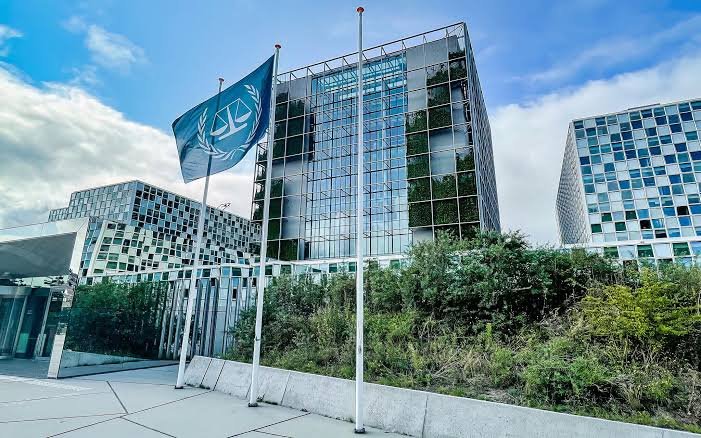
When the judges entered the courtroom, the silence reflected more than legal procedure.
It reflected the weight of an idea that has shaped international law for generations—that no individual, regardless of rank or political influence, should be beyond accountability for the world’s gravest crimes.
That principle is now facing one of its most significant tests.
Across multiple regions, ongoing conflicts and humanitarian crises have intensified demands for justice while exposing deep divisions over how international law should be enforced. Governments continue to support accountability in principle, yet disagreements over jurisdiction, enforcement and political consistency have become increasingly visible.
The debate extends far beyond a single court.
It is reshaping the future of international justice itself.
The International Criminal Court (ICC) remains the world’s only permanent international tribunal established to prosecute individuals accused of genocide, crimes against humanity, war crimes and the crime of aggression when national courts are unable or unwilling to do so.
Since its establishment under the Rome Statute in 2002, the Court has become one of the most recognised institutions of international criminal law.
Yet its growing prominence has also attracted increasing political scrutiny.
Supporters argue that the Court remains an essential safeguard against impunity, particularly in situations where domestic justice systems cannot effectively investigate serious international crimes.
They maintain that international accountability strengthens respect for humanitarian law and offers victims an avenue for justice that might otherwise remain unavailable.
Also Read. Africa Courts Gulf Powers For Strategic Investment
Critics, however, continue questioning whether international justice is applied consistently across different conflicts and regions.
Some governments have expressed concerns regarding jurisdiction, enforcement and perceived selectivity, arguing that international legal institutions must demonstrate equal application of the law if they are to retain global confidence.
These competing perspectives have elevated International Accountability into one of the defining legal debates of modern diplomacy.
Legal scholars increasingly agree on one point.
The long-term credibility of international justice depends not only on legal authority but also on public confidence that the law applies equally regardless of geography, political influence or military power.
For Africa, this discussion has particular historical significance.
The continent has long played a central role in conversations surrounding international criminal justice, judicial reform and the relationship between national sovereignty and global legal institutions.
Over recent years, many African governments have simultaneously supported stronger domestic judicial systems while continuing broader discussions about reforming international legal governance.
This reflects a growing emphasis on Complementarity.
Under the Rome Statute, the ICC is intended to complement—not replace—national courts.
The principle encourages countries to strengthen their own judicial institutions so that serious international crimes can increasingly be investigated and prosecuted domestically.
Across Africa, investment in judicial capacity, legal education and institutional reform has therefore become an important component of governance strategies.
Many legal experts argue that stronger domestic courts ultimately reinforce international justice by reducing dependence on external intervention.
Meanwhile, international cooperation remains essential.
The ICC has no independent police force.
Its investigations and arrest warrants rely heavily on cooperation from member states, making diplomatic support a critical element of effective international justice.
This institutional reality has become increasingly important as geopolitical competition complicates international cooperation.
Some governments prioritise sovereignty and non-interference, while others argue that accountability for atrocity crimes must remain a universal obligation.
Balancing these principles continues to challenge policymakers around the world.
Beyond individual prosecutions, the broader conversation concerns the future architecture of international law.
As conflicts evolve and new security challenges emerge, international institutions are under growing pressure to demonstrate both effectiveness and impartiality.
Analysts believe the coming decade may determine how international justice develops within a more multipolar global order.
Whether through international tribunals, regional courts or strengthened national judicial systems, accountability will remain an essential component of sustainable peace.
For Africa and the wider international community, the objective extends beyond punishment.
It is about strengthening institutions capable of protecting human dignity, reinforcing the rule of law and preventing future atrocities.
The pursuit of justice has never been simple.
In an increasingly divided world, preserving confidence in international law may prove to be one of diplomacy’s greatest challenges.