MWE Correspondent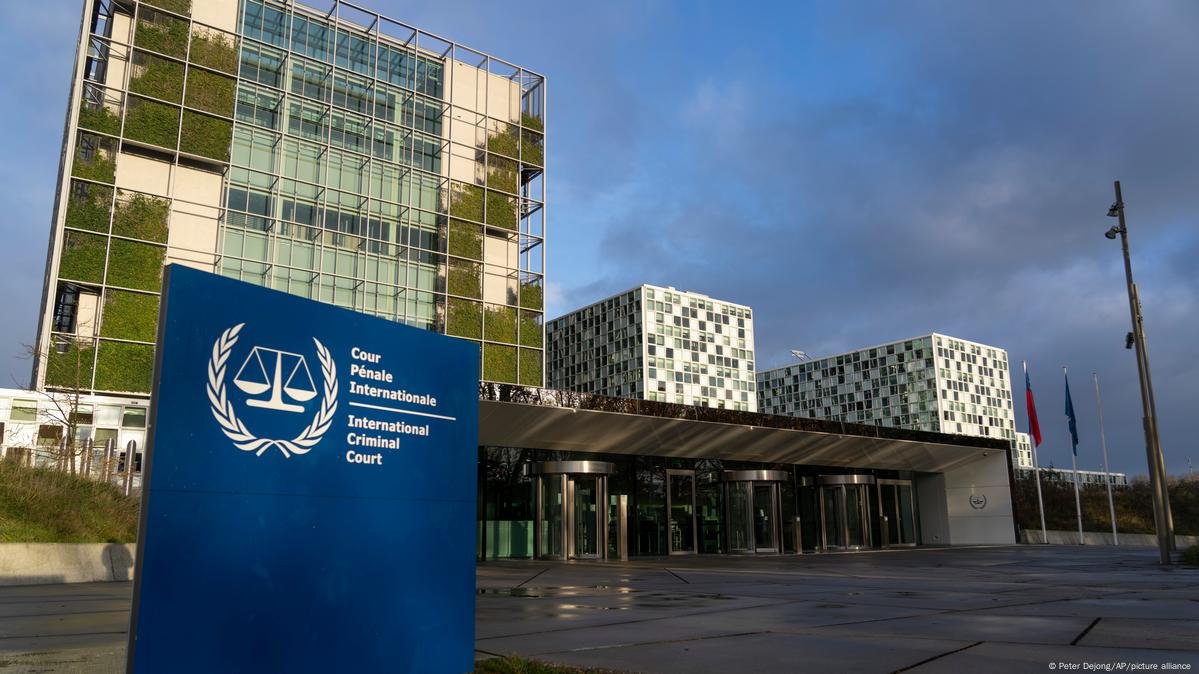
The judges enter the courtroom carrying files that represent years of investigations into some of the world’s gravest alleged crimes. Outside, however, another trial is unfolding—not in a courtroom, but in the court of international opinion.
The issue is no longer whether international justice matters.
It is whether the world believes it is applied equally.
Throughout 2026, the International Criminal Court (ICC) has remained at the centre of international debate as its investigations and legal decisions continue to intersect with global politics. Arrest warrants, state cooperation, diplomatic disputes and competing interpretations of international law have placed the Court under unprecedented international scrutiny.
Supporters argue that the ICC remains an essential institution for ending impunity where national courts cannot or will not prosecute the gravest international crimes.
Critics, however, contend that international justice cannot maintain credibility unless its principles are applied consistently across all regions and political actors.
This debate has become one of the defining legal and diplomatic challenges of the modern international system.
The ICC was established under the Rome Statute with a clear mandate: to prosecute individuals accused of genocide, crimes against humanity, war crimes and the crime of aggression when domestic judicial systems are unable or unwilling to act.
Its jurisdiction was designed to complement—not replace—national courts.
Yet in practice, the Court increasingly operates within a complex geopolitical environment where legal decisions often carry significant diplomatic consequences.
This has elevated International Criminal Justice into a central issue in global governance.
Also Read, Trump Declares US Will Guard Strait of Hormuz
Every investigation now attracts close attention not only from legal experts but also from governments, regional organisations and civil society groups seeking to understand how international law is evolving.
In Africa, discussions surrounding the ICC have developed considerably over the past decade.
Earlier criticism centred on the perception that African cases dominated the Court’s early docket. Although the ICC has since expanded investigations into situations beyond Africa, debates concerning fairness, consistency and equal treatment continue to influence political attitudes across the continent.
Many African governments now emphasise the importance of strengthening domestic judicial institutions alongside engagement with international legal mechanisms.
This reflects growing support for Judicial Sovereignty.
Judicial sovereignty does not reject international accountability.
Instead, it seeks to ensure that national courts possess the independence, capacity and credibility to investigate and prosecute serious crimes in accordance with international legal standards.
Strong domestic institutions reduce reliance on external judicial intervention while reinforcing public confidence in the rule of law.
At the same time, the ICC faces practical challenges beyond legal interpretation.
The Court depends heavily on cooperation from member states to execute arrest warrants, protect witnesses and collect evidence.
Without effective international cooperation, even well-founded judicial decisions may prove difficult to enforce.
This reality illustrates one of international justice’s greatest limitations.
Legal authority alone cannot guarantee implementation.
Political will remains equally important.
The interaction between international law and geopolitics has become increasingly visible as major global powers adopt different positions regarding the Court’s jurisdiction and authority.
Some governments strongly support international criminal accountability, while others question aspects of the Court’s mandate or remain outside the Rome Statute altogether.
These differences continue shaping diplomatic relationships and broader debates concerning international governance.
This has brought Global Accountability into sharper focus.
Many legal scholars argue that lasting confidence in international justice depends upon consistency, transparency and equal application of legal principles regardless of political influence, economic power or military strength.
The legitimacy of international institutions ultimately depends on public trust.
That trust is strengthened when justice is seen as impartial rather than selective.
For Africa, this evolving landscape presents an opportunity.
By strengthening judicial institutions, improving prosecutorial independence and enhancing regional legal cooperation, African countries can reinforce both national sovereignty and international credibility.
Such reforms would support accountability while ensuring justice remains rooted in strong domestic institutions.
The future of the ICC will therefore depend on more than individual cases.
It will depend on whether the institution can maintain confidence across an increasingly divided international system.
International justice was created to stand above politics.
Its greatest challenge today is proving that principle remains possible in a world where law and geopolitics are increasingly intertwined.
The outcome will shape not only the future of the ICC, but also the credibility of international justice itself for generations to come.