MWE Correspondent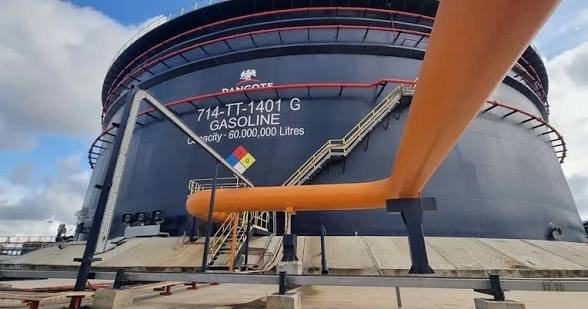
Kenya is positioning itself to become a major energy and industrial hub after Nigerian billionaire Aliko Dangote announced plans to develop a US$17 billion oil refinery at Lamu Port, a project expected to reshape East Africa’s petroleum industry and strengthen regional trade.
If completed, the refinery would rank among the largest industrial investments ever undertaken in East Africa and significantly enhance Kenya’s role in regional energy supply chains.
The proposed facility, to be developed by Dangote Industries Limited, is expected to process up to 700,000 barrels of crude oil per day, making it the largest refinery in East Africa and one of the biggest on the African continent.
Kenyan authorities say the project has the potential to reduce dependence on imported refined petroleum products, strengthen energy security and create thousands of direct and indirect jobs during construction and operation.
The investment is also expected to breathe new life into the long-delayed Lamu Port-South Sudan-Ethiopia Transport (LAPSSET) Corridor, one of Africa’s most ambitious infrastructure projects.
Launched to improve regional connectivity, LAPSSET includes highways, railways, oil pipelines, airports and port infrastructure linking Kenya with South Sudan and Ethiopia. Policymakers believe a major refinery at Lamu could increase cargo volumes, attract additional industrial investment and accelerate development along the corridor.
Also Read, Trump-Iran Crisis Deepens After Assassination Warning
President William Ruto has appointed a special government task force to coordinate with Dangote Industries and other stakeholders ahead of the planned groundbreaking ceremony later this year.
According to Kenyan officials, preparations are underway to facilitate land acquisition, environmental approvals, supporting infrastructure and investment coordination to ensure the project proceeds as scheduled.
The refinery is expected to process crude oil from both regional and international sources, producing petrol, diesel, aviation fuel, liquefied petroleum gas (LPG) and other refined petroleum products for domestic consumption and export.
Analysts say the investment could reduce East Africa’s reliance on fuel imports from the Middle East and Asia, helping improve supply stability while lowering transport costs associated with importing refined products.
The project also reflects Dangote’s growing influence in Africa’s energy sector.
After successfully commissioning the Dangote Petroleum Refinery in Lagos, Nigeria—currently Africa’s largest refinery—the businessman has increasingly positioned his company as a key player in the continent’s efforts to expand local refining capacity and reduce dependence on imported fuels.
Energy experts note that Africa exports millions of barrels of crude oil each day while importing much of its refined petroleum products, exposing many countries to global price volatility and supply disruptions.
Expanding refining capacity within Africa is viewed as an important step toward strengthening energy independence, supporting industrialisation and improving the continent’s balance of trade.
For Kenya, the proposed refinery represents more than an energy investment.
Economists believe it could stimulate manufacturing, logistics, maritime services and infrastructure development while attracting additional domestic and foreign investment to the coastal region.
Businesses in transport, engineering, construction, storage, shipping and financial services are also expected to benefit from the large-scale project.
If implemented as planned, the refinery could transform Lamu from a growing port into one of East Africa’s leading energy and industrial centres, reinforcing Kenya’s ambition to become a regional gateway for trade, manufacturing and petroleum exports.
With detailed planning now underway and investors working alongside the Kenyan government, attention will increasingly focus on financing, environmental compliance and construction timelines as one of Africa’s largest proposed energy projects moves closer to implementation.