Joseph Isangura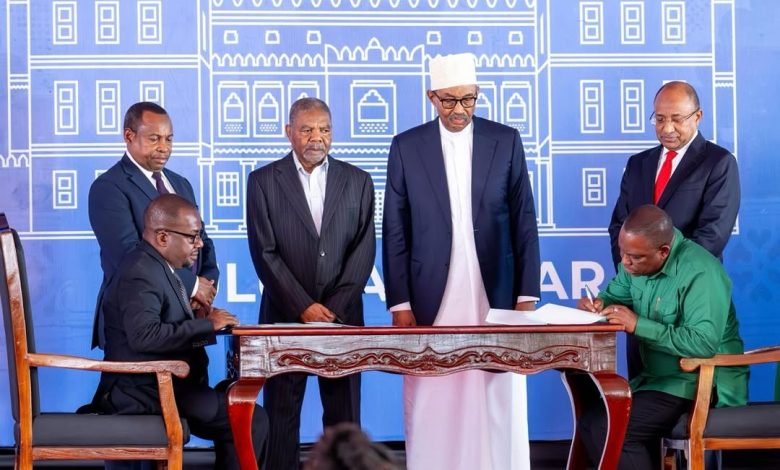
Tanzania’s ruling Chama Cha Mapinduzi (CCM) and the opposition ACT-Wazalendo have signed a Joint Declaration on Political Reconciliation, marking the most significant formal political agreement in Zanzibar in recent years and signalling a renewed effort to strengthen dialogue, trust and long-term political stability.
The declaration, signed after nearly eight months of negotiations, is the first tangible outcome of a reconciliation process that has brought together leaders from across the country’s political spectrum in an effort to reduce tensions and promote peaceful political engagement.
The agreement was signed on behalf of CCM by the party’s Deputy Secretary-General for Zanzibar, Mohamed Said Dimwa, while Omar Ali Sheikh, ACT-Wazalendo’s Deputy Secretary-General for Zanzibar, signed for the opposition party.
The ceremony brought together Tanzania’s top political leadership, including President Samia Suluhu Hassan, Zanzibar President Dr Hussein Ali Mwinyi, Vice-President Dr Emmanuel Nchimbi, ACT-Wazalendo National Chairperson Othman Masoud Othman, CCM Vice-Chairperson for Mainland Tanzania Stephen Wasira, and ACT-Wazalendo leader Dorothy Semu.
Also present were former Zanzibar Presidents Amani Abeid Karume and Dr Ali Mohamed Shein, who have jointly facilitated the reconciliation process since it began late last year. Their involvement has been widely viewed as a demonstration of cross-generational leadership aimed at building political consensus.
Although the full contents of the declaration were not immediately released, leaders described it as a framework for strengthening dialogue, mutual respect, peaceful political competition and cooperation on matters affecting Zanzibar’s future.
The agreement carries particular significance because Zanzibar has experienced recurring political tensions surrounding elections for more than three decades. Several elections have been disputed by opposition parties, leading at different times to prolonged political disagreements, mediation efforts and calls for electoral reforms.
Successive reconciliation initiatives have sought to reduce those tensions, including previous power-sharing arrangements and constitutional discussions designed to promote political inclusiveness. While some initiatives produced temporary improvements, others faced implementation challenges, making the latest declaration another important milestone in Zanzibar’s continuing search for lasting political consensus.
Also Read. Tanzania Praises Citizens For Choosing Peace Over Protests
President Samia described dialogue as the most sustainable path for resolving political differences, saying peace, unity and cooperation remain essential for safeguarding Tanzania’s democratic institutions and advancing national development.
She said political competition should strengthen democracy rather than divide society, urging leaders from all parties to place national interests above partisan differences.
Political analysts say the declaration sends a positive signal that dialogue remains possible even after periods of disagreement. They note that sustained engagement between political parties can help build public confidence, reduce uncertainty and create a more predictable political environment.
A stable political climate is also considered important for Zanzibar’s tourism industry, foreign investment and broader economic development. The islands rely heavily on tourism, trade and private-sector investment, sectors that benefit from long-term political stability and public confidence.
Analysts caution, however, that the agreement’s long-term success will depend on implementation. Continued dialogue, mutual trust and adherence to the commitments made by both parties will be critical in determining whether the declaration translates into lasting political cooperation.
The presence of both current and former national leaders at the signing ceremony underscored the importance attached to the reconciliation process. Observers say it reflects a shared recognition that political stability remains one of Tanzania’s greatest strengths and a key foundation for economic growth, democratic governance and social cohesion.