MWE Correspondent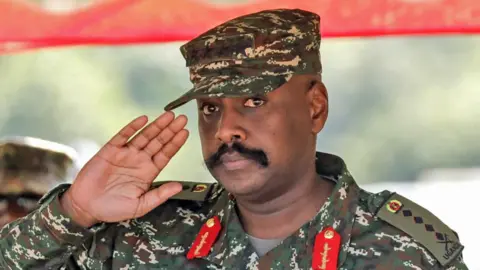
A new controversy over press freedom has emerged in Uganda after reports that several major media organisations, including NTV Uganda, Spark TV and Daily Monitor, were ordered to stop operations following alleged instructions linked to the country’s military leadership.
The reported shutdown has sparked concern among journalists, human rights advocates and civil society groups, who say any attempt to restrict independent media could raise serious questions about the future of freedom of expression and accountability in the country.
Reports circulating in Uganda claim that the directive came from the Chief of Defence Forces, General Muhoozi Kainerugaba, who allegedly stated that the affected media outlets would not resume operations without his approval.
The reports further allege that General Kainerugaba questioned the principle of unrestricted media freedom and suggested that coverage considered negative toward Uganda should receive clearance from his office before publication.
However, the claims have yet to be fully clarified through an official statement from the government or the affected media organisations confirming the exact legal basis and circumstances surrounding the reported restrictions.
If confirmed, the move would represent one of the most serious confrontations between Uganda’s security establishment and the country’s independent media sector in recent years.
For many journalists in Uganda, the issue goes beyond individual media houses. It touches on a wider debate about the role of the press in a democratic society and whether national security concerns should ever limit the ability of journalists to investigate, question and report on matters involving those in power.
Uganda has a long and complex history with media freedom. While the country has a vibrant media landscape with numerous television stations, newspapers and online platforms, journalists and media organisations have repeatedly raised concerns over intimidation, restrictions during politically sensitive periods and difficulties reporting on security-related issues.
The reported action comes at a time when governments across Africa continue to face pressure to balance national security responsibilities with constitutional protections for freedom of expression and access to information.
Also Read. Israel Rejects Withdrawal Until Hezbollah Disarms
Supporters of stronger controls often argue that governments must prevent the spread of information they consider harmful to national stability. Critics, however, warn that broad restrictions can weaken public trust and prevent citizens from receiving independent information about issues affecting their daily lives.
General Muhoozi Kainerugaba has become one of Uganda’s most influential public figures due to his position as head of the country’s armed forces and his close relationship with President Yoweri Museveni. His public statements and political influence have attracted significant attention both within Uganda and internationally.
The affected media organisations have not publicly provided a complete account of the situation, leaving questions over whether the restrictions are temporary, legally authorised or part of a broader regulatory action.
International press freedom organisations are closely monitoring developments, as restrictions against major news organisations often become a key indicator of the wider environment in which journalists operate.
For ordinary Ugandans, the debate is not only about television stations, newspapers or reporters. It is about the fundamental question of how a society receives information, challenges authority and holds institutions accountable.
As Uganda awaits further clarification, the reported shutdown has placed press freedom once again at the centre of national discussion — raising questions about the balance between security, governance and the public’s right to know.