MWE Correspondent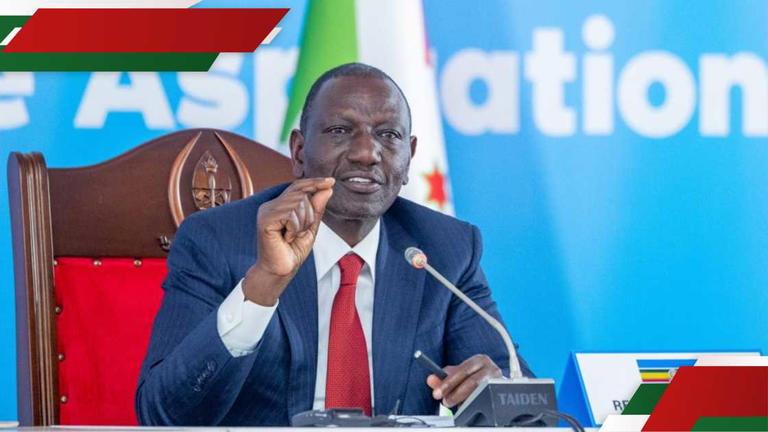
Kenyan President William Ruto is expected to sign the controversial Finance Bill 2026 into law on Tuesday, a move that would clear the way for implementation of the country’s KSh4.8 trillion national budget for the 2026/27 financial year.
The legislation has emerged as one of the most closely watched political and economic developments in East Africa, coming just two years after widespread anti-tax protests forced the government to withdraw a previous finance bill amid unprecedented public unrest.
The proposed law was passed by Kenya’s National Assembly on June 18 after a heated parliamentary debate that exposed deep divisions among lawmakers and the public. According to official parliamentary voting records, 122 Members of Parliament voted in favour of the bill, while 40 opposed it and a significant number abstained. The outcome highlighted both support for the government’s fiscal agenda and continuing concerns about taxation, public debt, and the rising cost of living.
President Ruto has publicly defended the legislation, arguing that difficult fiscal decisions are necessary to maintain economic stability, finance public services, and reduce dependence on borrowing. Kenya, East Africa’s largest economy, continues to face mounting debt obligations, making revenue generation a central priority for the administration. Analysts note that the government is attempting to balance economic growth, fiscal sustainability, and public expectations at a time when many households remain under financial pressure.
Also Read, US, Iran Launch Crucial Swiss Peace Talks
However, critics argue that the Finance Bill arrives against the backdrop of lingering public distrust following the dramatic events of 2024. During that period, nationwide demonstrations erupted over proposed tax increases contained in the Finance Bill 2024. The protests culminated in the storming of Parliament and forced President Ruto to withdraw the legislation after acknowledging public opposition. The events marked one of the most significant political crises of his presidency and reshaped the government’s approach to tax policy.
The latest bill is therefore being viewed not merely as a fiscal instrument but as a political test of the government’s ability to rebuild public confidence while pursuing economic reforms. Several opposition figures and civil society voices have urged the President to subject the legislation to further scrutiny before signing it into law. Among them is Siaya Governor James Orengo, who has called for additional deliberations on concerns surrounding the legislative process.
Economic observers say the stakes extend beyond Kenya’s borders. As a regional financial and commercial hub, Kenya’s fiscal health is closely monitored by investors, development partners, and neighbouring states. Successful implementation of the budget could strengthen confidence in the country’s economic management. Conversely, renewed public opposition could create fresh political uncertainty at a time when the government is seeking to maintain fiscal discipline and sustain economic growth
For President Ruto, whose leadership has often been defined by ambitious economic reforms and difficult policy choices, Tuesday’s expected assent may become a defining moment. Whether the Finance Bill 2026 is remembered as a foundation for economic stability or as another flashpoint in Kenya’s evolving debate over taxation and governance will depend largely on how the government manages both implementation and public expectations in the months ahead.