MWE Correspondent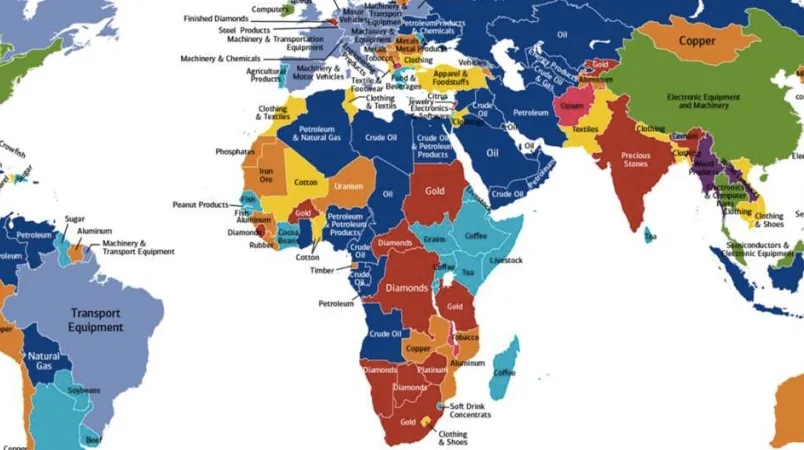
The battle for global influence is increasingly being fought beneath the ground.
From the copper belts of Africa and Latin America to the lithium fields of South America and the rare earth deposits of Asia, a fierce competition is unfolding for the commodities that will power the world’s next economic era.
Governments, multinational corporations, and investors are racing to secure access to strategic resources as the transition toward clean energy, artificial intelligence, advanced manufacturing, and digital infrastructure accelerates.
The stakes extend far beyond mining.
Control over critical commodities is becoming a decisive factor in economic competitiveness, industrial strength, and geopolitical influence. Just as oil shaped international power during much of the twentieth century, minerals such as lithium, cobalt, graphite, nickel, copper, and rare earth elements are increasingly emerging as the strategic assets of the twenty-first century.
The race is being driven by a historic surge in demand. Electric vehicles require large quantities of battery minerals. Renewable energy systems depend on vast amounts of copper and rare earth elements. Data centers supporting artificial intelligence and digital services consume growing volumes of energy and industrial materials. The expansion of the global critical minerals market is therefore becoming one of the most important economic stories of the decade.
The economic implications are profound. Nations that control significant reserves of strategic commodities are finding themselves at the center of global investment flows. Billions of dollars are being directed toward mining projects, transport corridors, processing facilities, energy infrastructure, and manufacturing hubs designed to secure future supply chains. For investors, the commodity sector has become one of the most important gateways to long-term growth opportunities.
At the geopolitical level, the competition is reshaping international relationships. Major powers including the United States, China, the European Union, India, and Gulf states are expanding their presence across resource-rich regions as they seek reliable access to essential materials. The growing emphasis on strategic resource security reflects a broader recognition that economic resilience increasingly depends on stable commodity supplies.
\Also Read, Russia Visit Promises Broad Tanzania Gains
Africa has emerged as one of the most important frontiers in this global contest. The continent possesses some of the world’s largest reserves of cobalt, graphite, manganese, platinum group metals, copper, and rare earth elements. As governments pursue industrialization and infrastructure development, international investors are increasingly viewing Africa not simply as a source of raw materials but as a future manufacturing and processing hub capable of playing a much larger role in global value chains.
Trade patterns are beginning to shift accordingly. Resource-rich nations are seeking to capture more value from their commodities by investing in local processing and industrial production. The push toward value-added commodity trade is gaining momentum as countries attempt to move beyond traditional export models and secure a larger share of global industrial revenues.
For businesses, the consequences are equally significant. Companies are reassessing supply chains, pursuing long-term resource partnerships, and investing in regions capable of supporting future production needs. Commodity security has become a boardroom priority as much as a government concern.
Looking ahead, the competition is expected to intensify. Demand for strategic resources is projected to grow substantially over the coming decade, while geopolitical tensions and supply chain vulnerabilities continue to influence market behavior. The countries that successfully combine resource development, industrial capacity, and strategic planning will be best positioned to benefit from the next phase of global economic transformation.
The broader message is becoming increasingly clear.
The global struggle for strategic commodities is rapidly evolving into a struggle for economic leadership itself, with nations competing not only for resources but for influence over the industries and technologies that will define the future world economy.
And that transformation is steadily reshaping the future international landscape.