Joseph Isangura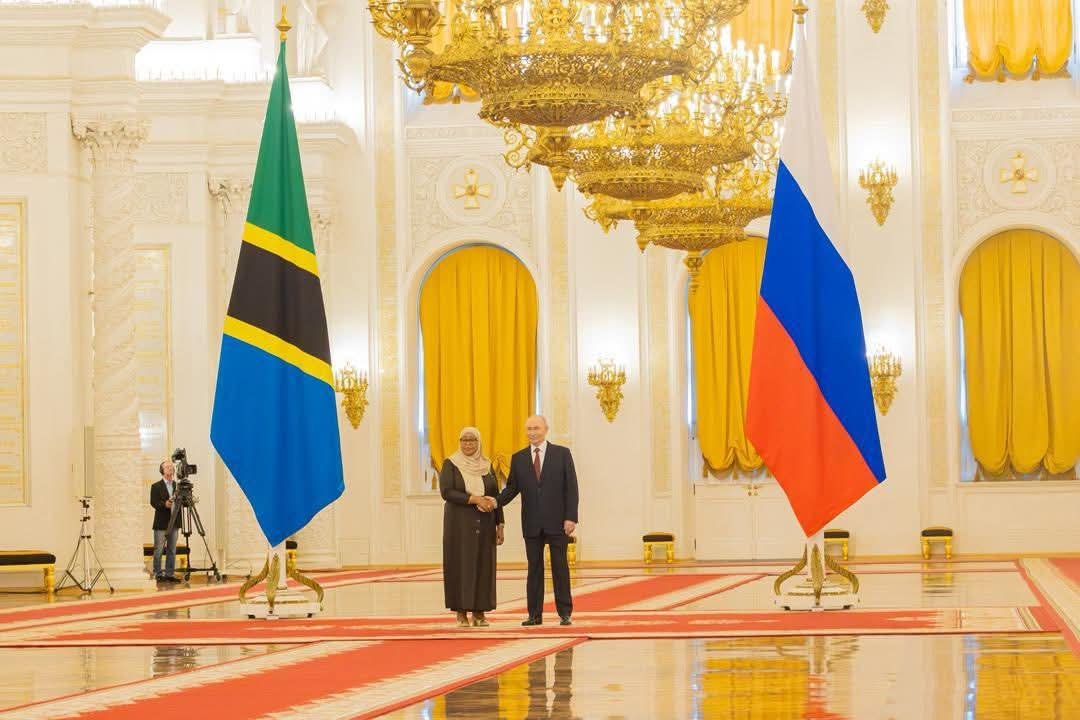
President Samia Suluhu Hassan has used her state visit to Russia to position Tanzania at the centre of a rapidly changing global economic landscape, as Moscow and African nations intensify efforts to forge new alliances beyond traditional Western partnerships.
In high-level talks with Russian President Vladimir Putin in Moscow, President Samia pushed for expanded trade, investment, and technological cooperation in what analysts describe as one of Tanzania’s most strategically significant diplomatic engagements in recent years.
The meeting comes at a time when global powers are increasingly competing for influence, markets, and natural resources across Africa, transforming the continent into a critical arena for economic diplomacy and geopolitical partnerships.
According to Tanzanian officials, trade between Tanzania and Russia has grown by 72 percent between 2020 and 2025 — a figure both leaders praised as evidence of strengthening bilateral relations. Yet behind the economic statistics lies a much broader geopolitical reality shaping the future of African diplomacy.
For Russia, strengthening ties with African states has become increasingly important as Moscow seeks to expand economic and political partnerships outside Europe amid continuing international tensions and sanctions pressure from Western nations.
Also Read:Russia Moves Toward High-Stakes State Duma Elections
For Tanzania, the Moscow visit reflects President Samia’s growing emphasis on economic diplomacy — a foreign policy approach focused on attracting investment, securing technology partnerships, opening export markets, and accelerating industrial development.
During their discussions, Samia and Putin explored cooperation in sectors viewed as critical to Tanzania’s long-term economic ambitions, including energy, mining, agriculture, science and technology, education, tourism, and large-scale infrastructure development.
Diplomatic observers say the visit demonstrates how African governments are increasingly leveraging global competition among major powers to negotiate development opportunities while avoiding overdependence on a single international partner.
The talks also revive a historical relationship dating back to the Cold War era, when Tanzania under founding president Mwalimu Julius Nyerere maintained close political ties with the former Soviet Union during Africa’s liberation struggles.
However, analysts note that unlike the ideological alliances of the past, the new Tanzania–Russia engagement is driven largely by economics, investment, and strategic development priorities.
President Samia’s presence in Moscow is also expected to strengthen Tanzania’s visibility among international investors during her participation in the St. Petersburg International Economic Forum (SPIEF 2026), where world leaders, corporate executives, and policymakers are gathering to discuss global economic trends and investment opportunities.
Economic experts believe Tanzania is increasingly positioning itself as a stable gateway to East and Central African markets due to its strategic location, natural resources, expanding infrastructure, and growing population.
The visit has therefore attracted attention beyond diplomatic circles, with analysts viewing it as part of a broader shift in Africa’s global role — from being seen primarily as a recipient of aid to becoming an active geopolitical and economic player capable of negotiating from a position of growing strategic importance.
The success of the visit is likely to be measured not only by diplomatic symbolism, but by whether the discussions translate into long-term investment, industrial partnerships, and economic opportunities capable of reshaping Tanzania’s development trajectory.