Joseph Isangura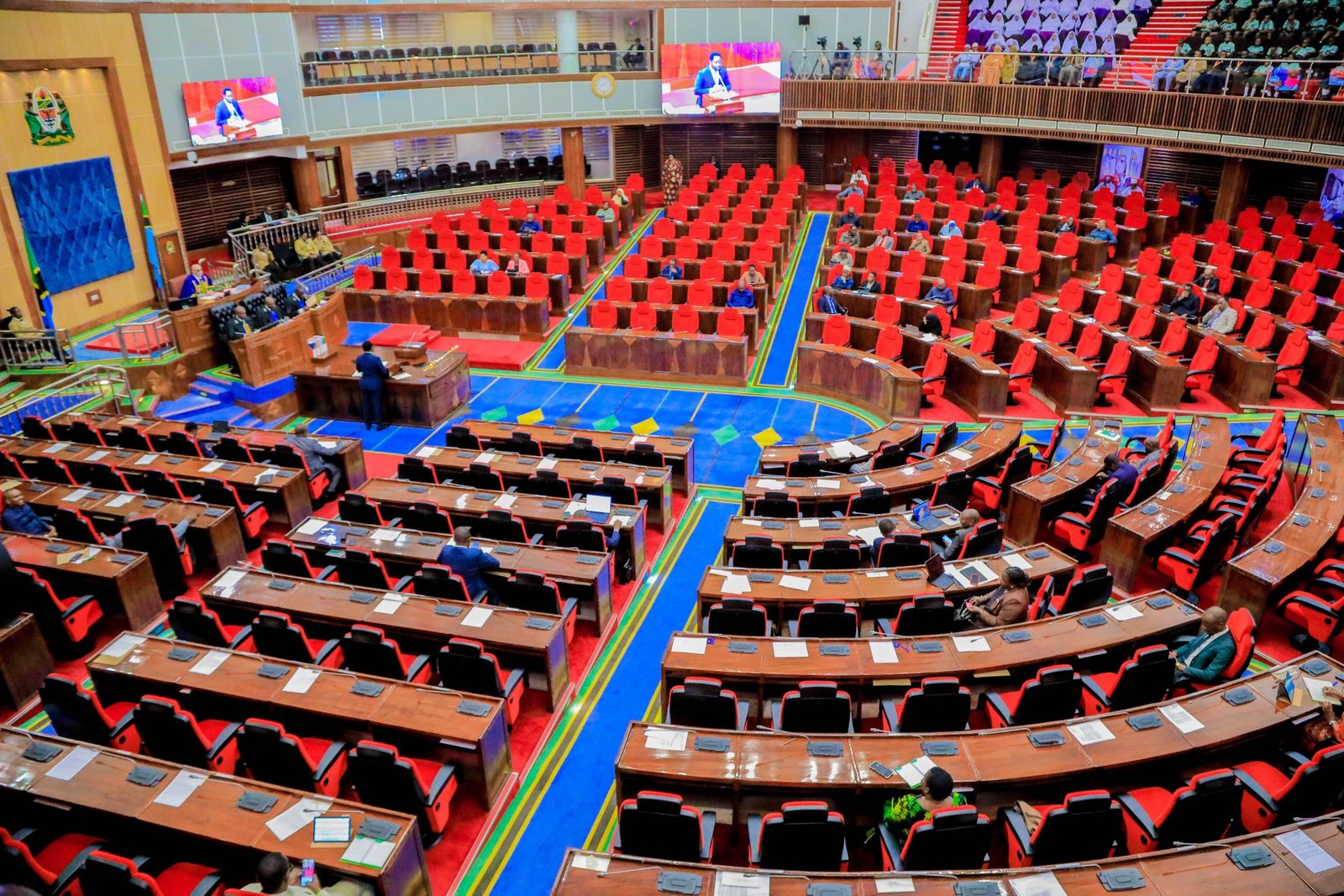
In a decisive parliamentary session that underscores Tanzania’s continued fiscal expansion and long-term development ambitions, the National Assembly has approved a Sh12.5 trillion budget for the Office of the Prime Minister and its affiliated institutions for the 2026/2027 financial year.
The approval marks more than a routine financial exercise. It reflects a broader national narrative—one shaped by years of infrastructure expansion, energy reforms, and efforts to strengthen the delivery of public services across the country.
Prime Minister Mwigulu Nchemba, presenting the final budget framework to Parliament, stated that the allocation is designed to reinforce the government’s capacity to implement strategic national projects while maintaining institutional stability. He emphasized that the balance between recurrent and development expenditure remains central to the country’s fiscal planning.
Of the total approved budget, Sh8.73 trillion has been allocated for recurrent expenditure, covering government operations, salaries, and administrative functions. A further Sh3.76 trillion has been directed toward development spending, targeting infrastructure, energy systems, and social service delivery. Additionally, the Parliamentary Fund has received Sh225 billion, of which Sh207.99 billion is allocated for recurrent costs and Sh17.02 billion for development initiatives.
The Prime Minister informed lawmakers that the funding priorities include modernization of transport infrastructure, expansion of electricity access, and improvement of essential public services. He further noted that Tanzania has recorded measurable progress in rural electrification and infrastructure development compared to several other African economies, positioning the country on a more competitive regional trajectory.
While the 2026/2027 budget stands as a significant financial milestone, it is also part of a broader story that has unfolded over the past several years—a gradual transformation in Tanzania’s development financing model.
In the early 2020s, public expenditure was largely dominated by recurrent costs, as the government focused on maintaining administrative stability while addressing infrastructure gaps inherited from earlier periods. During this phase, development projects often progressed slowly, constrained by limited fiscal space and competing national priorities.
However, as macroeconomic conditions improved and revenue collection strengthened, a gradual shift began to emerge. By the mid-2020s, development allocations increased steadily, particularly in key sectors such as energy, transport, and rural infrastructure. This period saw intensified investment in electrification programs, road networks, and industrial support systems.
The government’s strategy evolved further into what officials describe as “implementation-driven budgeting,” where emphasis is placed not only on allocating funds but also on ensuring measurable project delivery and completion.
Also Read; Dollar Grip Faces Quiet Challenge From Rising Alternatives
A defining feature of Tanzania’s recent fiscal direction has been the prioritization of infrastructure and energy development. Over the past five years, rural electrification programs have expanded electricity access to a growing proportion of the population, enabling improved household welfare and supporting small-scale economic activity.
At the same time, transport infrastructure—particularly railway modernization and road expansion—has been positioned as a catalyst for regional trade integration. These investments are intended to reduce logistics costs, improve market access, and strengthen Tanzania’s role as a regional economic hub.
Despite the scale of investment, the budget continues to reflect a significant allocation toward recurrent expenditure. More than half of the approved funds remain directed toward operational costs, prompting ongoing debate among analysts regarding fiscal efficiency and long-term sustainability.
Government officials, however, maintain that recurrent expenditure is essential for ensuring the effective functioning of institutions responsible for implementing development projects. They argue that without strong administrative systems, even well-funded projects risk delays or inefficiency.
Viewed over a five-year horizon, Tanzania’s budgetary evolution reflects a country in transition. From a system once heavily constrained by limited development financing, the fiscal framework has expanded steadily to accommodate larger infrastructure ambitions and broader social investments.
This transformation has been gradual rather than abrupt, shaped by economic recovery, improved revenue performance, and a growing emphasis on strategic national projects. Yet, it also highlights an enduring structural challenge: balancing operational costs with the need for transformative capital investment.
The approval of the Sh12.5 trillion budget is more than a parliamentary endorsement of government spending. It represents a continuing effort to define Tanzania’s development path—one that seeks to combine institutional stability with large-scale infrastructure growth.
As the country advances into the 2026/2027 financial year, the central question remains not only how much is spent, but how effectively those resources are translated into tangible improvements in citizens’ lives. In that sense, the budget stands as both a financial statement and a national development blueprint still in motion.