MWE Correspondent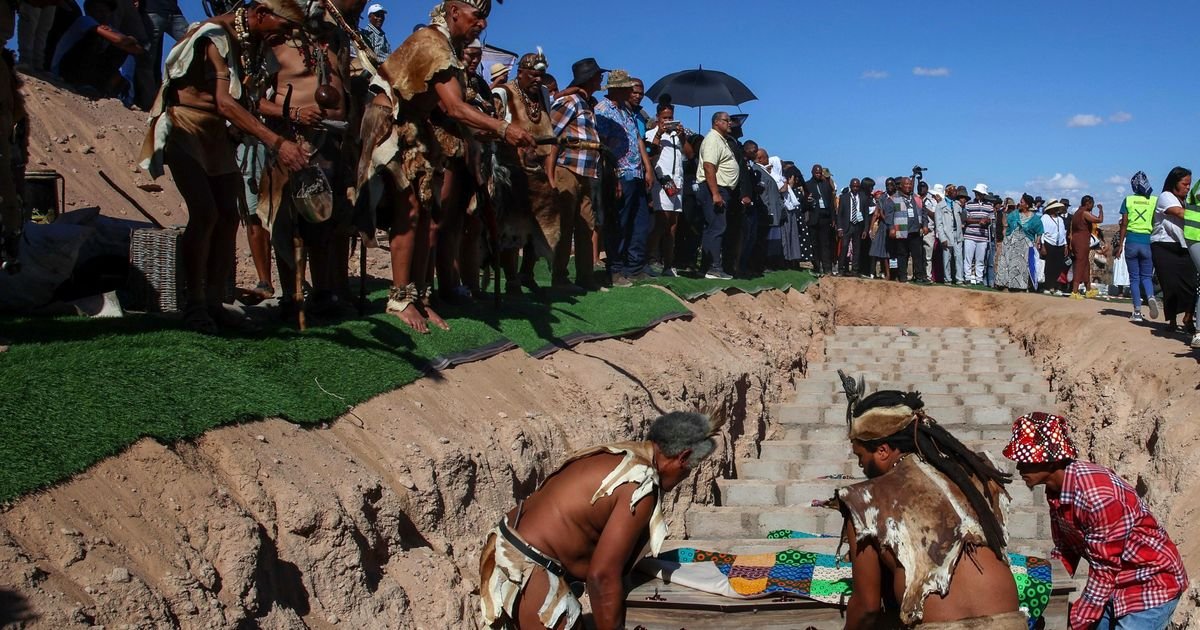
A powerful moment of reckoning unfolded in South Africa this week, as the remains of dozens of Africans—once taken to Europe under the guise of scientific research—were finally returned home and laid to rest with dignity.
The reburial ceremony, held on March 23, marked the return of at least 63 individuals from the Khoi and San communities, whose bodies had been exhumed and transported to Europe between 1868 and 1924. For decades, their remains were kept in museums and institutions, often used in studies rooted in discredited racial theories.
Speaking during the ceremony, Cyril Ramaphosa described the moment as more than a symbolic act. He called it “a restoration of dignity” and a necessary step toward confronting the painful legacy of colonialism. His remarks echoed a growing movement across Africa demanding the return of both human remains and cultural artefacts taken during colonial rule.
The repatriation forms part of a broader global debate around historical accountability and justice. Many African nations have intensified calls for European institutions to return items acquired during colonial expansion, arguing that these objects—and in cases like this, human remains—were taken without consent and under exploitative conditions.
Historians note that during the late 19th and early 20th centuries, African bodies were frequently used in so-called scientific studies that attempted to justify racial hierarchies. These practices, now widely condemned, stripped individuals of their humanity and reduced entire communities to subjects of experimentation.
The latest return is being seen as a turning point. Cultural leaders and activists say it signals a shift in how former colonial powers are beginning to respond to long-standing demands for justice. However, they also caution that much more remains to be done.
Also Read; Egypt Reports New Western Desert Gas Discovery Boost
Across the continent, countries are compiling inventories of artefacts and remains believed to be held abroad, with negotiations underway for their return. Institutions in Europe have increasingly faced pressure to engage in transparent dialogue and take concrete steps toward restitution.
For descendants of the Khoisan peoples, the reburial is deeply personal. It represents not only closure, but also recognition of a history that was long ignored or misrepresented. Traditional rites performed during the ceremony were intended to reconnect the spirits of the departed with their ancestral lands—something denied to them for over a century.
Analysts say the movement for repatriation is gaining momentum globally, linking Africa’s demands with similar efforts by Indigenous communities in other parts of the world. The issue has become central to discussions about decolonization, historical memory, and ethical responsibility in museums.
As the world reflects on this moment, the message from South Africa is clear and unwavering: those who were taken will not be forgotten, and their return is not just about the past—it is about reclaiming identity, restoring dignity, and reshaping the future.