MWE Correspondent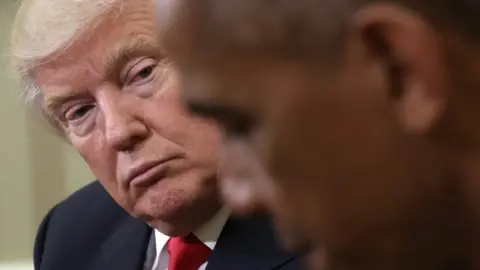
U.S. President Donald Trump has reignited political tensions in the United States after publicly accusing former President Barack Obama of orchestrating a conspiracy linked to the long-running investigation into Russian interference in the 2016 election.
In a post shared on his social media platform, Trump claimed that newly released intelligence documents exposed what he described as a coordinated effort by Obama-era officials to undermine his presidency. The message included a blunt call for Obama’s arrest, a statement that quickly drew global attention and sharp reactions across the political spectrum.
Trump offered no evidence to support the allegation, instead characterising the supposed revelations as proof of what he called an attempted “coup” against his administration. The claims have not been independently verified by intelligence agencies, courts, or congressional investigators.
The controversy centres once again on the broader narrative surrounding the Russia investigation, which examined Moscow’s efforts to influence the 2016 U.S. election through cyber operations and disinformation campaigns. Multiple investigations confirmed that Russia attempted to interfere, though none established that votes were altered.
Trump and his allies have long argued that the inquiry was politically motivated, often referring to it under the label Obamagate — a term used to suggest misconduct by officials from Obama’s administration. Critics, however, describe the theory as unsupported by factual findings and rooted more in partisan rhetoric than evidence.
Also Read; US Senator Warns of Rift in Uganda Security Ties
Former President Barack Obama has not responded directly to Trump’s latest remarks. In previous instances, his office dismissed similar accusations as baseless and warned against using disinformation to undermine public trust in democratic institutions.
Legal experts note that calling for the arrest of a former president without presenting credible proof is highly unusual in modern American politics and risks further deepening political divisions. They emphasise that any claims of wrongdoing must be addressed through the judicial system, not through public declarations on social media.
Observers also point out that Trump’s renewed focus on past investigations comes as the U.S. political climate remains intensely polarised. With public confidence in institutions already strained, analysts warn that unverified accusations involving former national leaders could contribute to instability both domestically and internationally.
Meanwhile, lawmakers from both major parties have urged caution, stressing the importance of relying on verified facts rather than political messaging. Some have called for transparency around any newly released intelligence materials to prevent misinformation from shaping public discourse.