MWE Correspondent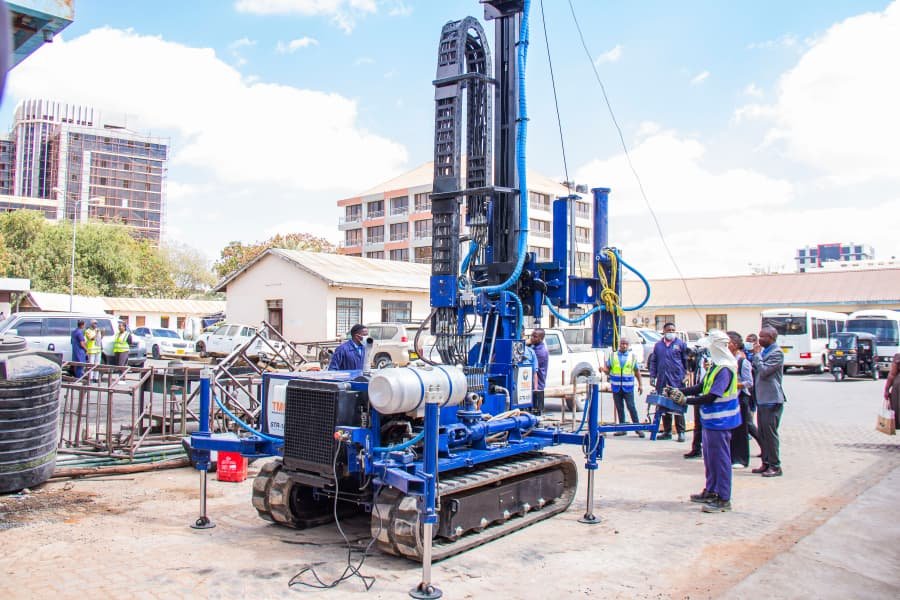
The Tanzania Rural and Urban Roads Agency (TARURA) has adopted advanced technology to conduct detailed soil investigations before construction of roads, bridges and other infrastructure projects, in a move aimed at improving safety, quality and durability while strengthening the resilience of infrastructure to the effects of climate change.
The technology enables engineers and other specialists to obtain detailed information about soil and rock layers beneath the ground, helping them determine the most appropriate foundation designs and construction methods based on the conditions of each project site.
Speaking in Dodoma during a media tour of TARURA’s laboratories, Acting Head of the Agency’s Research and Quality Control Unit, Engineer Vincent Lwanda, said soil investigation was one of the critical steps in ensuring that infrastructure projects are safe, strong and capable of serving the public for many years.
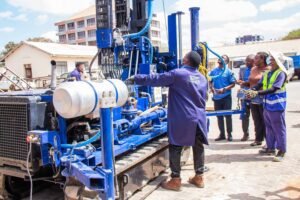
He said TARURA conducts research and testing on soil as well as various construction materials, with the results providing engineers with reliable information for making informed decisions during the planning and implementation of infrastructure projects.
Lwanda said TARURA had invested more than Sh2 billion in specialised equipment used to drill into the ground and extract soil and rock samples from deep beneath the surface for detailed technical analysis.
“These laboratories are not only for roads. We welcome members of the public involved in construction to bring their materials for quality testing,” Lwanda said.
He explained that the use of the laboratories has contributed significantly to improving the quality of roads constructed under TARURA, compared with the past when some roads deteriorated prematurely due to inadequate investigation of soil conditions and construction materials.
TARURA currently operates a main laboratory in Dodoma and 16 other laboratories located in different parts of the country. The facilities provide testing services to members of the public, institutions, contractors and individuals involved in construction activities.
Also Read: Burundians Seek Travel Documents Amid Kenya Business Crackdown
Lwanda added that contractors implementing TARURA projects are required to use the Agency’s laboratories at various stages of construction. The results of laboratory tests form an important part of the process used to verify the quality of completed works before contractors are paid.
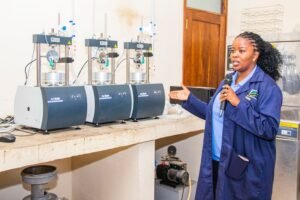
Beyond supporting infrastructure development, TARURA’s laboratories are also contributing to the development of the next generation of engineers by providing practical training opportunities for students from universities and other higher learning institutions across the country.
Engineer Emmanuel Kilasi, an Equipment Engineer in TARURA’s Research and Quality Control Unit at the headquarters, said the Agency had recently acquired a new drilling rig for extracting soil samples to assess underground conditions.
According to Kilasi, the equipment is capable of collecting soil samples from depths of between 200 and 300 metres below the ground surface.
The information obtained from these samples helps engineers determine the soil’s load-bearing capacity, which is essential when designing foundations for major infrastructure such as bridges, roads and buildings.
Kilasi stressed that obtaining accurate information about ground conditions before construction is essential in reducing problems that may emerge during implementation or after a project has been completed.
He said the information also enables engineers to select construction technologies, materials and designs that are appropriate for the specific conditions of a project site.
The approach is particularly important as infrastructure projects increasingly have to withstand environmental pressures, including heavy rainfall, flooding and other effects associated with climate change.
Meanwhile, Vivian Mwakabaja, a second-year student at Mbeya University of Science and Technology (MUST), said practical training at TARURA’s laboratories had helped her connect classroom knowledge with real-world engineering applications.
She said the experience had enabled her to learn practical techniques for testing soil quality and determining its ability to withstand and carry loads.
The initiative demonstrates TARURA’s growing emphasis on scientific research, laboratory testing and the use of modern technology as part of efforts to improve the quality and longevity of Tanzania’s road and other infrastructure networks.