MWE Correspondent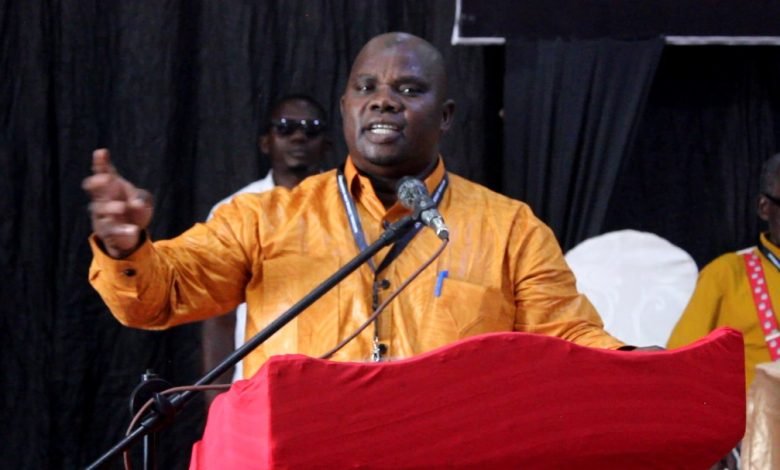
Tanzanian opposition figure Doyo Hassan Doyo has criticised the International Criminal Court (ICC), arguing that the institution reflects geopolitical imbalances and calling for stronger African-led legal systems.
In an interview, Doyo, a 2025 presidential candidate for the National League for Democracy Tanzania (NLD), said the ICC does not operate as a neutral arbiter of justice. Instead, he described it as an institution influenced by powerful states, pointing to what he characterised as uneven application of international law.
“The structure of the ICC raises questions about fairness,” he said, noting that some major global powers are not subject to its jurisdiction. This, he argued, undermines confidence in its mandate to deliver impartial justice.
Doyo’s remarks reflect a broader debate across Africa about the role of international judicial institutions. Critics have long argued that enforcement patterns at the ICC disproportionately affect African countries, while cases involving powerful states remain limited or absent.
He cited global conflicts involving civilian casualties, including children, as examples where international mechanisms have failed to respond decisively. According to Doyo, such instances reinforce perceptions that accountability frameworks are selectively applied.
The ICC has consistently rejected accusations of bias, maintaining that prosecutions are based on legal thresholds and available evidence. Nonetheless, scepticism remains in parts of Africa, where policymakers and political actors are increasingly advocating for regional alternatives.
Doyo said African countries should accelerate efforts to strengthen continental institutions, including judicial mechanisms capable of handling crimes that currently fall under international jurisdiction. He argued that reliance on external systems has constrained political and legal sovereignty.
The position aligns with ongoing discussions within the African Union on expanding the role of regional courts. Proposals have included enhancing the mandate of the African Court on Human and Peoples’ Rights to cover a broader range of international crimes.
Also Read; Health Insurance Debate Sparks Wider Religious Questions
Doyo framed the issue within a wider economic context, pointing to Africa’s extensive natural resources. He argued that countries rich in minerals and energy should not remain economically dependent, citing Tanzania’s tanzanite reserves and the Democratic Republic of Congo’s mineral wealth as examples of underutilised potential.
Tanzania has in recent years pursued policies aimed at increasing domestic control over natural resources, particularly in the mining sector. Analysts say this reflects a broader trend toward economic nationalism across parts of the continent.
Doyo also referenced statements by Tanzania’s leadership on building governance systems rooted in local traditions. He said this approach could support more sustainable democratic models tailored to national contexts rather than externally imposed frameworks.
However, legal experts caution that reducing engagement with institutions like the ICC could limit access to international accountability mechanisms, particularly in cases involving crimes against humanity and cross-border violations.
For now, Doyo’s comments highlight a growing recalibration in African political discourse, where questions of sovereignty, equity and institutional legitimacy are increasingly shaping policy debates.