MWE Correspondent
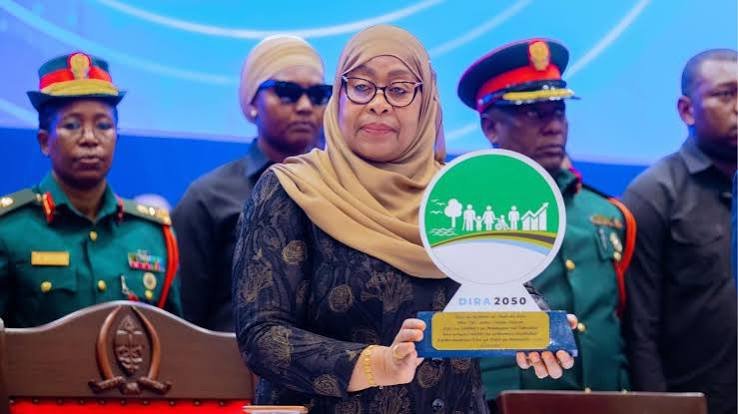
Tanzania’s growing economic ties with China, India, Russia and the European Union are highlighting the country’s efforts to diversify international partnerships, as competition among major powers raises questions about whether developing economies can pursue independent economic interests without becoming caught in geopolitical rivalries.
The debate comes as Tanzania seeks foreign investment, technology, infrastructure financing and access to international markets to support its ambition of becoming a $1 trillion economy by 2050. Its engagement with different economic powers reflects a strategy of maintaining multiple partnerships rather than depending on a single international bloc.
Tanzania’s revised Foreign Policy provides the foundation for this approach, identifying economic diplomacy, national sovereignty, non-alignment and South-South cooperation as key principles of its international engagement.
The Ministry of Foreign Affairs says Tanzania seeks to deepen economic cooperation with development partners while safeguarding its sovereignty, territorial integrity and political independence.
The policy also emphasises participation in bilateral, regional and international organisations, reflecting the government’s intention to use diplomacy to mobilise resources for national development.
This approach is consistent with the Tanzania Development Vision 2050, which identifies a strong, inclusive and competitive economy as a central national objective. The vision prioritises diversified financing, investment, integrated logistics, technological development, research and value addition as drivers of economic transformation.
The government’s broader development agenda, including the CCM Election Manifesto 2025–2030, also places emphasis on economic growth and strengthening the private sector. A government strategic plan identifies the manifesto as a framework for implementing these priorities.
View this post on Instagram
China represents one of Tanzania’s largest economic relationships outside Africa. The two countries established a comprehensive strategic cooperative partnership in 2022, building on diplomatic relations dating back to 1964.
Trade between Tanzania and China reached $11.28 billion in 2025, a 27% increase from $8.17 billion in 2024, according to figures announced by Foreign Affairs Minister Mahmoud Thabit Kombo in October 2026.
“Beyond our history, beyond our people-to-people relationship, and beyond our development projects, we are witnessing very strong growth in actual trade,” Kombo said during an event marking the anniversary of China’s founding.
He identified the modernisation of the Tanzania-Zambia Railway Authority (TAZARA) railway as a major component of future cooperation, with the project expected to improve regional transport and strengthen connections between Tanzania and landlocked markets.
However, expanding trade has not necessarily translated into balanced economic benefits. Tanzania’s trade statistics show that in 2024 it exported goods worth approximately $443 million to China while importing about $4.78 billion, leaving a bilateral merchandise trade deficit of approximately $4.34 billion.
View this post on Instagram
The figures highlight the challenge facing Tanzania as it seeks to increase exports and capture more value from its agricultural and mineral resources.
India has also become an increasingly important economic partner. Bilateral trade reached $9.02 billion in the 2025/26 financial year, compared with $8.64 billion in the previous financial year, according to India’s Ministry of Commerce and Industry.
The figures were discussed during the fifth session of the India-Tanzania Joint Trade Committee in Dar es Salaam on April 29–30, 2026.
Both countries discussed cooperation in pharmaceuticals, mining, agriculture, education, healthcare, shipbuilding and investment. They also explored the possibility of using local currencies for trade settlements and improving business access between the two markets.
India’s High Commission in Tanzania has reported that Indian investments in the country reached $4.74 billion in 2025, according to figures from the Tanzania Investment and Special Economic Zones Authority.
The relationship is particularly significant in healthcare, manufacturing, agriculture, infrastructure and mining, where Indian companies have established a substantial presence.
Russia offers another dimension to Tanzania’s economic diversification strategy, particularly in fertilisers, agriculture, energy, pharmaceuticals, technology and tourism.
During talks with Russian President Vladimir Putin in Moscow in June 2026, President Samia Suluhu Hassan acknowledged Russia’s historical contribution to African liberation movements and expressed interest in strengthening bilateral cooperation.
“We now have an opportunity to discuss the future development of our countries,” Samia said, while thanking Russia for its historical support for African liberation.
Russian Economic Development Minister Maxim Reshetnikov said trade turnover between Russia and Tanzania increased by nearly 20% during the first 11 months of 2025, driven by increased fertiliser supplies to Tanzania and purchases of Tanzanian coffee.
He identified logistical challenges as an obstacle to further growth, saying the two countries were exploring cooperation on port infrastructure and other areas.
Russian Ambassador to Tanzania Andrey Avetisyan has also argued that economic independence requires stronger commercial relationships rather than continued reliance on development assistance.
“Foreign aid cannot be a permanent solution because it depends on the decisions of donors. Investment, trade, and adding value to domestic resources are the path to real development,” Avetisyan told journalists in Dar es Salaam in December 2025.
Despite these opportunities, Russia’s economic relationship with Tanzania remains considerably smaller than its political and historical relationship. The two countries therefore face the challenge of converting diplomatic commitments into stronger trade flows, investment and industrial cooperation.
Europe remains another important economic partner and a major source of development financing, investment and access to international markets.
According to the European External Action Service, trade between Tanzania and the European Union reached €1.95 billion in 2024. European exports to Tanzania accounted for €1.19 billion, while imports from Tanzania amounted to €756 million.
The EU has committed €585 million in grant funding to Tanzania under its 2021–2027 cooperation framework, supporting infrastructure, digitalisation, connectivity and economic development.
EU Ambassador to Tanzania and the East African Community Christine Grau said the partnership was intended to create opportunities for businesses and strengthen economic cooperation.
“Our partnership is about creating opportunities, supporting entrepreneurs, strengthening businesses, and enabling innovation to grow for the mutual benefit of Tanzania and the European Union,” Grau said in May 2026.
The European partnership also includes cooperation in critical minerals, particularly graphite and nickel, as well as renewable energy, agriculture and transport infrastructure.
These relationships demonstrate that Tanzania’s economic interests extend across different political and economic systems. The country has opportunities to benefit from European markets and financing, Chinese infrastructure and manufacturing capacity, Indian technology and industrial investment, and Russian cooperation in agriculture, energy and other strategic sectors.
Read More: African Leaders Press for Greater Global Autonomy
The question of whether Tanzania can freely choose its partners is also connected to the expansion of BRICS, a forum bringing together major emerging economies, including Brazil, Russia, India, China and South Africa, alongside newer members.
Tanzania is not a full BRICS member. In June 2025, Deputy Finance Minister Hamad Chande told Parliament that the country participated in BRICS meetings as an observer while maintaining bilateral relations with its member countries.
The distinction is important because cooperation with individual BRICS members does not automatically make Tanzania part of the grouping or subject it to all its collective arrangements.
BRICS has also introduced a partner-country category, creating additional opportunities for cooperation without full membership. Tanzania’s current status should therefore be distinguished from the formal membership and partner lists published by the group’s rotating presidency.
The economic argument for diversification is reinforced by Tanzania’s own trade figures. Data published by the Tanzania Trade Development Authority show that the country recorded a merchandise trade deficit of approximately $6.98 billion in 2024, despite total exports increasing to $8.70 billion.
Economists argue that expanding international trade must be accompanied by domestic production and value addition if Tanzania is to obtain greater benefits from its partnerships.
Dr Donald Mmari, executive director of Research on Poverty Alleviation (REPOA), has warned that exporting raw materials while importing finished products limits the country’s ability to capture more economic value.
“We cannot rely solely on selling raw materials and then use foreign currency to import products manufactured from those same resources,” Mmari said in an October 2026 analysis of Tanzania’s industrialisation ambitions.
His argument highlights a central challenge in Tanzania’s economic diplomacy: attracting international investors is important, but partnerships must also create local industries, employment, technological capabilities and competitive exports.
International partnerships can also involve different conditions, including commercial requirements, environmental standards, governance commitments and financial safeguards. Such conditions need to be assessed individually rather than treated as evidence that every development partner is attempting to control Tanzania’s foreign policy.
The legal framework of the United Nations recognises the sovereign equality of states, while Tanzania’s Constitution and foreign policy establish the protection of national sovereignty and independence as important principles of national governance and international engagement.
For Tanzania, the issue is therefore not whether it should choose one global power over another, but how to negotiate partnerships that advance national interests without creating new forms of economic dependence.
The success of that strategy will ultimately depend on the country’s ability to negotiate favourable agreements, expand exports, strengthen domestic manufacturing and ensure that international investment produces measurable benefits for Tanzanian businesses and citizens.