 Hassan Magulumali
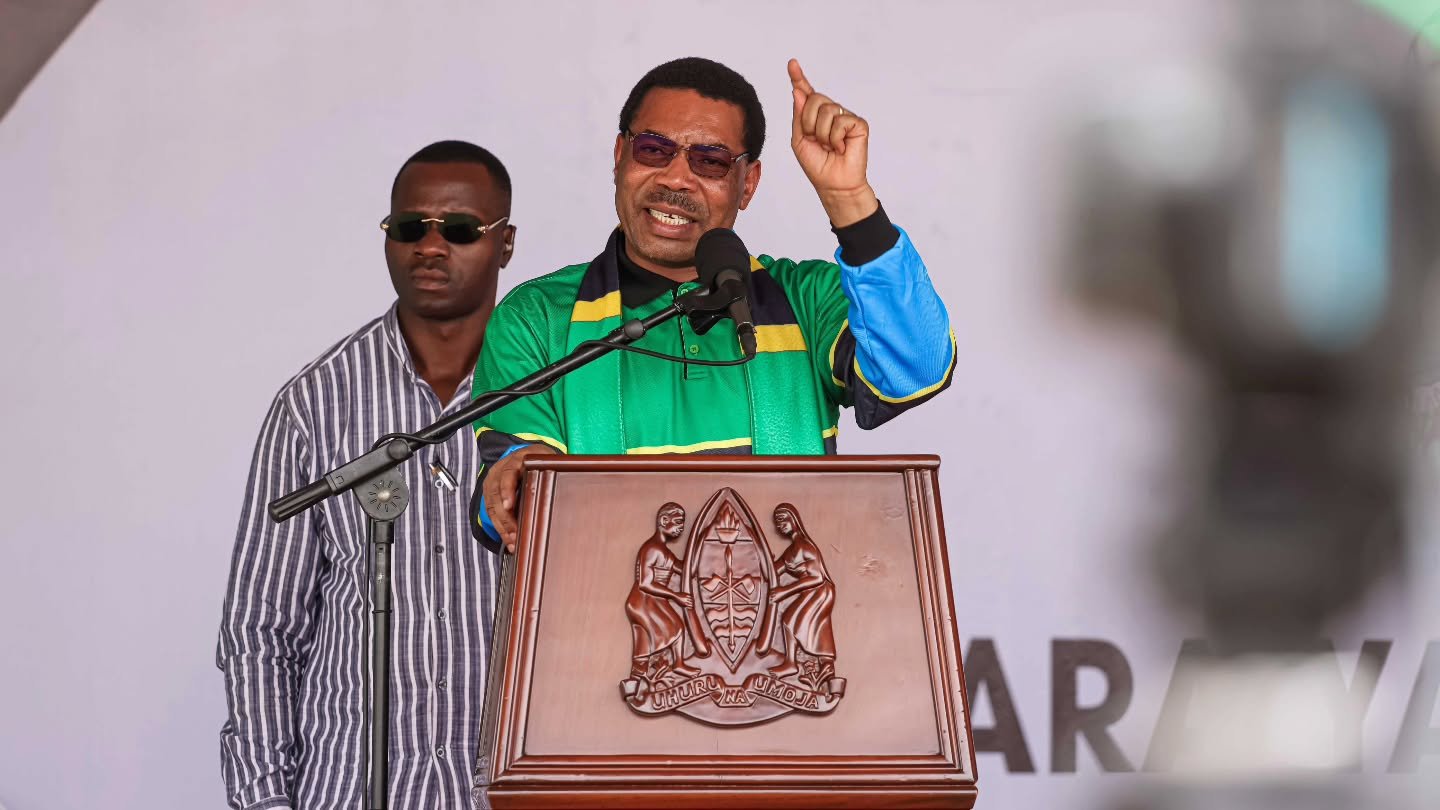
Tanzania’s Prime Minister Mwigulu Nchemba has credited the government’s decision to prioritise completion of the Julius Nyerere Hydropower Project (JNHPP), rather than spend public funds hiring temporary electricity-generating equipment, with delivering one of the country’s largest energy infrastructure investments.
Nchemba made the remarks on November 8, 2026, while addressing residents during a public meeting in Kishapu District, Shinyanga Region, where he discussed the government’s efforts to expand electricity access and respond to public concerns.
He said the government had faced two options: renting power-generation equipment to address electricity supply needs or directing resources towards completing the Mwalimu Nyerere Hydropower Project. The administration of President Samia Suluhu Hassan chose to complete the dam, arguing that the investment would leave the country with a permanent national asset rather than equipment that would remain under private ownership.
According to Nchemba, the decision helped complete a project associated with the long-standing vision of Tanzania’s founding president, the late Mwalimu Julius Nyerere, to harness the country’s water resources for large-scale electricity generation.
The project, located on the Rufiji River in the Coast Region, has an installed generation capacity of 2,115 megawatts (MW), produced by nine generating units, each with a capacity of 235MW. Its completion represents a major expansion of Tanzania’s electricity-generation infrastructure and is intended to strengthen energy security, support industrial production and improve the reliability of electricity supply.
The project was officially inaugurated by President Samia on August 22, 2026, after construction was completed and all nine generating units had been brought into operation. The government has presented the development as a major milestone in its efforts to expand electricity generation and support economic growth.
Nchemba also linked the country’s expanding electricity network to the implementation of successive ruling-party election manifestos. He explained that government priorities had evolved from connecting district headquarters to extending electricity to wards and villages, with the current focus extending to smaller settlements, mining areas and industrial facilities.
Also Read: Africa Must Be a Partner, Not a Political Subordinate
The expansion is significant because electricity access is not only a household service but also an important condition for economic activity. Reliable power can help small businesses operate machinery, support agricultural processing, improve services in rural communities and reduce production interruptions in factories and mines.
However, the benefits of increased generation depend on the capacity of transmission and distribution infrastructure to deliver electricity to consumers. Power connections, grid reliability, maintenance and affordable tariffs will remain important in determining how effectively the additional generation capacity supports households and businesses.
The government has continued to identify electricity access as a foundation for industrialisation and economic transformation. Extending supply to small-scale and large-scale mining operations, as well as industrial zones, could create opportunities for local processing and value addition, helping the country capture more economic benefits from its natural resources.
JNHPP also carries wider strategic significance because of its potential contribution to regional electricity trade. A stronger generation base could allow Tanzania to increase electricity exchanges with neighbouring countries, provided that transmission infrastructure, cross-border agreements and regional demand support such arrangements.
The decision to finance and complete the project using domestic public resources has also placed national investment capacity at the centre of the debate over Tanzania’s development model. It demonstrates the government’s preference for directing resources towards long-term infrastructure, although the project’s ultimate economic value will depend on efficient operation, financial sustainability and the benefits generated across the wider economy.
For Tanzania, the next challenge is to ensure that the additional electricity translates into more productive investment, stronger local industries, employment opportunities and improved living standards. The expansion of generation must therefore be matched by continued investment in distribution networks and access for communities that remain beyond the reach of reliable electricity.
Nchemba’s remarks in Kishapu reinforced the government’s position that completing the Julius Nyerere Hydropower Project was a strategic decision aimed at securing a long-term national asset. Its lasting success, however, will be measured not only by the electricity it generates, but also by how effectively that power supports Tanzania’s economic transformation and reaches the people and businesses that need it.