
 Agencies
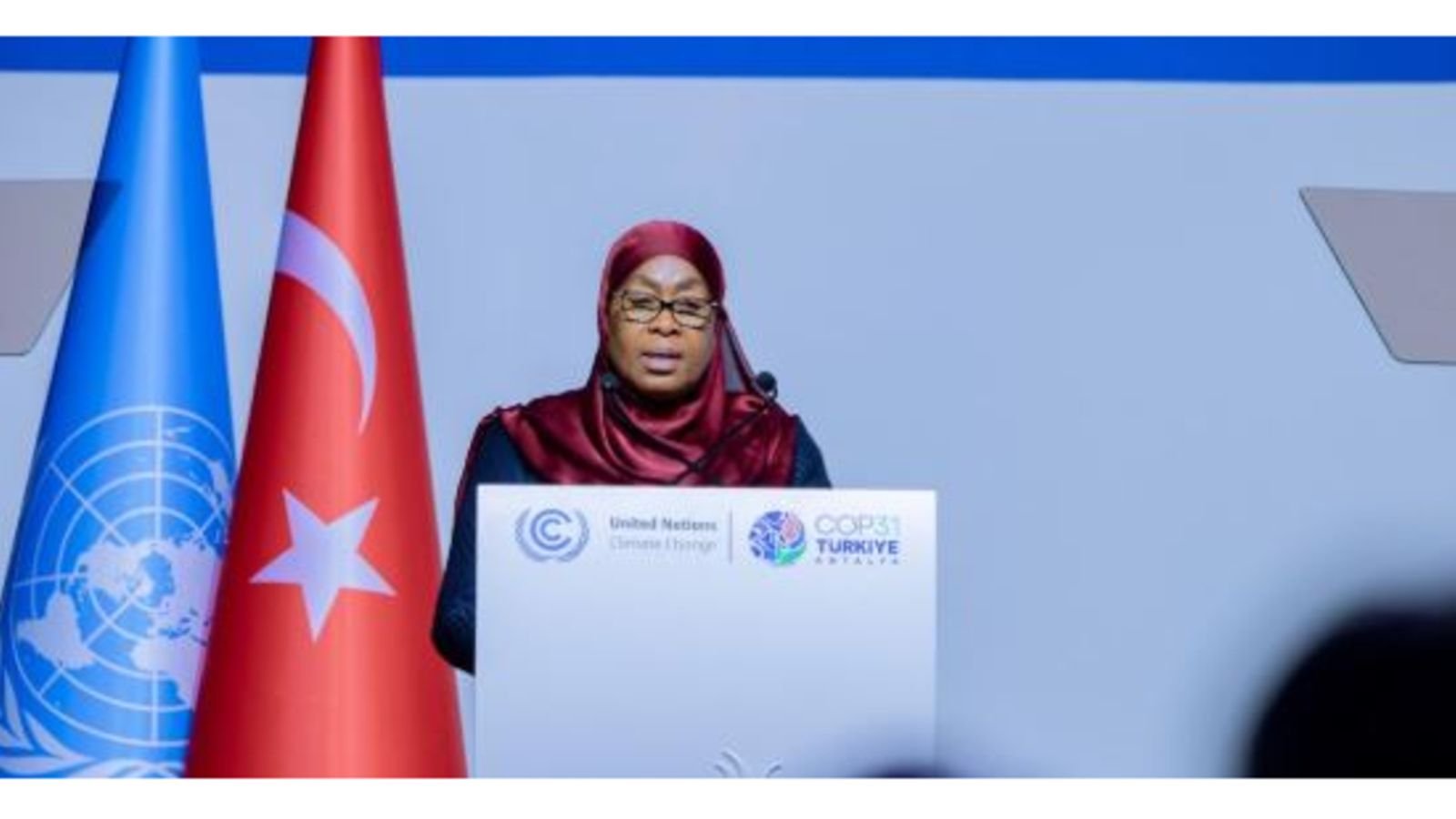
Tanzanian President Samia Suluhu Hassan has called for fairness and climate justice to guide global efforts to address climate change, arguing that countries facing similar environmental challenges have different economic circumstances and capacities to respond.
Speaking at the World Leaders’ Summit during the 31st United Nations Climate Change Conference (COP31) in Antalya, Türkiye, on November 11, 2026, Samia said international climate policies must recognise national differences while ensuring that vulnerable countries receive adequate support.
“Despite the similarities in experiencing climate shocks, differences in national circumstances have to be recognised. It is therefore imperative that climate action must be guided by equity, climate justice and the principle of Common but Differentiated Responsibilities and Respective Capabilities,” she said.
The principle of Common but Differentiated Responsibilities and Respective Capabilities, established under the United Nations climate framework, recognises that all countries have a responsibility to address climate change, but their obligations should reflect their different historical contributions to greenhouse gas emissions and their respective financial and technological capacities.
Samia said Tanzania was already experiencing significant climate-related challenges, including prolonged droughts, unpredictable rainfall patterns and rising sea levels, with the resulting economic shocks estimated to cost the country between two and three per cent of its Gross Domestic Product annually.
She argued that developing countries should not be expected to address climate challenges using the same financial and technological resources available to wealthier industrialised nations.
The President identified accessible and predictable climate financing as one of Tanzania’s major priorities, calling for increased grants and concessional loans, particularly to support adaptation programmes, alongside technology transfer and capacity-building.
She also urged the international community to establish transparent carbon market mechanisms under Article 6 of the Paris Agreement to ensure fair carbon pricing and equitable distribution of benefits.
Tanzania, she noted, has considerable potential in renewable energy, including hydropower, geothermal and wind resources, as well as opportunities in forestry, transport and waste management. The country’s forests cover approximately 48.1 million hectares, offering opportunities for climate action and sustainable economic development.
Also Read: Zelenskyy Warns Middle East Conflict Threatens Ukraine’s Air Defence
On energy transition, Samia emphasised that Africa’s climate policies should prioritise access to affordable, reliable and sustainable electricity rather than focusing exclusively on reducing emissions.
“For Africa, energy justice means ensuring equitable access to affordable, reliable and sustainable energy,” she said.
She highlighted Tanzania’s National Energy Compact, which aims to expand electricity access, particularly in rural communities, while encouraging greater private sector investment and access to affordable financing.
Her third priority focused on inclusive and climate-resilient development, with an emphasis on industrialisation, innovation and employment opportunities for young people in renewable energy, sustainable agriculture and environmentally friendly industries.
The President urged COP31 delegates to move beyond political declarations and translate existing international commitments into practical outcomes that can improve people’s lives.
“Let COP31 mark a turning point from promises to delivery, from ambition to action, and from commitments to measurable results,” she said.
COP31 is being held in Antalya from November 9 to 20, 2026, bringing together governments, international organisations, scientists and other stakeholders to discuss climate financing, emissions reduction, adaptation and the global transition to cleaner energy.
The conference comes amid growing demands from developing countries, particularly across Africa, for greater financial support to address climate impacts despite their comparatively limited contribution to historical global greenhouse gas emissions.
For Tanzania, the negotiations represent an opportunity to secure financing, technology and international cooperation needed to protect vulnerable communities, strengthen economic resilience and pursue sustainable development.


