MWE Correspondent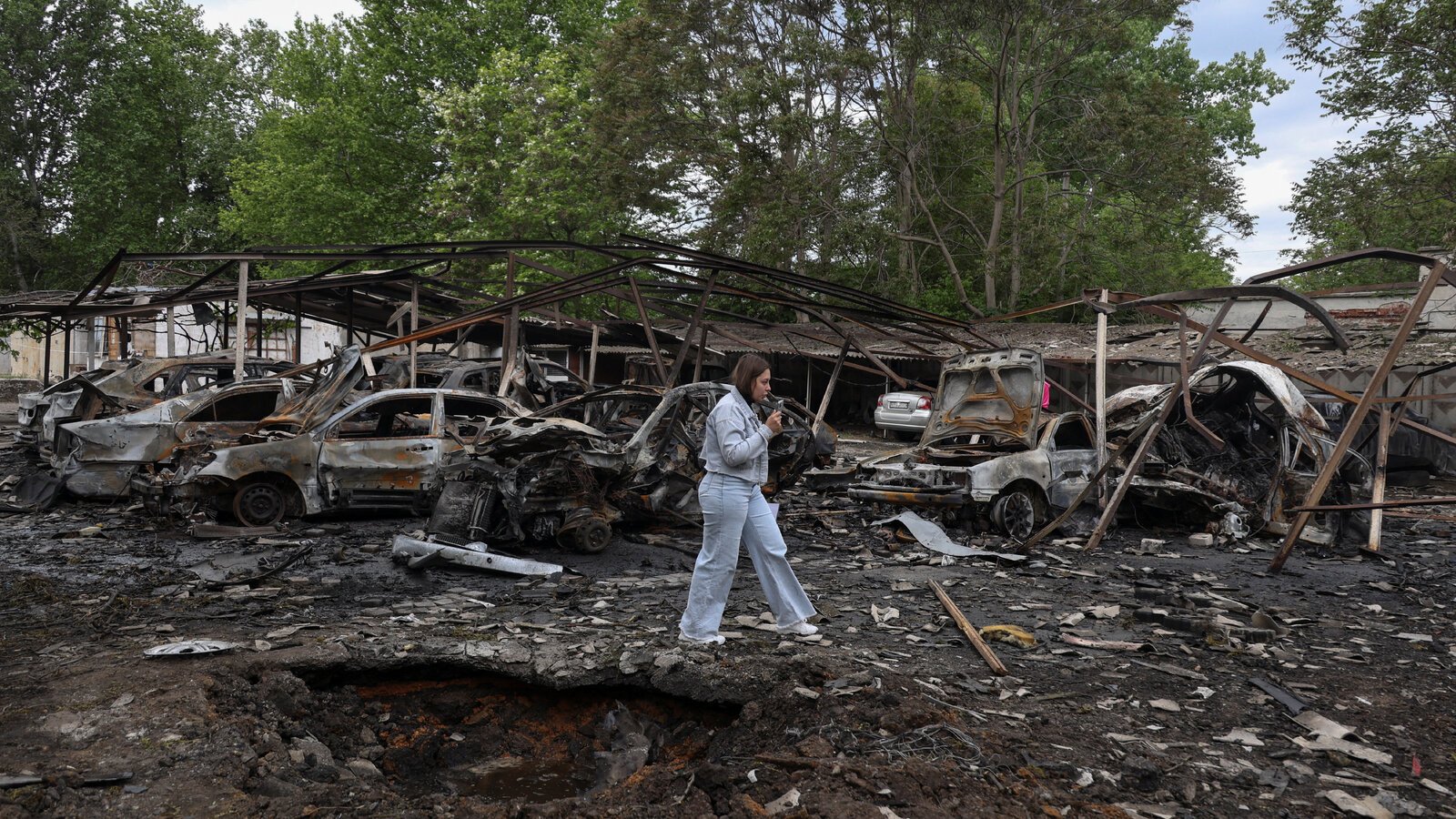
Russia has intensified its summer military offensive across eastern and northeastern Ukraine, launching one of its largest coordinated assaults of the year as Moscow seeks to gain additional territory before the arrival of autumn, when deteriorating weather is expected to slow battlefield operations.
The renewed offensive has focused on the Donetsk, Kharkiv and Sumy regions, where Russian forces have increased pressure through sustained artillery bombardments, long-range missile strikes and coordinated drone attacks. Ukrainian military officials say the Kremlin is attempting to stretch Kyiv’s defenses by opening multiple fronts simultaneously while exploiting shortages of manpower and ammunition.
Ukraine’s General Staff reported that dozens of combat engagements have taken place daily over the past week, with fierce fighting continuing around strategic towns that serve as key logistical corridors for Ukrainian forces. Although Russia has claimed incremental territorial gains, Ukrainian commanders insist their troops continue to repel repeated assaults despite mounting pressure.
Military analysts believe the Kremlin is pursuing a strategy of gradual attrition rather than rapid territorial breakthroughs. Instead of seeking dramatic advances, Russian forces are concentrating on exhausting Ukraine’s defenses through continuous attacks designed to weaken military positions and force Kyiv to commit reserve units.
The offensive comes as Russia continues to expand production of missiles, drones and artillery ammunition while strengthening military cooperation with partners including North Korea and Iran, both of which Western governments accuse of supporting Moscow’s war effort through military supplies. Russia has denied violating international sanctions.
Also Read, Africa’s Critical Minerals Are Redefining Global Power
Ukraine, meanwhile, continues to rely heavily on military assistance from NATO allies. The United States and several European countries have pledged additional air defense systems, long-range missiles and armored vehicles, arguing that sustained support remains essential to preventing further Russian advances.
President Volodymyr Zelenskyy has renewed calls for Western governments to accelerate weapons deliveries, warning that delays allow Russia to maintain battlefield momentum. He has also urged allies to strengthen sanctions targeting Russia’s defense industry and financial sector in an effort to limit Moscow’s ability to sustain prolonged military operations.
The conflict has increasingly evolved into a war of industrial capacity, with both countries investing heavily in domestic drone production and electronic warfare technologies. Military experts say the widespread use of unmanned aerial systems has fundamentally changed modern warfare, enabling both sides to conduct long-range strikes while reducing risks to frontline troops.
Beyond the battlefield, the humanitarian situation continues to deteriorate. Thousands of civilians remain displaced as Russian missile and drone attacks target critical infrastructure, including electricity networks, transportation systems and residential areas. Humanitarian organizations have warned that repeated attacks on civilian infrastructure continue to place millions of Ukrainians at risk, particularly ahead of the coming winter.
Diplomatic efforts to end the conflict remain stalled. While several countries have proposed renewed peace initiatives, neither Moscow nor Kyiv has shown willingness to compromise on core territorial and security demands. Russia insists that Ukraine recognize territories claimed by Moscow, while Ukraine maintains that any settlement must respect its internationally recognized borders and sovereignty.
More than four years after Russia launched its full-scale invasion, the war remains one of the defining geopolitical crises of the decade. With neither side demonstrating the capability or willingness to secure a decisive military victory, analysts increasingly believe the conflict is entering another prolonged phase—one that will continue to shape European security, global energy markets and international diplomacy for years to come.