MWE Correspondent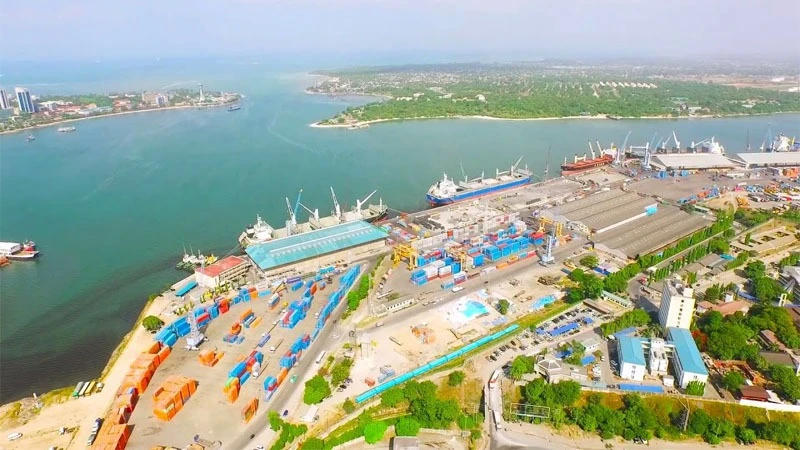
Tanzania’s plans to expand its maritime infrastructure gained fresh momentum after Prime Minister Dr. Mwigulu Nchemba inspected the Lindi Regional Port and called for faster progress on the proposed Ngongo Port project, a development expected to transform trade and transport in the country’s southern corridor.
During his visit on Sunday, December 21, 2025, Dr. Nchemba reviewed operations at the existing Barazani Port and expressed concern that the facility is no longer able to meet current transport and commercial demands. He directed port authorities to speed up the remaining technical and preparatory processes to allow construction of Ngongo Port to begin without further delay.
The Prime Minister said the new port would ease pressure on Barazani, which was built to handle far smaller volumes of cargo and vessel traffic than it now receives. As trade has grown, congestion and operational constraints have become more visible, affecting efficiency for port users and limiting the region’s potential as a logistics hub.
Completion of Ngongo Port, he noted, would be a turning point for Lindi Region, unlocking wider economic opportunities through increased trade, transport activity and investment. “This project is not just about infrastructure,” he said. “It is about creating an environment where business can grow, jobs can be created and the regional economy can expand.”
Lindi’s strategic position along the Indian Ocean coastline has already begun to attract traders from different parts of Tanzania and neighbouring countries. Officials believe modern port facilities will accelerate this trend, strengthening cross-border commerce and boosting government revenue through higher cargo throughput. The role of a modern port, economists note, goes beyond handling ships; it shapes supply chains, lowers transport costs and improves access to regional and global markets.
Maritime transport remains a backbone of Tanzania’s economy, supporting exports of agricultural produce, minerals and manufactured goods. By expanding capacity in the south, Ngongo Port is expected to complement other major ports and enhance connectivity along regional trade routes. The project also aligns with broader national goals of infrastructure-led growth and regional integration, including cooperation within the East African Community.
Also Read; Government Nearly Doubles Higher Education Student Loan Budget
Port authorities have been instructed to finalise feasibility studies, environmental assessments and technical designs as a matter of priority. The work is being coordinated by the Tanzania Ports Authority, which oversees the country’s seaports and inland waterways. Once these initial stages are completed, construction is expected to proceed in phases to allow gradual expansion of operations.
Local leaders and business groups in Lindi have welcomed the renewed focus on the project, saying improved port infrastructure could reposition the region as a key gateway for trade and industry. Better transport links would not only support large investors but also benefit small businesses by improving access to markets and reducing logistics costs.
Analysts caution, however, that the success of Ngongo Port will depend on how well it is integrated with supporting infrastructure such as roads, railways and storage facilities. Without these links, they warn, the full economic benefits may take longer to materialise.
Still, the Prime Minister’s visit has sent a clear signal that the government views Ngongo Port as a strategic investment. For Lindi Region, the project represents a chance to turn its coastal advantage into lasting economic gains, while for Tanzania it marks another step toward strengthening its position as a regional trade and transport hub.