
 MWE Correspondent
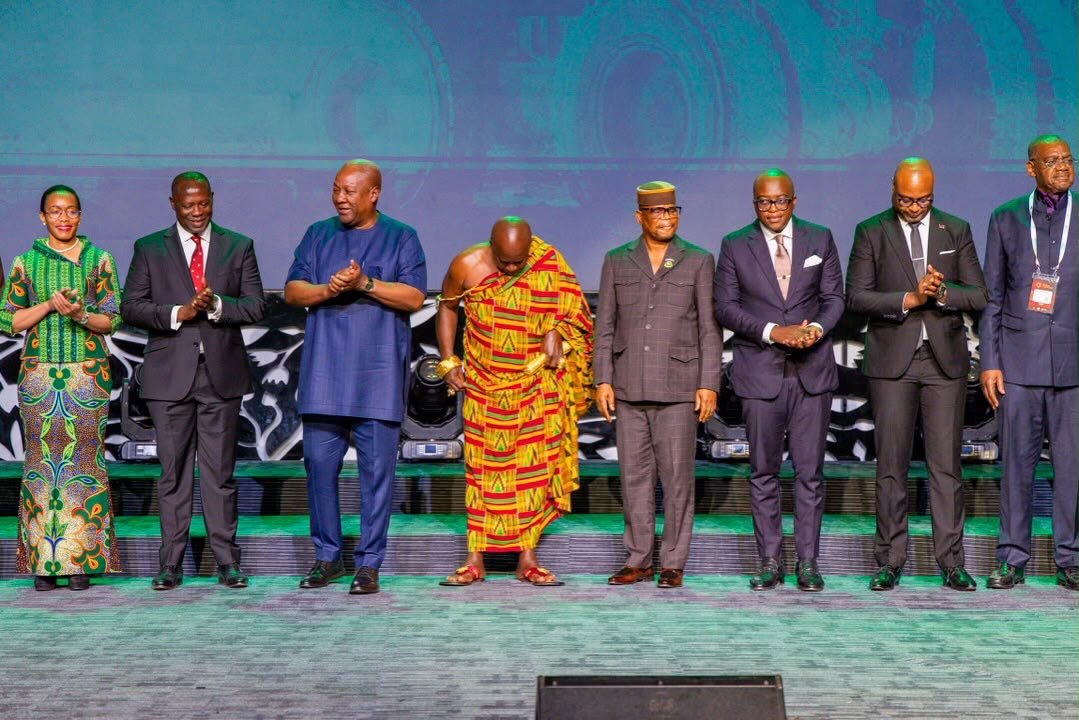
Tanzania’s Minister for Minerals, Anthony Peter Mavunde, has called on African countries to strengthen cooperation in managing and developing mineral resources, saying greater collaboration is essential to industrialisation, job creation and sustainable economic growth across the continent.
Mavunde made the remarks on October 19, 2026, during a ministerial panel discussion involving Tanzania, Nigeria and Liberia at the international Mining in Motion conference in Accra, Ghana. The three-day conference, running from October 19 to 21, is bringing together stakeholders to discuss strategies for advancing Africa’s mining industry.
The panel, held under the theme “From Vision to Delivery: Making the African Mining Vision Work for Member States,” focused on translating continental mining ambitions into practical policies and programmes that deliver economic benefits to African countries.
Mavunde said African nations needed to set aside their differences and adopt coordinated approaches to mineral exploration, processing, investment and value addition, arguing that fragmented national strategies could limit the continent’s ability to benefit fully from its natural wealth.
He noted that Africa holds more than 32 per cent of the world’s known critical mineral resources, yet much of its mineral wealth continues to leave the continent with limited processing and manufacturing taking place locally.
According to the minister, exporting raw minerals without sufficient value addition deprives African economies of opportunities to establish industries, create skilled employment, expand government revenues and develop technological capabilities.
He emphasised that the continent should move beyond extracting and exporting minerals towards building integrated value chains that include refining, processing, manufacturing and the production of mineral-based goods.
Mavunde cited Tanzania’s mining sector reforms as an example of efforts to strengthen national control over mineral resources and increase the economic benefits derived from the industry.
Also Read: Tanzania Invests $425 Million In Higher Education
He said legal reforms introduced in 2017 had strengthened mineral resource governance and increased government participation in the sector. Measures restricting the export of unprocessed minerals had also encouraged domestic processing and value addition.
Under President Samia Suluhu Hassan’s leadership, Tanzania has established more than eight gold refineries and over 16 facilities involved in processing and refining base metals, according to Mavunde.
He added that mining contributes 10.3 per cent of Tanzania’s Gross Domestic Product (GDP), while small-scale miners account for approximately 40 per cent of the sector’s mineral production, highlighting their growing importance to the national economy.
The minister said these developments demonstrated the importance of combining effective regulation with investment in local processing capacity to ensure that mineral resources generate broader economic opportunities.
Mavunde also highlighted the potential for regional cooperation, particularly among Tanzania, Madagascar and Mozambique, in developing graphite resources. He said the three countries could coordinate production, processing and policy frameworks to establish a stronger regional value chain that benefits their populations.
Graphite is an important mineral used in lithium-ion batteries and other energy storage technologies, making it increasingly significant as global demand for electric vehicles and renewable energy systems grows. Closer regional cooperation could help African producers capture a greater share of the value generated by these industries rather than relying primarily on exports of unprocessed materials.
His remarks come amid growing international competition for critical minerals used in electric vehicles, renewable energy infrastructure, electronics and advanced manufacturing. For African countries, the challenge is to attract investment while ensuring that mining creates domestic jobs, supports local businesses and strengthens industrial capacity.
The African Mining Vision, adopted by African Union member states in 2009, provides a continental framework for using mineral resources to support broad-based development. It promotes transparent and accountable resource governance, economic diversification, local value addition and stronger links between mining and other productive sectors.
However, translating the vision into tangible results requires effective implementation, infrastructure investment, skills development, reliable energy supplies and closer coordination among governments and industry players.
Mavunde’s call for greater cooperation underscores the need for African countries to approach mining as a shared development opportunity, particularly where mineral deposits, processing capabilities and transport networks can complement one another across national borders.
For Tanzania and its neighbours, coordinated mineral policies and investment in processing could help strengthen regional industries, increase export earnings and ensure that a greater proportion of the continent’s mineral wealth contributes to long-term economic transformation.


