MWE Correspondent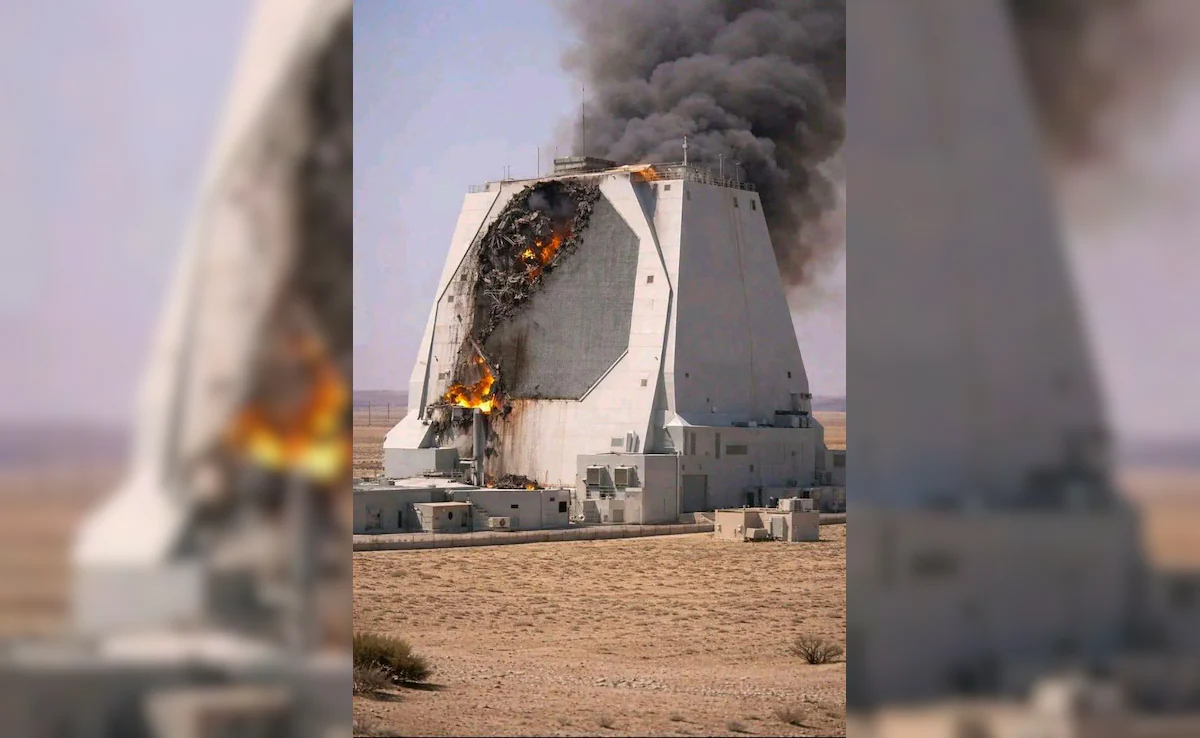
Tensions in the Gulf have taken a sharper turn after Iran’s powerful military wing, the Islamic Revolutionary Guard Corps, claimed it had destroyed a major American early-warning radar installation stationed in Qatar.
The announcement, delivered through Iranian state media, described the strike as part of what Tehran is calling “Operation True Promise 4,” a campaign it says is aimed at responding to recent military pressure in the region.
According to the statement, the targeted system was the AN/FPS-132 Block 5 radar — a long-range missile detection platform reportedly located at Al Udeid Air Base. The installation is widely regarded as one of Washington’s most important military hubs in the Gulf, supporting air operations and surveillance missions across a vast strategic corridor.
Iran’s Islamic Revolutionary Guard Corps said the radar was “completely destroyed,” though U.S. officials have not publicly confirmed the extent of the alleged damage. Independent verification remains difficult, as access to military facilities is restricted and both sides are tightly controlling information.
Military analysts note that the AN/FPS-132 is designed to track ballistic missile launches over thousands of kilometers, offering early warning that allows defense systems to respond quickly. If the radar were significantly damaged, it could temporarily narrow the response window for U.S. forces and their allies. However, defense experts emphasize that American missile detection relies on layered systems, including satellites and multiple ground-based radars, meaning one installation alone does not determine overall capability.
The development comes amid heightened friction between Iran and the United States, with both sides exchanging threats and limited strikes in recent days. The Gulf region has witnessed a steady rise in military activity, including drone launches and missile interceptions, raising fears that miscalculations could spark a broader conflict.
For Qatar, which hosts Al Udeid Air Base, the situation presents a delicate balancing act. The country has long positioned itself as both a strategic U.S. ally and a diplomatic intermediary in regional disputes. Any confirmed strike on its territory would increase security concerns and potentially complicate its diplomatic posture.
Also Read; US Military Aircraft Crashes in Kuwait, Crew Survives
Beyond the military dimension, global markets reacted cautiously to the reports. Energy analysts warn that further escalation could unsettle oil supplies, as the Gulf remains central to global energy exports. Aviation routes have also come under scrutiny, with airlines carefully monitoring airspace risk assessments.
Regional observers say the psychological impact of the claim may be as significant as the physical damage itself. In conflicts of this nature, public messaging often serves strategic purposes, aiming to project strength and influence perception. Whether the radar was destroyed, partially damaged, or unaffected, the narrative adds another layer of tension to an already fragile situation.
Diplomatic efforts behind closed doors are reportedly underway, with international actors urging restraint and de-escalation. Still, the latest developments underscore how quickly military exchanges can reshape the security landscape in one of the world’s most strategically sensitive regions.
As competing claims continue to emerge, clarity may take time. For now, governments across the globe are watching closely, aware that any further escalation in the Gulf could carry consequences far beyond the region itself.