MWE Correspondent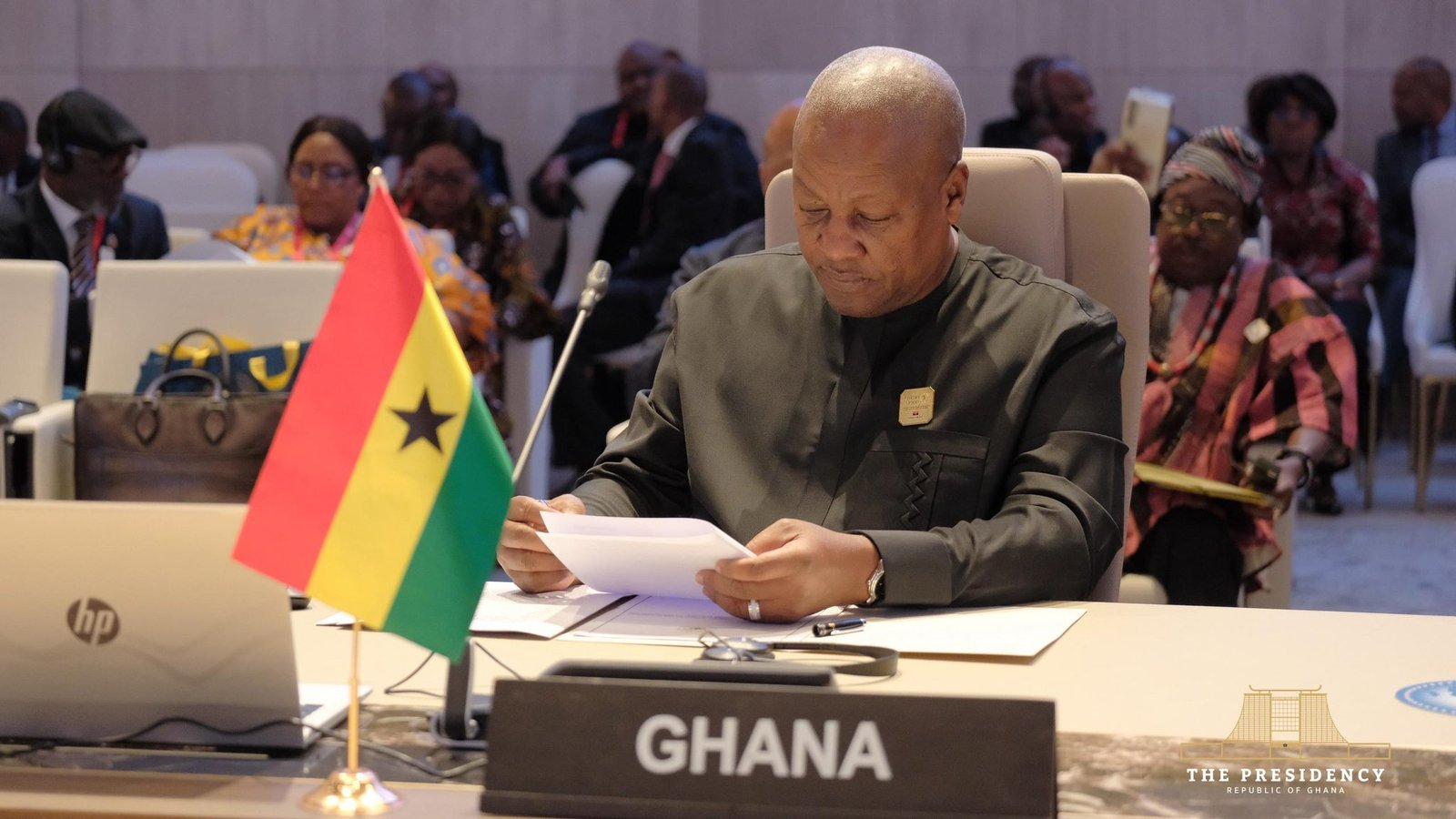
Ghana has rejected a proposed new health agreement with the United States after President John Dramani Mahama said several provisions raised concerns over sensitive health data, financing obligations and Ghana’s regulatory authority.
The decision puts Ghana among a growing number of African countries questioning the terms of a new U.S. approach to health assistance, as Washington seeks to move from traditional aid programmes toward multi-year agreements that place greater responsibility for financing and managing health systems on recipient countries.
Speaking at the Council on Foreign Relations in New York, Mahama said Ghana’s Ministry of Health reviewed the proposed agreement before it was presented to Cabinet, where several provisions were flagged. According to the President, the document required Ghana to provide the United States with its pathogen profile and medical records, while also committing a specified amount of counterpart funding.
Mahama also raised concerns over provisions relating to medical products supplied under the proposed programme. He said some medicines and other health products would not be subject to inspection by Ghana’s Food and Drugs Authority, a provision that contributed to Cabinet’s decision not to accept the agreement in its existing form.
The proposed agreement was intended to replace part of the health financing Ghana previously received through the United States Agency for International Development, or USAID, following Washington’s broader restructuring of foreign assistance.
The U.S. Embassy in Accra has presented the new model differently. U.S. Chargé d’Affaires Rolf Olson said Washington wants to gradually move partner countries toward greater health-sector ownership and self-reliance rather than maintaining indefinite dependence on external assistance.
According to Olson, the United States had already signed 35 bilateral global-health memorandums of understanding involving $24.6 billion in new health funding, including $14.5 billion in U.S. assistance and more than $10.1 billion in co-investment from partner countries. He said the agreements are designed to gradually increase domestic responsibility for health financing and programme management.
Mahama has repeatedly called for African countries to reduce dependence on foreign health financing, strengthen domestic systems and increase local production of vaccines and medicines. His government has also launched the “Accra Reset,” an initiative aimed at reshaping global health cooperation around greater self-reliance and national ownership.
Read More: From Aid Recipient to Medicine Producer
The dispute over the U.S. agreement is therefore part of a wider debate about what happens when foreign health financing comes with conditions governing data, regulation, financing and implementation.
Zimbabwe failed to reach an agreement with Washington after negotiations became dominated by concerns over sensitive health-data sharing. The United States subsequently moved to terminate its funding for Zimbabwean health programmes at the end of September 2026. The dispute has raised concerns over the potential impact on programmes fighting HIV, tuberculosis and malaria.
Kenya has faced a related controversy. A court temporarily suspended implementation of a major U.S.-Kenya health agreement while considering legal challenges involving the privacy and oversight of citizens’ health data. Reuters reported that concerns about data-sharing provisions were also a factor in the Kenyan dispute.
Foreign health assistance can provide substantial financing for HIV treatment, malaria control, maternal healthcare, laboratories, medicines and disease surveillance at a time when many African health systems face major funding gaps.
But governments are increasingly questioning whether access to such financing should require arrangements that they believe could weaken domestic control over sensitive health information or national regulatory systems.
Ghana itself has acknowledged the scale of the financial challenge created by the decline in external assistance. Mahama said Ghana lost about $78 million following the closure of USAID programmes, with the funding previously supporting areas including malaria, maternal and child health, nutrition and HIV/AIDS programmes.
That makes the rejection of the U.S. compact more complicated than a simple dispute over diplomatic terms.
Ghana must now strengthen domestic financing while continuing to protect essential health services that previously benefited from external support.
The United States, meanwhile, says its new model is intended to reduce long-term aid dependency by encouraging countries to assume greater responsibility for their own health systems.
The central issue is therefore becoming increasingly clear across Africa: how can countries secure international financing and technical support without surrendering control over sensitive health data, national regulation and long-term health policy?
Ghana’s decision does not end health cooperation with the United States. Instead, Mahama’s government has indicated that it wants the concerns it identified addressed before accepting a new agreement.
As Washington restructures its health assistance and African governments push for greater health sovereignty, Ghana’s rejection could become part of a much larger debate over the future of foreign-funded healthcare on the continent.