MWE Correspondent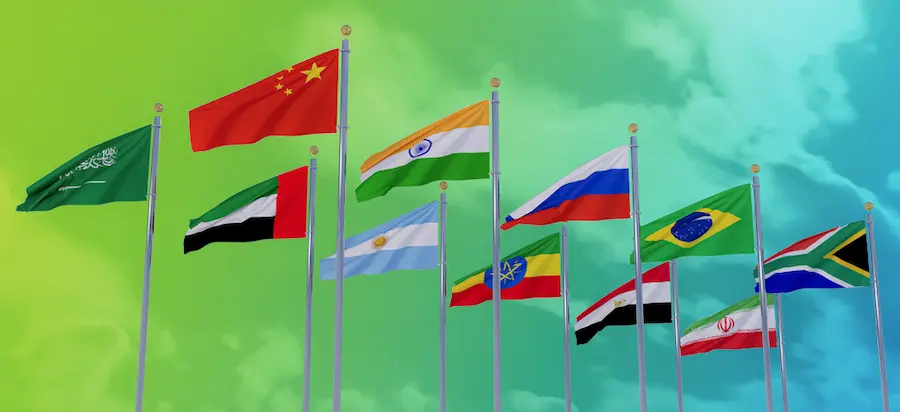
The expanding influence of BRICS is continuing to reshape international economic discussions as member states deepen cooperation across trade, finance, infrastructure, and strategic development sectors.
The bloc’s growing coordination reflects a broader transformation within the global economic landscape.
This is not symbolic alignment.
It is strategic consolidation.
Member economies are increasing collaboration in cross-border trade systems, industrial investment, and financial connectivity in an effort to strengthen long-term resilience and reduce operational dependence on external systems.
A major area of focus remains local-currency trade settlement.
Several member states are gradually increasing the use of domestic currencies in bilateral transactions to improve flexibility and reduce exposure to external monetary pressures.
This shift is closely associated with de-dollarization.
Rather than replacing existing financial structures entirely, the strategy focuses on expanding monetary options and reducing concentration risks within international trade systems.
Institutional cooperation is also accelerating.
Development financing initiatives, infrastructure partnerships, and payment-system coordination are becoming more integrated across participating economies.
This reflects the broader principle of multilateralism.
Multilateral cooperation allows countries to pursue shared economic objectives while preserving national policy independence and strategic flexibility.
Industrial development remains central to the bloc’s agenda.
Investment in energy systems, manufacturing capacity, logistics infrastructure, and technology partnerships is increasingly viewed as essential for sustainable long-term growth.
This aligns with economic cooperation.
Effective economic cooperation requires policy coordination, capital alignment, and institutional trust across participating economies.
Challenges continue to exist.
Differences in economic scale, regulatory frameworks, and geopolitical priorities require careful coordination to maintain long-term cohesion.
Nevertheless, momentum continues building.
A more coordinated group of emerging economies is steadily expanding its influence across international trade and financial systems.
The broader message is becoming increasingly evident.
BRICS is not simply expanding membership.
It is strengthening emerging economic power networks.
And that transformation is steadily reshaping the balance of global economic influence.