 editor
 Joseph Isangura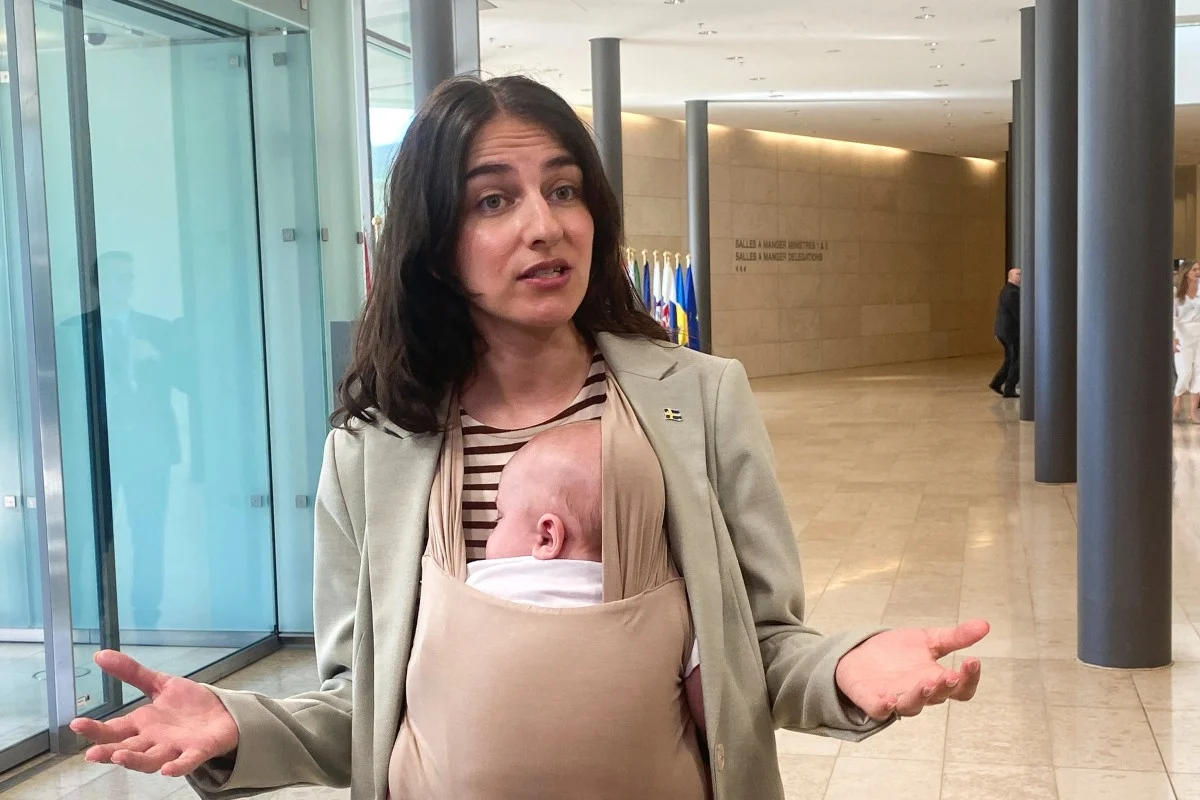
A routine meeting of European Union ministers turned into a historic moment this week when Sweden’s Minister for Climate and the Environment arrived with an unexpected participant: her three-month-old son.
The infant is believed to be the first baby ever to attend a formal meeting of ministers at the Council of the European Union, marking an unprecedented moment in the history of one of the world’s most influential political institutions.
While the council gathered to discuss environmental and climate policies shaping the future of nearly 450 million Europeans, the youngest attendee quietly became the focus of a much broader conversation—one reaching far beyond politics.
The appearance of the baby has reignited debate across Europe about whether modern political institutions are evolving quickly enough to reflect the realities of working parenthood.
For decades, leadership in government has often been associated with personal sacrifice, particularly for women balancing public office with raising young families. Although parental leave and workplace flexibility have expanded across many European countries, the highest levels of political decision-making have remained largely built around traditional expectations.
The Swedish minister’s decision challenged those conventions.
Rather than postponing official duties or separating motherhood from public service, she demonstrated that parenting and leadership need not be mutually exclusive.
According to an official from the EU Council, no previous record exists of an infant attending a ministerial council meeting, making the occasion a historic first for the institution.
Images from the meeting quickly spread across Europe and beyond, generating widespread public discussion.
Many praised the moment as a powerful symbol of gender equality, inclusive leadership and the changing nature of public service in the twenty-first century. Supporters argued that governments should reflect the everyday realities of the citizens they represent, including the responsibilities of raising children.
Others viewed the event more cautiously, questioning whether high-level diplomatic meetings should remain formal spaces free from personal family responsibilities.
The differing reactions highlight a broader debate unfolding in many democracies over how political institutions should adapt to changing social expectations while preserving professionalism and institutional tradition.
Also Read. Tanzania Moves To End Annual Elections
The Swedish minister is not the first elected leader to bring a child into an official workplace. Around the world, several parliamentarians have attended legislative sessions with infants, often drawing attention to the challenges faced by working parents in public office.
However, the appearance of a baby at a meeting of European Union ministers represents a milestone because of the council’s role in shaping legislation, foreign policy and environmental strategies affecting one of the world’s largest economic and political blocs.
Political analysts say the significance of the moment lies less in the presence of the child than in what it represents: an evolving vision of leadership in which public service and family life are no longer viewed as incompatible.
In an era when governments across Europe are seeking to increase women’s representation in senior leadership, the image of a cabinet minister participating in international negotiations while caring for her infant may prove to be one of the defining political photographs of the year.
For some, it was simply a mother bringing her child to work.
For others, it was a quiet but powerful reminder that the institutions shaping tomorrow’s Europe are themselves continuing to evolve.