
 MWE Correspondent
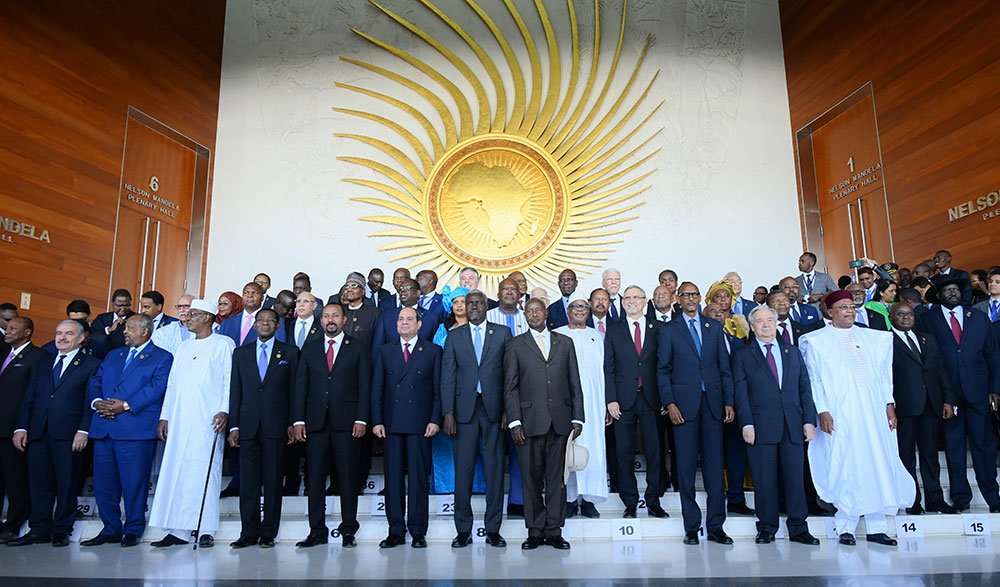
Africa’s expanding economic relations with Europe, China, Russia, India and other global powers are raising an important question about the continent’s place in an increasingly competitive international system: should African countries be free to choose their development partners according to national interests, or should their international relationships be shaped by the political preferences of powerful external governments?
The issue extends beyond diplomacy. It concerns economic sovereignty, access to technology, industrialisation, infrastructure development and Africa’s ability to determine its own development priorities without being forced into geopolitical rivalries.
African leaders have increasingly defended the right of their countries to maintain independent foreign policies and cooperate with different international partners according to their development priorities.
Tanzanian President Samia Suluhu Hassan reaffirmed this position during the Diplomatic Sherry Party on January 21, 2026, where she outlined the principles guiding Tanzania’s international engagement.
“Tanzania will therefore, not seek to take sides in a divided world but rather we will seek to build bridges that will bring the world together,” she said.
She added that the country would continue to be guided by non-alignment, non-interference in the domestic affairs of other countries, regional cooperation and multilateralism.
Her remarks reflect Tanzania’s longstanding diplomatic approach, which seeks to maintain constructive relations with different countries while protecting its national interests.
South African President Cyril Ramaphosa has also defended the principle of non-alignment. In an address on South Africa’s foreign policy ahead of the 2023 BRICS Summit, he said: “We have resisted pressure to align ourselves with any one of the global powers or with influential blocs of nations.”
Ramaphosa explained that the experience of the Cold War had demonstrated how alignment with major powers could undermine the stability and sovereignty of African countries.
“This experience has convinced us of the need to seek strategic partnerships with other countries rather than be dominated by any other country,” he said.
His position highlights an important distinction between international cooperation and political alignment. African countries can pursue investment, trade and technology partnerships without accepting external pressure to adopt the geopolitical positions of their partners.
The argument was similarly advanced by former Malawian President Lazarus Chakwera when he addressed the 42nd Southern African Development Community Summit in Kinshasa in August 2022.
“There is no one outside Africa who is coming to build Africa the way we want it to be built. Not the Americans. Not the Europeans. Not the Asians,” Chakwera said.
He argued that African countries needed to mobilise their own resources and strengthen cooperation among themselves instead of expecting external powers to finance the continent’s development.
These statements reflect a broader continental ambition outlined in the African Union’s Agenda 2063. Its seventh aspiration envisions Africa as a strong, united, resilient and influential global player with a significant role in international affairs. It also calls for strategic partnerships to respond more effectively to African development priorities and for the continent to take greater responsibility for financing its own development.
Also Read: Tanzania Must Resolve Political Differences Through Dialogue
Tanzania provides a practical example of this diplomatic approach. Its Foreign Policy 2001, 2024 Edition, officially published in May 2025, identifies the protection of sovereignty, territorial integrity and political independence among the country’s guiding principles. It also emphasises economic diplomacy, non-alignment, South-South cooperation and African unity.
The policy does not exclude cooperation with Western countries or traditional development partners. Rather, it seeks to broaden Tanzania’s international engagement while ensuring that external relations advance national interests.
China illustrates the scale of these opportunities. According to China’s Ministry of Foreign Affairs, bilateral trade between China and Tanzania reached US$11.279 billion in 2025, an increase of 27 per cent from the previous year. Cooperation extends across infrastructure, trade, investment, education, healthcare and digital development.
India is another important partner. Figures published by the Indian High Commission in Dar es Salaam show that bilateral trade reached US$9.02 billion in the 2025–26 financial year. Indian investments in Tanzania amounted to US$4.74 billion in calendar year 2025, according to figures attributed to the Tanzania Investment and Special Economic Zones Authority.
Europe also remains a major economic partner for Africa. The European Union describes itself as the continent’s leading trading and investment partner, with European investors holding Africa’s largest foreign direct investment stock. Through initiatives such as Global Gateway, the EU has positioned itself as a significant partner in infrastructure, energy and digital development.
Russia has also pursued cooperation with African countries in areas including energy, mining, agriculture, education and industrial development. The 2025 Russia-Africa ministerial conference declaration identified manufacturing, transport, renewable energy, pharmaceuticals, professional training and technology transfer as potential areas for expanding cooperation.
These relationships demonstrate that Africa has several potential sources of investment, technology and markets. However, having multiple partners does not automatically translate into economic independence. Diversification only strengthens negotiating power when African governments possess the institutional capacity to evaluate agreements, protect public interests and demand tangible benefits.
The central question should therefore be what African countries gain from each partnership. Governments need to examine whether projects create sustainable employment, strengthen local businesses, transfer technical skills, support domestic manufacturing and increase the value retained from natural resources. Financing arrangements, debt sustainability, environmental protection and transparency must also remain central to negotiations.
Africa’s bargaining position is further weakened by limited economic integration. The African Union’s 2025 African Integration Report estimated that intra-African exports represented approximately 15 per cent of total African exports in 2023, compared with more than 60 per cent in the European Union. This gap highlights the importance of implementing the African Continental Free Trade Area, reducing trade barriers and developing infrastructure connecting African markets.
A more integrated continental economy would give African producers access to larger markets and governments greater collective negotiating power when engaging international investors.
Tanzania’s Development Vision 2050 similarly provides an opportunity to connect international cooperation with industrialisation, innovation, human capital development and sustainable prosperity. Achieving these ambitions requires partnerships that strengthen domestic productive capacity rather than simply expand imports or dependence on external financing.
Ultimately, Africa does not need to choose between Europe, China, Russia, India or other international partners. It needs the economic strength, institutional confidence and collective bargaining power to engage with all of them on mutually beneficial terms.
The real test of international cooperation is not which global power becomes Africa’s closest diplomatic friend. It is whether African citizens, industries and future generations become its principal beneficiaries. Economic sovereignty must include the freedom to choose partners, negotiate agreements and determine development priorities in accordance with national and continental interests.


