
 MWE Correspondent
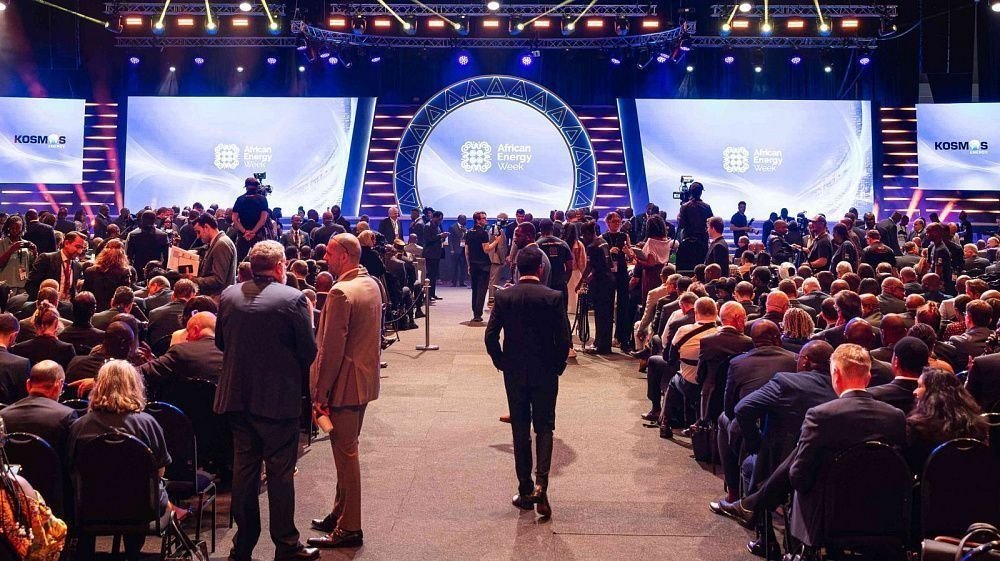
Africa’s latest push to attract energy investment has exposed a difficult question for the continent: will its natural resources finance African industrialisation, or will they continue to generate greater long-term wealth for foreign investors than for the communities that own them?
At African Energy Week 2026 in Cape Town, 15 energy projects were presented to potential investors, covering oil and gas exploration, production, infrastructure development and power generation.
Held from October 12 to 16, the forum brought together more than 12,000 participants, including government representatives, energy companies, financial institutions and technology providers. Investment commitments announced following the event exceeded US$17 billion.
Yet the scale of the financial pledges should not, by itself, be interpreted as evidence of economic transformation. The critical questions are who will finance these projects, who will control the resulting assets, where the profits will go, and how much lasting value African economies will retain after foreign investors recover their costs.
Among the proposals presented were plans to increase South Africa’s oil production from 30,000 to 80,000 barrels per day by 2029, develop heavy oil production in East Africa, and advance offshore oil and gas projects elsewhere on the continent. Other initiatives included expanding a liquefied petroleum gas storage terminal and building a 180-megawatt gas-fired power station in West Africa.
Investors were also offered exploration opportunities, including 15 oil and gas blocks in Liberia, 104 in Senegal and seven in Algeria.
These proposals may create jobs, improve energy supply and generate government revenue. However, Africa’s experience with extractive industries demonstrates why projected investment figures must be examined alongside ownership structures, fiscal terms, environmental liabilities and the actual benefits reaching local economies.
Also Read: Tanzania Pushes LNG Project Talks to Protect National Interests
The danger is that governments may celebrate capital inflows while overlooking the long-term costs attached to the contracts.
The risk of repeating Africa’s extractive trap
For decades, many African economies have exported raw commodities while importing expensive finished products, technology and industrial equipment. This pattern has limited the development of local manufacturing, technical expertise and higher-value industries, even in resource-rich countries.
Expanding oil and gas production without requiring meaningful domestic processing, local procurement and technology transfer could reproduce that imbalance.
Foreign companies may provide capital, engineering expertise and access to international markets, but those contributions do not automatically guarantee equitable outcomes. Where contracts provide excessive tax concessions, weak local-content obligations or inadequate public oversight, a country can host major energy operations while capturing only a limited share of their economic value.
For Tanzania, this issue is particularly important as the country pursues its proposed liquefied natural gas (LNG) project and seeks to expand the contribution of natural gas to national development.
Tanzania must negotiate from a position of informed strength, ensuring that commercial agreements protect public revenue, provide transparent rules for cost recovery, and establish enforceable commitments on employment, training, local suppliers and environmental protection.
The central issue is not whether Tanzania should welcome foreign investment. It is whether the country can structure that investment to build domestic capabilities rather than remain dependent on external capital, technology and expertise.