MWE Correspondent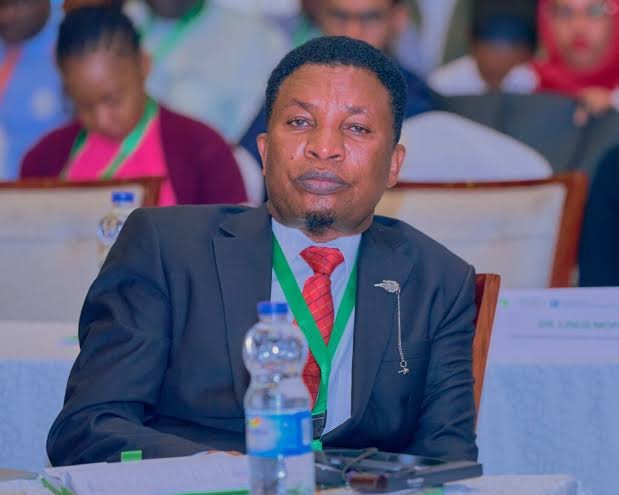
Africa must take greater control of its natural resources and strengthen its capacity to process and add value to critical minerals on the continent, Executive Director of the Pan African Climate Justice Alliance (PACJA), Dr Mithika Mwenda, has said.
Speaking to Sputnik Africa, Mwenda argued that although Africa is endowed with abundant deposits of critical minerals, many African countries still have limited control over their extraction, processing and value chains.
He said the continent needs to move beyond simply exporting raw materials and instead develop industries capable of processing minerals locally, creating jobs, generating government revenues and supporting industrial development.
Mwenda’s remarks come as competition for critical minerals intensifies globally. Minerals such as cobalt, lithium, graphite, nickel, manganese and rare earth elements are increasingly important for batteries, renewable energy technologies, electric vehicles, electronics and other strategic industries.
Africa possesses significant reserves of several of these resources, placing the continent at the centre of growing international interest in critical mineral supply chains.
However, the challenge for African countries is not simply the availability of minerals but who controls their extraction, processing, financing, technology and markets.
Mwenda said the issue of resource control has been recognised in major African policy declarations, including the Addis Ababa and Nairobi declarations, which emphasise the need for African countries to strengthen ownership and value addition around the continent’s natural resources.
He argued that Africa needs stronger cooperation among countries to ensure that mineral wealth translates into sustainable economic development rather than continuing to reinforce the export of unprocessed commodities.
The call comes at a time when governments across Africa are increasingly introducing policies aimed at encouraging domestic mineral beneficiation and local processing.
Also Read: Kikwete Inspects Safer Communities Project In Tabora
The global transition towards cleaner energy has significantly increased attention on Africa’s mineral resources.
Critical minerals are essential components in technologies used in renewable energy, electric vehicles, energy storage and advanced manufacturing. This has created an opportunity for resource-rich African countries to attract investment and establish new industries around their mineral deposits.
Yet analysts and African policymakers have repeatedly warned that simply increasing mineral extraction will not automatically deliver broad economic benefits.
Without adequate processing facilities, infrastructure, technology, financing and skilled labour, African economies risk remaining suppliers of raw materials while much of the higher-value manufacturing takes place elsewhere.
The African Union and regional economic blocs have therefore increasingly promoted mineral value addition, local beneficiation and stronger African participation in global mineral supply chains.
The issue is also closely connected to climate justice. African countries contribute relatively little to historical global greenhouse-gas emissions compared with major industrialised economies, yet many are rich in the minerals required for the global energy transition.
This has generated calls for a transition that does not reproduce older patterns in which Africa exports natural resources while importing higher-value finished products.
Mwenda’s comments underline a growing debate over whether Africa can turn its mineral endowment into an engine for industrialisation.
Countries across the continent are exploring ways to establish processing plants, improve geological information, negotiate stronger mining agreements and increase local content requirements.
For Africa to gain greater economic value from its resources, experts say governments will need to coordinate mineral policies, invest in reliable electricity and transport infrastructure, strengthen technical skills and develop regional processing corridors.
Such measures could enable neighbouring countries to share processing facilities and markets rather than competing individually for investment.
The challenge will be ensuring that increased control over natural resources also produces tangible benefits for local communities through employment, infrastructure, environmental protection and public revenue.
As global demand for critical minerals continues to grow, the question facing Africa is increasingly shifting from whether the continent has the resources to whether it can control and capture a larger share of the value generated from them.