
 Hassan Magulumali
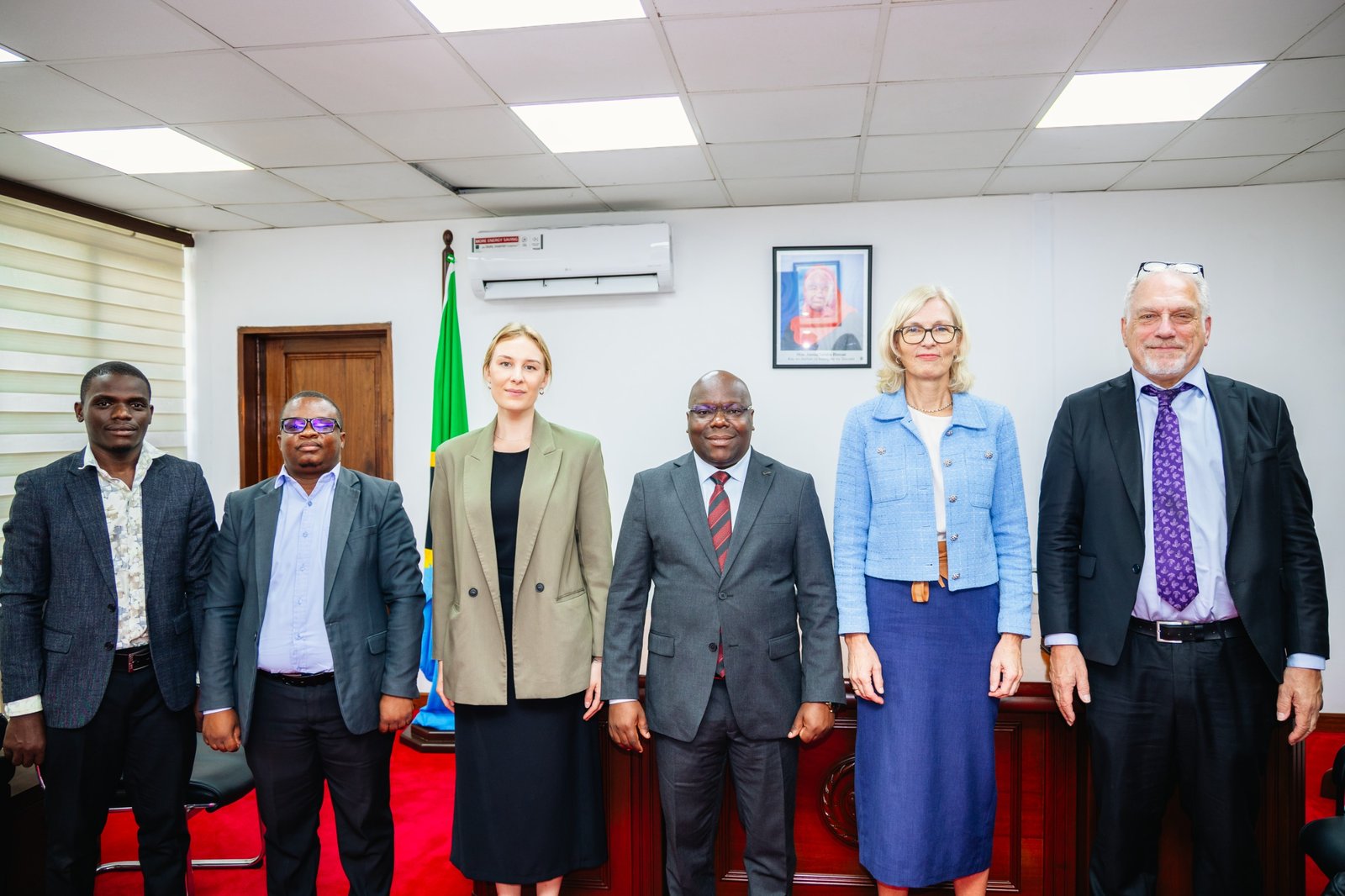
Tanzania and Norway are seeking to deepen cooperation in the energy sector, focusing on investment, infrastructure development, technology transfer, professional training and sustainable energy to strengthen the country’s energy security and support economic growth.
Tanzania’s Minister for Energy, Juma Zuberi Homera, said the two countries were exploring opportunities to expand collaboration across electricity generation, transmission, renewable energy, natural gas and clean cooking technologies.
Homera made the remarks on November 20, 2026, during a meeting with Norway’s Ambassador to Tanzania, Tone Tinnes, at the Ministry of Energy’s offices in Dar es Salaam.
He said Tanzania valued its more than 50 years of cooperation with Norway, which has contributed to the development of energy infrastructure, institutions and human resources through financial, technical and institutional support.
Among the historical contributions, Homera highlighted feasibility studies conducted during the 1970s and 1980s for the Stiegler’s Gorge hydropower project, which helped lay the groundwork for the Julius Nyerere Hydropower Project (JNHPP), with an installed capacity of 2,115 megawatts.
He also cited cooperation associated with the Mtera Hydropower Plant, which has a capacity of 80MW, and the Kihansi Hydropower Plant, with 180MW.
The minister further highlighted educational and professional development programmes, including the Norad Fellowship Programme and cooperation between the University of Dar es Salaam (UDSM) and the Norwegian University of Science and Technology (NTNU).
He said the partnership had also supported skills development among energy professionals, including efforts to increase the participation of women in engineering.
Also Read: Tanzania Orders Probe into Cracks on Tanga-Pangani Road
Homera said the government, under President Samia Suluhu Hassan, was pursuing ambitious energy targets, including achieving universal electricity access by 2030, expanding clean cooking access to 75 per cent and increasing the contribution of renewable energy to electricity generation to 75 per cent within the same period.
To achieve these targets, he invited Norwegian companies to explore investment opportunities in Tanzania through Public-Private Partnerships (PPPs), Independent Power Producer (IPP) arrangements and Engineering, Procurement, Construction and Financing (EPC+F) models.
He identified potential investment areas including electricity generation, transmission infrastructure, grid modernisation, energy storage systems and technologies that facilitate the integration of renewable energy into the national electricity network.
In the oil and natural gas sector, Tanzania proposed stronger cooperation in exploration, production, transportation and distribution, as well as expanding the use of Compressed Natural Gas (CNG) and developing petrochemical industries.
The minister also called for greater collaboration in local content development, technology transfer and professional training, while emphasising environmental protection and measures to reduce methane emissions from oil and gas operations.
Geothermal energy was another area identified for cooperation, particularly in resource assessments, feasibility studies, investment and technical training to help Tanzania diversify its electricity generation sources.
On clean cooking, Homera said the ministry was preparing a programme to train 1,840 young people from 184 local government authorities in the production of improved cookstoves.
The government is also preparing financing arrangements to enable the trained young people to establish and expand businesses in the clean cooking sector.
Norway’s Ambassador, Tone Tinnes, reaffirmed her country’s commitment to continued cooperation with Tanzania, saying Norway would maintain its engagement through financing and investment in electricity projects, renewable energy, oil and natural gas.
She also highlighted opportunities for cooperation in industrial development and technology transfer.
The renewed engagement comes as Tanzania seeks to expand electricity generation, improve access to reliable power and diversify its energy mix to meet growing demand from households, industries and commercial activities.
Norway brings experience in hydropower development, renewable energy technologies and petroleum-sector management, areas that could provide opportunities for technical cooperation and investment as Tanzania advances its long-term energy development ambitions.