
 MWE Correspondent
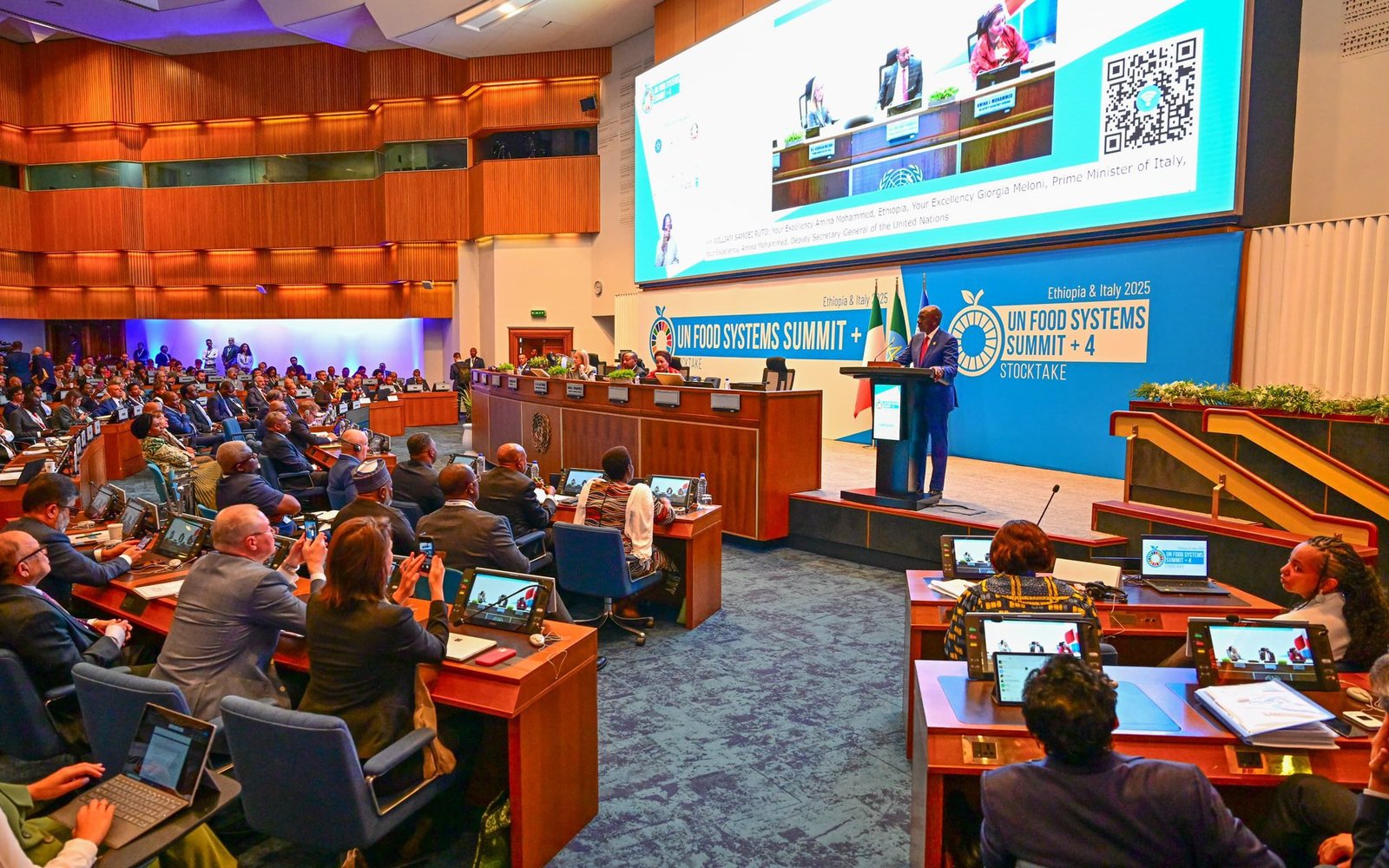
Kenyan President William Ruto has called on African countries to reduce their dependence on imported food, arguing that the continent has sufficient land, agricultural resources and human capital to feed its growing population and become a major global food producer.
Speaking on November 16, 2026, during the opening of the Third Global Parliamentary Summit Against Hunger and Malnutrition in Nairobi, Ruto questioned why Africa continues to spend more than $100 billion annually on food imports despite its vast agricultural potential.
He said the continent’s challenge was not a shortage of productive land or people willing to work, but inadequate investment in agriculture, limited access to affordable financing, insufficient irrigation infrastructure and weaknesses in food processing and distribution systems.
Ruto urged African governments to prioritise domestic food production, strengthen agricultural value chains and create better opportunities for farmers and young people, noting that the continent should not continue importing products it has the capacity to produce locally.
He also called on parliamentarians to move beyond political declarations and translate food security commitments into practical policies, legislation and adequate budget allocations.
According to Ruto, legislators have a critical responsibility to ensure that governments allocate sufficient resources to agricultural development, strengthen accountability and implement policies that improve access to nutritious and affordable food.
Also Read: DR Congo Launches Gold Refinery in Kalemie
The Kenyan president further highlighted the importance of regional agricultural trade, particularly through the African Continental Free Trade Area (AfCFTA), saying stronger cooperation among African countries could expand markets for farmers, encourage local processing and reduce dependence on food supplies from outside the continent.
He also outlined Kenya’s agricultural transformation initiatives, including plans to expand irrigation, improve access to subsidised fertiliser and strengthen the country’s school feeding programme.
The government intends to expand school meals to reach 10 million learners across all 47 counties by 2030, linking the programme to local agricultural production to provide farmers with reliable markets while improving children’s nutrition.
The two-day summit, running from November 16 to 17, has brought together parliamentarians, international organisations and development partners to discuss legislative and financial approaches to ending hunger and malnutrition.
Organised jointly by the Kenyan Parliament, the Food and Agriculture Organization of the United Nations (FAO) and the Spanish Agency for International Development Cooperation, the gathering is being held in Africa for the first time.
The meeting builds on previous summits held in Madrid, Spain, in 2018 and Valparaíso, Chile, in 2023, and seeks to strengthen parliamentary cooperation in developing resilient and sustainable food systems.
According to the FAO, approximately 645 million people worldwide experienced hunger in 2025, while 2.7 billion people could not afford a healthy diet, highlighting the scale of the global food security challenge.
The summit is expected to strengthen commitments towards achieving the United Nations Sustainable Development Goal 2, which seeks to end hunger, achieve food security, improve nutrition and promote sustainable agriculture by 2030.


