
 MWE Correspondent
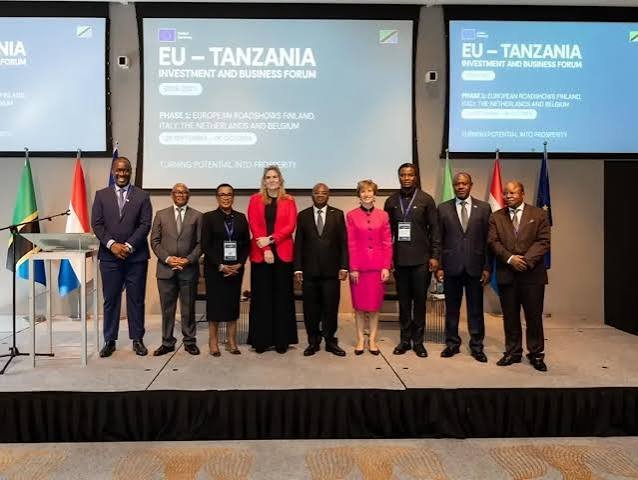
The European Union’s €156 million development programme for Tanzania has exposed growing differences between Brussels and Dodoma over democracy, human rights and the conditions governing international cooperation. However, developments since the European Parliament objected to the funding proposal in June 2026 show that the dispute did not end with a suspension of the money. Instead, the EU eventually approved the allocation while changing how much of the programme would be channelled through Tanzanian government systems.
The disagreement began against the background of concerns raised by European lawmakers over Tanzania’s political and human-rights situation following the October 29, 2025 general election. The European Parliament questioned the Commission’s proposed financing, arguing that its earlier concerns over democracy, political freedoms and accountability for reported violence had not been adequately addressed.
On June 18, 2026, the European Parliament adopted a resolution asking the European Commission to withdraw its proposed financing decision and submit a revised plan. The resolution also called for any changes to protect basic services, human rights, democracy and support for civil society organisations.
The parliamentary position was not simply an objection to development assistance for Tanzania. It reflected a wider debate within European institutions about whether public funding should continue under the same arrangements when serious concerns about governance and fundamental rights remain unresolved.
The European Parliament’s position also needs to be understood within the EU’s institutional structure. Parliament has a role in scrutinising EU spending and can object to certain implementing decisions, but the European Commission is responsible for implementing the bloc’s development cooperation programmes. Consequently, the parliamentary resolution and the Commission’s subsequent financing decision were separate stages of the process.
Tanzania’s government responded by rejecting what it described as misleading interpretations of the parliamentary vote. In a statement issued on June 19, 2026, through the Ministry of Foreign Affairs and East African Cooperation, the government said the resolution was not the European Union’s final decision and did not automatically suspend ongoing or planned partnership programmes.
The government also maintained that some claims in the resolution did not accurately reflect developments in Tanzania or the measures taken following the October 2025 events. It said it had provided explanations to European lawmakers before the vote and regretted that its position had not been adequately considered.
An important part of Tanzania’s response concerned the structure of the proposed funding. The government said only €17 million of the €156 million package had been intended to pass directly through government systems, while approximately €139 million was earmarked for implementation through EU institutions, agencies of member states and civil society organisations.
Also Read: Traore Demands Results From Russia-Africa Partnership
The dispute nevertheless continued to affect the programme’s approval process. In July 2026, the European Commission proceeded with the financing decision, making the full €156 million allocation available for implementation. The EU’s Head of Cooperation in Tanzania and the East African Community, Marc Stalmans, subsequently confirmed the decision to Tanzania, while emphasising that approval did not mean the entire amount had already been disbursed.
The revised financing arrangements are particularly significant. According to documents, the 2026 Annual Action Plan authorises €129 million for mineral and agricultural value chains, €20 million for digital economy and connectivity, and €7 million for a cooperation facility.
However, the programme does not restore direct EU budget support to the Tanzanian government. The European Commission’s approach shifts implementation towards other partners and mechanisms, including private-sector and non-government channels. The action plan also states that ongoing budget-support programmes have been discontinued and that new ones will not be introduced in the foreseeable future.
This distinction is important because approval of the €156 million does not mean Tanzania will receive the money as unrestricted government revenue. The funding is intended for specific development activities, with implementation and disbursement subject to the relevant agreements and procedures.
The programme also reflects the economic interests of both sides. Its priorities include agricultural productivity, mineral processing, digital infrastructure, investment and stronger value chains. These areas are relevant to Tanzania’s ambitions for industrialisation, employment creation and greater domestic value addition. At the same time, the EU’s Global Gateway strategy seeks to expand investment links between Europe and partner countries, meaning the cooperation serves both development and commercial objectives.
For Tanzania, the challenge is to ensure that these investments generate measurable benefits for local businesses, workers and communities, particularly through technology transfer, skills development and stronger participation by domestic companies.
The disagreement also raises a broader question about the relationship between development assistance and political conditions. The EU maintains that its external cooperation must reflect its legal commitments to human rights, democracy and the rule of law. Tanzania, meanwhile, has emphasised its sovereignty and the importance of mutual consultation in managing bilateral relations.
Neither position removes the need for accountability. Development partners have a responsibility to ensure that public resources are used transparently and reach intended beneficiaries. Equally, funding decisions should be communicated clearly so that political disagreements do not create unnecessary uncertainty for communities and businesses depending on development programmes.
Ultimately, the €156 million dispute has not resulted in the cancellation of the entire package. It has, however, changed the context in which EU support is delivered. The central question now is whether the revised arrangement can produce tangible development outcomes while allowing Tanzania and the EU to address their political differences through constructive engagement.


