Agencies
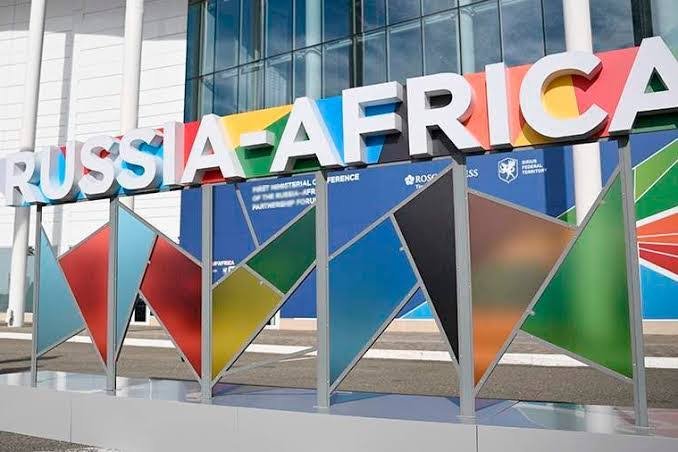
The third Russia-Africa Summit in Moscow has established a new framework for expanding cooperation in energy, agriculture, trade, education and artificial intelligence, as African countries seek investment and technology to accelerate industrialisation and strengthen economic independence.
The two-day summit, held on October 28–29, 2026, brought together representatives from 48 African countries, including 22 represented by heads of state or government. It concluded with the adoption of three major documents: the final summit declaration, the Russia-Africa Partnership Forum Action Plan for 2027–2029 and a declaration on cooperation in the civilian use of artificial intelligence.
The agreements provide a framework for the next phase of relations between Moscow and African countries, with an emphasis on translating diplomatic commitments into practical economic cooperation.
One of the major priorities is energy security, an area where many African economies continue to face challenges involving electricity shortages, limited generation capacity and inadequate infrastructure.
Russia has offered cooperation in conventional energy, renewable power and peaceful nuclear technology. Nuclear energy attracted particular attention during the summit, with Russian state nuclear corporation Rosatom expressing interest in developing projects suited to the different energy requirements of African countries.
According to Reuters, Rosatom chief executive Alexei Likhachev said Russia was discussing large nuclear power plant projects with Uganda, Ghana, Ethiopia and Egypt. He also reported detailed discussions concerning floating nuclear power plants with Egypt, Tanzania, Togo and Namibia.
For Tanzania, the discussions could create opportunities to explore alternative electricity-generation technologies as the country pursues its long-term industrialisation and energy development ambitions. However, the reported discussions should not be interpreted as a concluded agreement to construct a nuclear power plant.
Food security was another important issue, reflecting Africa’s vulnerability to international supply disruptions, rising agricultural production costs and dependence on imported fertilisers and food commodities.
Russia is a significant supplier of wheat and fertilisers to African markets. The new cooperation framework seeks to expand agricultural technology exchanges, improve agricultural productivity, support irrigation and develop drought-resistant crop varieties.
Such cooperation could be particularly important for African countries seeking to increase domestic food production while strengthening agricultural processing and distribution systems.
Read More:Traore Demands Results From Russia-Africa Partnership
Rather than concentrating exclusively on the supply of agricultural commodities, the partnership also creates opportunities for cooperation in research, modern farming equipment, seed development and food-processing industries.
Technology and artificial intelligence represent another expanding area of cooperation. The summit adopted a separate declaration on civilian AI applications, highlighting the importance of digital innovation, scientific research and specialist training.
The proposed cooperation includes developing African expertise in machine learning, data analysis and cloud technologies, alongside opportunities for joint research and technology transfer.
For African countries, the significance of these initiatives will depend on whether they strengthen local technological capabilities rather than create new dependence on foreign software, equipment and technical services.
The 2027–2029 action plan also places emphasis on industrial cooperation, including mineral processing, metallurgy, fertiliser production and medical technologies. This is particularly relevant to Africa, which possesses significant deposits of critical minerals but continues to export substantial quantities of raw materials without capturing sufficient value through domestic processing.
Expanding industrial cooperation could help African countries develop manufacturing capacity, create employment and retain a greater share of the economic benefits generated from their natural resources.
Education, healthcare and scientific research are also included in the broader cooperation agenda, with opportunities for academic exchanges, professional training and collaboration between universities and research institutions.
The African Union Commission’s Chairperson, Mahmoud Ali Youssouf, and Russian Foreign Minister Sergey Lavrov also signed an AU Commission-Russia Action Plan for 2027–2029 on October 28, covering 19 areas of cooperation.
The continental framework is significant because it provides an institutional channel through which African priorities can be discussed collectively rather than relying exclusively on separate bilateral negotiations.
Trade expansion is another major objective. Russian officials have reported that trade between Russia and African countries exceeded $27 billion in 2025, while President Vladimir Putin has called for increasing the figure to $50 billion.
The summit declaration also calls for reducing trade barriers, increasing investment, expanding exports of value-added African products and improving transport and logistics connections.
However, the success of these commitments will depend on financing, implementation capacity and the ability of African businesses to access the Russian market. African governments will also need to ensure that investment agreements provide transparent terms, local employment opportunities and meaningful technology transfer.
The summit’s broader message is that cooperation should move beyond diplomatic engagement towards economic activities capable of delivering measurable development benefits.
For Africa, the opportunity is not simply to attract another international development partner, but to use international cooperation to strengthen domestic production, improve technological capacity and reduce economic vulnerabilities.
The 2027–2029 action plan provides a foundation for this ambition, but its real value will be measured by the projects implemented, technologies transferred, industries established and opportunities created for African citizens