
 MWE Correspondent
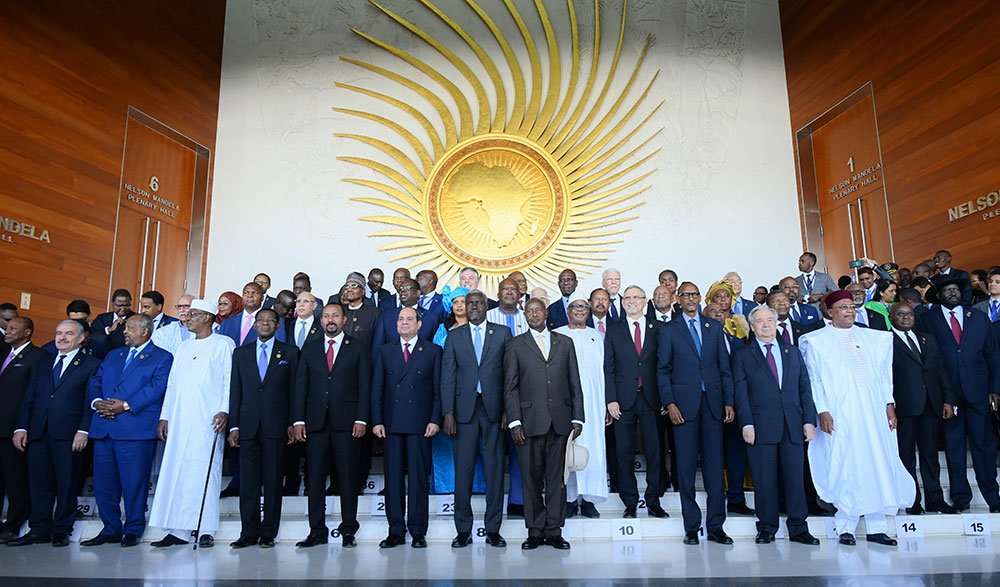
Africa‘s growing economic engagement with Europe, China, Russia, India and other global powers is renewing an important question about the continent’s position in international relations: should African countries be free to choose their development partners according to their national interests, or should those relationships be influenced by the political preferences of powerful external governments?
The question goes beyond diplomatic relations. It concerns economic sovereignty, access to technology, infrastructure development, trade, investment and Africa’s ability to determine its own development priorities in an increasingly competitive international environment.
For African countries, international partnerships remain essential. The continent needs investment in energy, transport, agriculture, manufacturing, healthcare, education and digital infrastructure. However, the central challenge is ensuring that cooperation with external partners strengthens domestic economic capacity rather than creating new forms of dependency.
The African Union’s Agenda 2063 provides an important framework for this approach. It envisions an integrated, prosperous and influential Africa capable of determining its own future. Its seventh aspiration specifically calls for Africa to become a strong, united and influential global player, while emphasising the importance of strategic partnerships and greater responsibility for financing the continent’s development.
This vision suggests that Africa should not approach international relations as a competition in which it must permanently align itself with one geopolitical bloc. Instead, partnerships should be evaluated according to their contribution to African priorities, including industrialisation, employment creation, technology transfer, infrastructure and economic diversification.
Tanzania offers a practical example of how this approach can work. Its Foreign Policy 2001 (2024 Edition), officially published in May 2025, identifies national sovereignty, political independence, African unity, economic diplomacy, non-alignment and South-South cooperation as important principles guiding international engagement.
The policy does not reject cooperation with Western countries or traditional development partners. Rather, it seeks to expand Tanzania’s ability to work with different countries and international institutions while protecting its national interests.
The country’s engagement with China illustrates this strategy. Diplomatic relations between Tanzania and China date back to April 1964, and the relationship was elevated to a comprehensive strategic cooperative partnership in 2022. According to China’s Ministry of Foreign Affairs, bilateral trade reached $11.279 billion in 2025, representing an annual increase of 27 per cent. Cooperation covers infrastructure, agriculture, education, healthcare, digital development and investment.
India is another significant economic partner. According to India’s High Commission in Dar es Salaam, bilateral trade reached $9.02 billion in the 2025–26 financial year, while Indian investments in Tanzania amounted to $4.74 billion in calendar year 2025, based on figures from Tanzania’s investment authority.
Read More: Tanzania-EU Funding Dispute Tests Partnership
Europe also remains important. The European Union is collectively Africa’s largest trading partner and holds the continent’s largest foreign direct investment stock. Its investments cover industries including agriculture, infrastructure, services and natural resources. Through its Global Gateway initiative, the EU has also positioned itself as a major partner in infrastructure, energy and digital development.
Russia, meanwhile, has developed cooperation with African countries in areas including energy, mining, education, agriculture and nuclear technology. Its engagement has also expanded through the Russia-Africa summit framework. However, individual agreements must be assessed according to their commercial viability, financing arrangements and long-term benefits rather than diplomatic declarations alone.
These relationships demonstrate that Africa has multiple potential sources of investment, technology and markets. The challenge is to turn that diversity into stronger negotiating power.
Nevertheless, diversification does not automatically guarantee economic independence. Partnerships with any external power can produce unequal outcomes when African countries negotiate from weak institutional positions, lack technical expertise or accept agreements without sufficient public scrutiny.
The experience of Africa’s international economic relations therefore raises important questions about transparency, debt sustainability, local employment, technology transfer and the ownership of strategic resources.
A foreign investment project should not be judged simply by the amount of money announced or the nationality of the investor. Its value should also be measured by the number of sustainable jobs created, opportunities for local businesses, skills transferred to African workers, infrastructure developed and the extent to which African economies retain value from their natural resources.
There is also a broader continental challenge. Africa cannot achieve meaningful economic sovereignty while remaining heavily dependent on external markets and struggling to trade effectively within its own borders.
The African Union’s 2025 African Integration Report indicated that intra-African exports represented approximately 15 per cent of total African exports in 2023, compared with more than 60 per cent in the European Union. This illustrates why strengthening the African Continental Free Trade Area (AfCFTA) is essential. A more integrated African market would improve the continent’s bargaining position and enable local industries to benefit from larger markets.
The international competition for Africa’s resources, markets and strategic partnerships should therefore be viewed as an opportunity, provided African governments negotiate from clearly defined national and continental priorities.
Tanzania’s Development Vision 2050 similarly provides an opportunity to connect international cooperation with industrialisation, innovation, human capital development and sustainable prosperity. Achieving these ambitions will require partnerships that strengthen domestic productive capacity rather than simply increase imports or dependence on external financing.
Ultimately, Africa does not need to choose between Europe, Russia, China, India or other international partners. It needs the economic capacity, political confidence and institutional strength to engage with all of them on mutually beneficial terms.
The question is not which global power should become Africa’s preferred friend. It is whether African countries can build partnerships in which their citizens, industries and future generations are the principal beneficiaries.
Africa’s sovereignty must include the freedom to choose its economic partners, negotiate its agreements and determine its development priorities without external pressure. Equally, that freedom must be accompanied by accountability, transparency and respect for international law.