MWE Correspondent
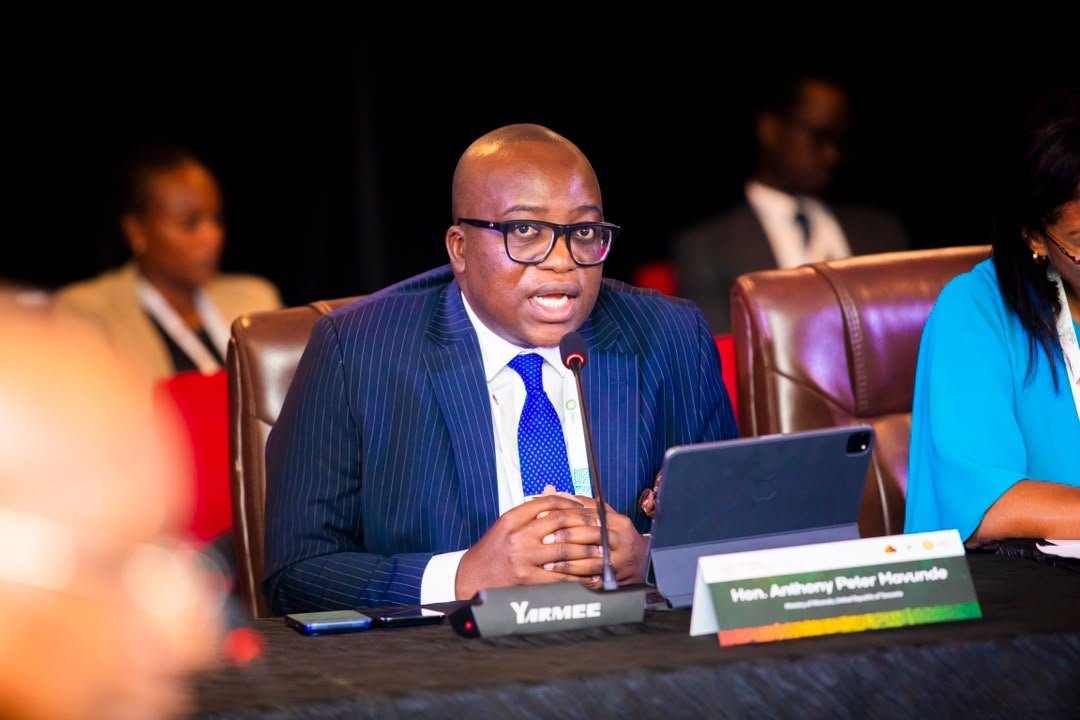
Tanzania’s Minister for Minerals, Anthony Peter Mavunde, has called on African countries to use domestic revenues and financial resources to fund mineral exploration, processing and refining, urging governments to reduce dependence on foreign donors and build stronger industrial economies.
Mavunde made the call on October 20, 2026, while chairing a ministerial meeting during the Mining in Motion 2026 conference in Accra, Ghana. The meeting, held under the theme “Financing Africa’s Mineral Future – From Exploration to Refining,” brought together African leaders to discuss ways of mobilising investment across the continent’s mineral value chain.
He stressed that Africa must strengthen its capacity to finance strategic mining projects using locally generated resources, supported by sound policies, political commitment and cooperation between governments, financial institutions and private investors.
Using Tanzania as an example, Mavunde highlighted the government’s decision to allocate 10 per cent of revenue collected from the mining sector to detailed geological exploration. The initiative aims to improve knowledge of the country’s mineral resources, identify new deposits and expand opportunities for future investment.
He said only about 16 per cent of Tanzania’s land area had undergone detailed geological exploration, suggesting that significant opportunities remain to discover and develop additional mineral resources.
Mavunde credited President Samia Suluhu Hassan’s commitment to financing geological exploration through domestic mining revenues as an important step towards reducing reliance on donor funding and strengthening Tanzania’s ability to identify and manage its natural resources.
He also emphasised that financing the mining sector should extend beyond exploration and extraction to include mineral processing, refining and the establishment of industries that manufacture higher-value products.
Also Read: Oil Prices Surge as Middle East Tensions Escalate
According to Mavunde, investing in these stages could create employment, develop technical skills, expand domestic businesses and increase export earnings by enabling African countries to sell processed mineral products rather than relying predominantly on raw mineral exports.
The issue is particularly important for Africa, which possesses substantial deposits of minerals used in construction, manufacturing, electronics and the global energy transition. However, limited access to affordable financing, inadequate infrastructure, unreliable energy supplies and insufficient processing capacity continue to constrain the continent’s ability to capture greater economic benefits from its resources.
By strengthening domestic financing mechanisms and investing in mineral-based industries, African governments could retain a larger share of the value generated from their natural resources while creating opportunities for local manufacturers and skilled workers.
Mavunde further highlighted Tanzania’s local content policy as a mechanism for increasing the participation of Tanzanian companies in mining operations. The policy seeks to expand opportunities for local suppliers to provide goods and services to mining companies, allowing more mining-related expenditure to circulate within the domestic economy.
He said developing local manufacturing capacity and improving the competitiveness of Tanzanian businesses would help citizens benefit more directly from the sector’s growth.
The ministerial discussions also examined public-private partnerships, innovative financing arrangements and infrastructure investment as potential solutions to the capital challenges facing mining projects. Regional cooperation and opportunities under the African Continental Free Trade Area (AfCFTA) were identified as important tools for expanding markets and developing mineral value chains across national borders.
Through AfCFTA, African countries have an opportunity to strengthen regional trade, attract investment into processing facilities and build industrial networks that connect mineral-producing countries with manufacturers and consumers across the continent.
Ghana’s Minister for Lands and Natural Resources, Emmanuel Armah-Kofi Buah, also called for stronger cooperation among African countries to address financing shortages, infrastructure gaps and energy constraints affecting the mining industry.
Buah emphasised the need for a coordinated continental strategy that would strengthen Africa’s position in investment negotiations, encourage mineral processing industries and protect the interests of communities living near mining operations.
The meeting underscored a broader challenge facing Africa: possessing valuable mineral resources does not automatically translate into industrial development or widespread prosperity.
For Tanzania and other African economies, the long-term benefits of mining will depend not only on the volume of minerals extracted but also on how effectively governments mobilise financing, develop local expertise, build processing industries and ensure that mining revenues support broader economic transformation.
Mavunde said sustained political commitment, stronger domestic financing capacity and regional collaboration would be essential to making the mining sector a driver of industrialisation, employment and sustainable development across Africa.