MWE Correspondent
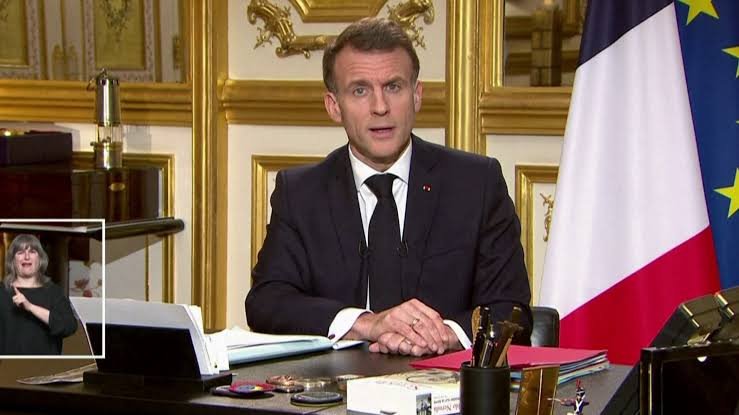
French President Emmanuel Macron has linked rising fuel prices and public anger in France to the war involving the United States, Israel and Iran, saying the economic consequences of a conflict in which France did not participate are being felt by ordinary citizens.
Speaking in a televised address on October 18, 2026, Macron acknowledged that concerns over the rising cost of living and fuel prices were legitimate, while condemning violence, looting and the destruction of public property during nationwide demonstrations.
Macron said peaceful protesters should not be confused with individuals responsible for vandalism and other criminal acts, stressing that economic hardship had contributed to growing frustration among French citizens.
The protests, which intensified on October 17, brought together students, workers, trade union members and other demonstrators concerned about living costs, education conditions and the country’s economic outlook. Some demonstrations escalated into clashes with police, looting and attacks on public buildings.
Macron argued that the rise in fuel prices was connected to the wider conflict in the Middle East, particularly the disruption of oil transportation following military action against Iran and tensions surrounding the Strait of Hormuz.
The strategic waterway is one of the world’s most important oil transit routes, connecting the Persian Gulf with international shipping lanes. Disruptions to shipping through the strait can affect global oil supplies, increase transportation costs and push up fuel prices in countries that depend on imported energy.
Also Read: Tanzania Orders Strict Fertiliser Price Enforcement
France has not participated in the US-Israeli military campaign against Iran, but Macron has warned that the economic consequences of the conflict are affecting European households and businesses.
The French government has also faced pressure to respond to rising living costs, with demonstrators demanding measures to protect purchasing power, improve public services and address concerns about education funding.
The unrest has created a difficult challenge for Macron’s administration, which must respond to legitimate public grievances while maintaining public order and protecting businesses and public institutions.
In response to the wider energy crisis, Macron convened a meeting of G7 leaders on October 2 to coordinate efforts to ease pressure on global fuel prices. The leaders agreed to work towards restoring freedom of navigation through the Strait of Hormuz, increase refinery production and release up to 100 million barrels of strategic oil and refined-product reserves over four months.
The measures were intended to improve supply and reduce pressure on energy markets, although their impact on retail fuel prices would depend on developments in the conflict, global demand and the recovery of oil transportation.
The protests in France also reflect broader concerns about the cost of living across Europe, where higher energy prices can affect transport, food production, manufacturing and household expenditure.
For France, the challenge extends beyond fuel prices. Student concerns about school conditions, shortages of teachers and educational opportunities have contributed to the demonstrations, creating a wider debate about public spending and the government’s economic priorities.
Macron’s remarks underline how an international conflict can generate domestic political consequences far beyond the battlefield. While the French government continues to call for stability and a coordinated international response to the energy crisis, protesters are demanding practical measures to ease the financial pressure on households.
The situation remains a test of the government’s ability to address economic grievances, maintain public order and limit the impact of the Middle East conflict on the French economy.