MWE Correspondent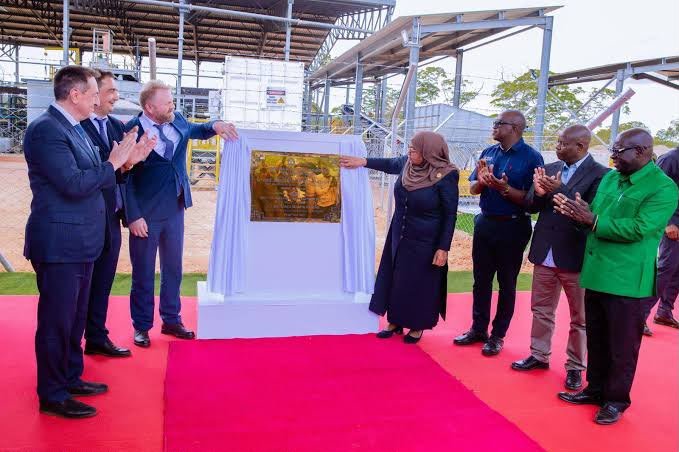
Tanzania is increasingly looking to nuclear energy as a possible source of long-term electricity, with Russia emerging as a major potential technology partner. But behind the promise of reliable power and industrialisation lies a difficult question: could dependence on Russian nuclear technology create a new strategic vulnerability for Tanzania and Africa?
In June 2026, President Samia Suluhu Hassan said Tanzania was interested in small nuclear power plants and that Russia’s Rosatom was already discussing the possibility of developing such a project with the country.
The proposal comes as Tanzania explores nuclear energy as part of a broader strategy to expand its electricity supply and support industrial development. The government has also been working with the International Atomic Energy Agency (IAEA) on the peaceful use of nuclear technology, including preparations for the possible future introduction of nuclear power.
For Tanzania, the attraction is understandable. Nuclear power can provide large amounts of continuous electricity and could potentially support energy-intensive industries, mining, manufacturing and other economic activities that require reliable power.
Once a country builds a nuclear power system around a particular foreign supplier, that relationship can last for decades. The technology, fuel, maintenance, specialist training, spare parts and technical support can create a long-term dependency on the original supplier.
Russia already has a significant role in Tanzania’s nuclear ambitions. Rosatom-backed companies are involved in the Mkuju River uranium project, where a pilot uranium processing facility was commissioned in 2025. Tanzania is also exploring the development of its nuclear power capability while following the IAEA’s recommended milestones approach.
The danger is that Tanzania could eventually find itself connected to Russia across the entire nuclear value chain—from uranium resources and technology to reactor construction, fuel and technical services.
That could give Tanzania access to technology, but it could also make the country heavily dependent on one foreign partner.
Russia’s nuclear industry has increasingly faced Western sanctions and political pressure. In February 2026, the United Kingdom imposed sanctions on three Rosatom subsidiaries involved in international nuclear projects, while Rosatom said its overseas projects would continue.
For Tanzania, the lesson is not that Russian technology should automatically be rejected. Rather, it is that nuclear infrastructure must be designed so that geopolitical disputes between major powers do not become Tanzania’s energy problem.
A nuclear plant cannot simply be switched to another supplier when diplomatic relations deteriorate.
The same concern applies across Africa. Russia has been actively expanding nuclear cooperation on the continent, while countries including Egypt, South Africa, Rwanda and others have explored nuclear technology. Analysts have described the expansion as both an energy opportunity and part of Russia’s broader geopolitical engagement with Africa.
Africa therefore needs to ask a harder question than whether Russia can build reactors.
It should ask whether African countries can use Russian, Western, Asian and African expertise without becoming locked into any single external power.
For Tanzania, a civilian nuclear cooperation agenda should begin with technology diversification, transparent financing, strong domestic regulation and aggressive investment in Tanzanian expertise.
The government should also ensure that agreements cover radioactive waste management, nuclear liability, decommissioning, emergency preparedness, cybersecurity, environmental protection and the long-term cost of fuel and maintenance.
These issues are particularly important because Tanzania’s existing international nuclear framework still has areas that require strengthening. According to the IAEA’s legal records, Tanzania is not currently party to the Convention on Nuclear Safety or the Joint Convention on the Safety of Spent Fuel Management and on the Safety of Radioactive Waste Management.
Read More : Can Russia Help Africa Escape The Dollar?
That should be part of the national conversation before major construction commitments are made.
Tanzania can use nuclear cooperation to develop engineers, scientists, medical specialists, research institutions and industrial capabilities. Nuclear technology can also contribute beyond electricity, including cancer treatment, agriculture, food security and scientific research—areas Tanzania is already developing with IAEA support.
The strategic objective should therefore not be to become dependent on Russian nuclear technology.
It should be to use Russian technology, where appropriate, as one component of a broader African capability.
If Tanzania enters nuclear cooperation with strong regulation, competitive procurement, multiple international partnerships and serious investment in local expertise, Russia could contribute to the country’s industrialisation.
But if Tanzania simply imports a complete nuclear system and remains dependent on an external supplier for technology, fuel, expertise and maintenance for decades, the country could exchange today’s energy shortages for tomorrow’s strategic dependency.
Nuclear energy should become development infrastructure—not geopolitical infrastructure.
Tanzania’s nuclear future should ultimately be measured not by how much foreign technology it imports, but by how much knowledge, industrial capacity, energy security and economic independence it builds at home.