
 Hassan Magulumali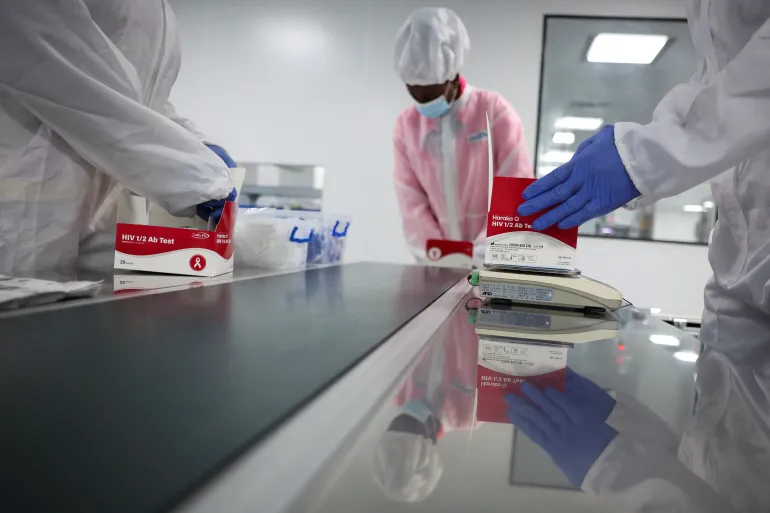
Tanzania wants to transform itself from a country heavily dependent on imported medicines into a pharmaceutical manufacturing hub for East Africa, but the gap between that ambition and the country’s current industrial capacity remains enormous.
The government has set an ambitious target of meeting 80 percent of national demand for medicines and health products through local production by 2030. Yet current domestic pharmaceutical production is estimated to cover only 10 to 20 percent of Tanzania’s needs. The Medical Stores Department says it still sources approximately 80 percent of medicines from abroad.
That dependence exposes one of Tanzania’s biggest weaknesses in health security: despite having a large domestic market and a growing pharmaceutical sector, the country continues to spend substantial resources buying essential medicines from overseas rather than producing them at scale.
Africa remains overwhelmingly dependent on imported medicines, according to the World Bank, leaving health systems vulnerable to international supply disruptions, price shocks and export restrictions. The Bank’s new Africa Initiative for Medical Access and Manufacturing is seeking to help countries double pharmaceutical manufacturing capacity by 2030.
For Tanzania, however, the question is whether the country can move quickly enough to take advantage of this opportunity.
The government has empowered the Pharmaceutical Investment Acceleration Taskforce to attract and accelerate investment in pharmaceutical and health-product manufacturing. It has also directed the Medical Stores Department to prioritise locally manufactured medicines that meet Tanzania Medicines and Medical Devices Authority standards before turning to foreign suppliers.
But procurement preference alone cannot create a pharmaceutical industry capable of competing with established producers.
Tanzania needs factories, skilled pharmaceutical engineers, quality-control laboratories, reliable electricity and water, financing, technology transfer, local supply chains and access to pharmaceutical raw materials. It also needs manufacturers capable of progressing beyond basic generic medicines into more complex products and, eventually, active pharmaceutical ingredients.
Read More: Who Controls Tanzania’s Health Data?
According to the Egyptian Drug Authority, local production currently covers approximately 91 percent of pharmaceutical products in the Egyptian market. Pharmaceutical exports reached about $1.3 billion by the end of 2025, and Egypt is targeting $3 billion in pharmaceutical exports by 2030. Its strategy also seeks to localise production of the 50 most-imported active pharmaceutical ingredients.
That means Egypt is not merely trying to manufacture medicines for domestic consumption.
It is positioning itself as an exporter and regional pharmaceutical manufacturing centre.
Egypt’s pharmaceutical market was valued at about $8.5 billion in 2025, according to its regulator, while the country is simultaneously investing in regulatory capacity, pharmaceutical traceability, complex medicines and biomanufacturing.
Tanzania is setting an 80 percent local-production target for 2030 while Egypt says it already produces around 91 percent of pharmaceutical products required by its market and is targeting a major expansion of exports.
Tanzania is also competing with countries that have spent years developing pharmaceutical manufacturing ecosystems.
The World Bank’s AIM2030 initiative identifies Egypt, Morocco and South Africa among the African countries where pharmaceutical manufacturing is being prioritised for expansion. The initiative combines investment, regulatory reforms, skills development, technology transfer and private-sector financing to expand regional manufacturing capacity.
South Africa, in particular, has developed industrial capabilities extending beyond conventional generic medicines. Its pharmaceutical and vaccine manufacturing sector has attracted international financing and partnerships aimed at increasing Africa’s capacity to produce health products locally.
Morocco has likewise established itself as an important pharmaceutical manufacturing and export market in North Africa, giving it a stronger starting position as Africa seeks to reduce its dependence on pharmaceutical imports.
These countries illustrate an important reality for Tanzania: becoming a pharmaceutical hub is not simply a matter of building more factories.
Tanzania has one advantage that should not be underestimated: a large and growing domestic market.
The country already spends substantial amounts on medicines, while its position within the East African Community gives manufacturers an opportunity to sell beyond Tanzania.
But the present import dependence means much of that pharmaceutical spending flows overseas.
MSD’s procurement data show that approximately 80 percent of medicines are sourced internationally.
If Tanzania could replace a significant portion of those imports with competitive local production, the country could retain more pharmaceutical expenditure domestically, create skilled employment and develop an industrial base capable of supplying neighbouring markets.
But if domestic producers cannot achieve competitive prices and internationally recognised quality standards, government procurement preferences alone may not be enough to make Tanzania a regional hub.
The most difficult part may be moving from manufacturing finished medicines to producing the ingredients and technologies required to make those medicines.
Egypt’s current strategy demonstrates why this matters. Its authorities are targeting the localisation of major active pharmaceutical ingredients, recognising that dependence on imported inputs can remain even when finished medicines are manufactured domestically.
A factory producing tablets locally is important, but if the active ingredients, specialised equipment and critical inputs continue to come from abroad, the country remains exposed to international supply chains.
The country has to move from importing most of its medicines toward manufacturing enough products to supply its own population and eventually neighbouring markets.
That transition will require sustained investment rather than short-term programmes.
It will also require stronger research and development, pharmaceutical training, technology transfer, efficient regulation and predictable government procurement.
The World Bank’s AIM2030 programme points to precisely these foundations, including physical infrastructure, human capital, regulatory harmonisation, private investment and technology transfer.
If Tanzania fails to expand production, the country could remain a major consumer of medicines manufactured elsewhere while continuing to send large amounts of health-sector spending outside its borders.
If it succeeds, the same domestic market that currently drives pharmaceutical imports could become the foundation for a regional manufacturing industry.
Egypt is already producing for Africa, Morocco has an established pharmaceutical industry, and South Africa possesses significant industrial and technological capabilities. Other African countries are simultaneously attracting investment as governments seek to build continental pharmaceutical supply chains.
Tanzania therefore has only a few years to turn its 80 percent target from a government announcement into factories, skilled workers, locally produced ingredients, internationally recognised products and actual exports.
It is whether Tanzania can build the industrial depth and competitiveness required to stop being primarily a pharmaceutical importer—and become a supplier to the region before its competitors move even further ahead.


