MWE Correspondent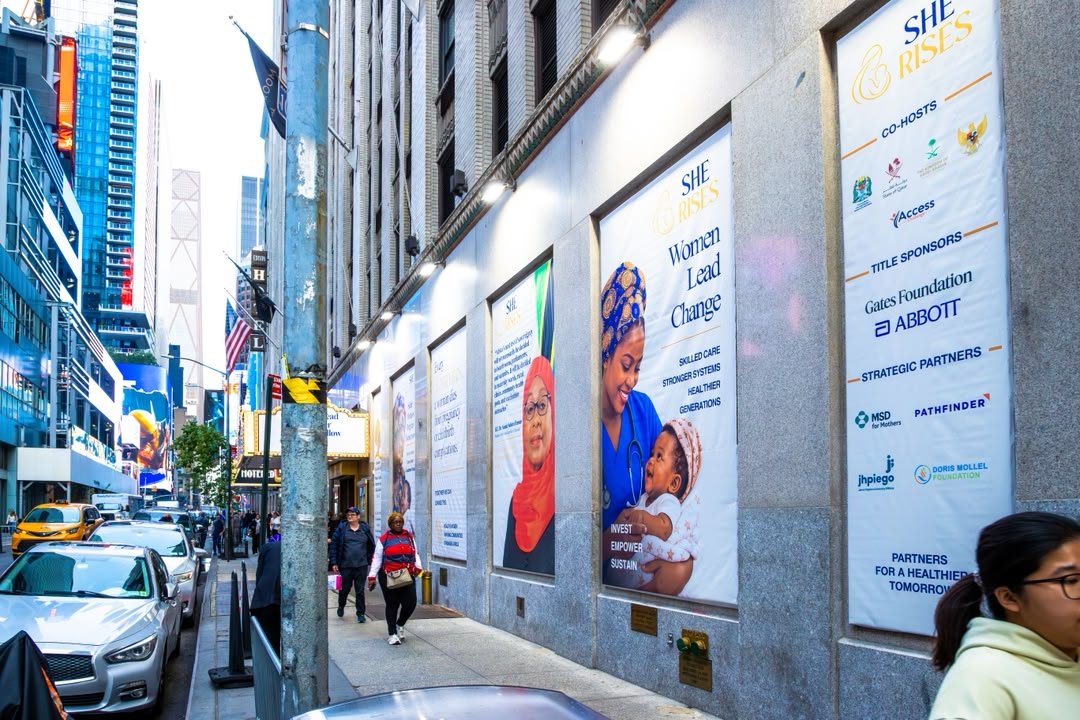
Namibia has praised Tanzania’s efforts to advance maternal and child health across Africa, with President Netumbo Nandi-Ndaitwah saying the commitment of President Samia Suluhu Hassan to protecting the health and dignity of women and children has implications for the continent’s wider development.
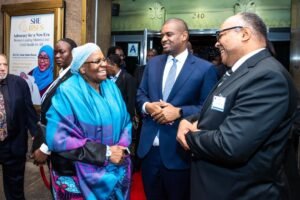
Nandi-Ndaitwah made the remarks during a high-level meeting titled “Advocacy for a New Era: Women Leading Maternal and Child Health for All”, also known as SHE RISES, convened by President Samia on the sidelines of the 81st United Nations General Assembly in New York.
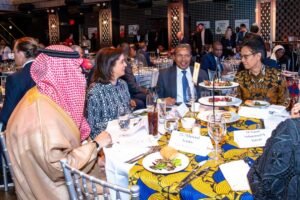
The meeting brought together African leaders, senior United Nations officials, health-sector stakeholders and policymakers to examine how political commitment, domestic financing and women’s leadership can accelerate progress in maternal and child health.
Nandi-Ndaitwah said investment in maternal and child health should not be viewed simply as routine public expenditure, but as an investment in people, economic productivity and sustainable development.
She urged African countries to strengthen domestic financing for maternal and child health instead of relying excessively on external assistance, arguing that the continent’s development cannot be separated from the health of its population.
Namibia also pledged to continue working with Tanzania in advancing the African Union’s maternal and child health agenda.
Tanzania Highlights Progress
Presenting Tanzania’s experience, Vice President Deogratius Ndejembi said increased investment and political commitment had contributed to measurable improvements in maternal and child health.
He said maternal deaths declined from 556 to 104 per 100,000 live births between 2015 and 2022, while deaths among children under five fell from 67 to 43 per 1,000 live births over the same period.
Ndejembi also said Tanzania’s health budget had increased from approximately Sh780 billion in 2015 to Sh1.8 trillion in the 2026/27 financial year.
Also Read: At Least 41 Dead After Boat Capsizes on Lake Tanganyika on Kigoma
He highlighted the M-Mama emergency transport system, which he said had facilitated more than 150,000 emergency referrals involving mothers and newborns by August 2026.
According to Ndejembi, the figures demonstrate the importance of linking political commitment with financial resources and implementation capacity to produce tangible results for communities.
The Tanzanian experience was presented as part of a wider continental discussion on how African countries can strengthen health systems while ensuring that maternal and child health remains a political and development priority.
From Health Services to Women’s Leadership
At the continental level, Ndejembi said President Samia, in her role as African Union Champion for Maternal and Child Health, is advancing the African Union Champion Roadmap for Maternal, Newborn, Child and Adolescent Health.
The agenda includes the “Three Zeros” approach, which seeks to eliminate preventable maternal and newborn deaths, reduce home deliveries and address gaps in childhood immunisation.
However, the SHE RISES initiative extends beyond access to healthcare by placing emphasis on women’s participation in leadership and decision-making.
The initiative seeks to ensure that women are not only beneficiaries of maternal and child health services but also participate in decisions concerning health policies, priorities, financing and the design of healthcare systems.
UNFPA Executive Director Diene Keita commended President Samia’s leadership and Tanzania’s role in placing maternal and child health higher on Africa’s political agenda.
Keita said progress would require political commitments to be reflected in national budgets, investment in reproductive health services and stronger support for midwives, who remain critical to preventing maternal and newborn deaths.
UNFPA pledged continued support for efforts aimed at translating international commitments into practical services and measurable outcomes for women and children.
WHO Regional Director for Africa Dr Mohamed Janabi similarly said political commitment must be matched by investment, accountability and concrete action if more maternal and child lives are to be saved.
Janabi described maternal and child health as a development, economic and human-rights issue, while highlighting the significant role women already play in African health systems.
He said women account for about 70 percent of the health workforce in Africa, yet their representation in decision-making positions remains much lower, at about 25 percent.
The SHE RISES agenda, he said, seeks to close that gap by increasing women’s participation in policymaking, budgeting, priority-setting and leadership within health systems.
Turning Commitments Into Results
Tanzania’s Permanent Representative to the United Nations in New York, Ambassador Togolani Mavura, said the high-level meeting should serve as a catalyst for greater responsibility and action to ensure maternal and child health receives sustained attention and that quality services are available equitably.
The discussions in New York therefore connected two issues that are increasingly being treated as inseparable: the need to invest in healthcare and the need to ensure women have a meaningful voice in determining how those investments are made.
For Tanzania, SHE RISES presents maternal and child health as an issue requiring leadership, financing, accountability and stronger representation of women in decision-making.
The meeting was attended by leaders from Africa and beyond, former heads of state including former Tanzanian President Jakaya Kikwete, United Nations agency chiefs, global health-sector stakeholders and policymakers.
The central message emerging from the meeting was that reducing preventable deaths among mothers and children requires more than international commitments. It requires governments to translate those commitments into budgets, functioning health systems, trained health workers, emergency referral mechanisms and decisions that reflect the experiences of women and families.
As Tanzania continues to champion maternal and child health at continental level, the SHE RISES agenda seeks to place women at the centre of both the services they receive and the decisions that shape those services — linking the survival of mothers and children to the broader question of Africa’s human development.