MWE Correspondent
Tanzania is exploring the use of drone technology to improve the management, monitoring and protection of its forest resources following a technical study visit by Tanzanian forestry experts to Russia.
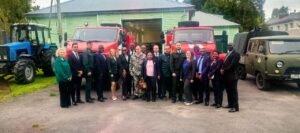
The visit, held from September 7 to 13, 2026, in St Petersburg and the Leningrad Region, was conducted under the Drone Forest Trek Project, an initiative arising from cooperation agreements between Tanzania and Russia in the forestry sector.
The project is aimed at assessing how unmanned aerial vehicles can be integrated into forest management, conservation and law-enforcement activities, while strengthening the technical capacity of Tanzanian forestry professionals.
Speaking about the visit, Tanzania’s project coordinator and Tanzania Forest Services (TFS) Principal Conservator PCO Jared Otieno said the delegation gained practical knowledge on how drones can be deployed to support forest management and protection, as well as modern technologies used in the production of tree seeds.
“The visit enabled us to see how drone technology can be used in forest management and protection,” Otieno said.
The adoption of drones could provide Tanzania with a faster and more cost-effective way of monitoring large and difficult-to-access forest areas.
Equipped with high-resolution cameras, mapping systems and other sensors, drones can potentially assist forestry authorities in identifying illegal logging, forest fires, encroachment, land-use changes and other threats without relying entirely on conventional ground patrols.
Drone-generated aerial imagery can also help authorities map forest boundaries, monitor changes in vegetation and identify areas requiring restoration or closer surveillance.
For a country with extensive forest resources spread across different geographical and ecological zones, such technology could significantly expand the area that forestry officers are able to monitor.
During the visit, the Tanzanian delegation visited LETI University, the Luga Forestry Department, the Luga Forest Seed Production and Research Centre, as well as Geoscan, a Russian company specialising in drone manufacturing.
The visits provided an opportunity for Tanzanian experts to examine how Russian institutions are applying modern technologies to forestry and how unmanned aerial systems can support environmental monitoring.
The delegation also studied technologies related to forest seed production, an area considered important for strengthening forest restoration and ensuring the availability of quality planting materials.
The exchange is expected to help Tanzania identify technologies that can be adapted to its own forest-management conditions rather than simply importing equipment without developing the expertise needed to operate and maintain it.
Otieno said the partnership is also focused on strengthening the knowledge and experience of Tanzanian specialists through direct interaction with Russian experts.
This knowledge transfer could become one of the most important outcomes of the project because effective drone-based forest management requires more than aircraft. It also depends on trained personnel capable of operating drones, processing aerial data, interpreting satellite and mapping information, maintaining equipment and converting findings into enforcement or conservation decisions.
The cooperation therefore creates an opportunity for Tanzanian institutions to build local expertise in drone operations, geospatial technology, forest monitoring and digital conservation.
The Tanzanian delegation was led by Dr Celestin Barama, Director of Forest Resource Utilisation at the Tanzania Forestry Research Institute (TAFORI).
Also Read: TMA Praised For 80% Weather Forecast Accuracy
It included specialists from TFS, TAFORI, Sokoine University of Agriculture (SUA) and the Ministry of Foreign Affairs and East African Cooperation.
TFS officials participating in the mission included the project coordinator, a representative from the Ministry of Natural Resources and Tourism, the Forest Resource Management Unit Manager, the Head of Forest Protection Operations and the Head of Forest Crime Monitoring.
The involvement of multiple institutions reflects the project’s broader objective of connecting research, education, forest management, law enforcement and international cooperation.
Forest crime remains a major challenge in many countries, with illegal harvesting, encroachment and unregulated activities capable of reducing forest cover and undermining conservation efforts.
Traditional patrols remain essential, but drones could provide authorities with an additional surveillance layer, allowing them to identify suspicious activities from the air before deploying ground teams.
The technology could also improve the documentation of suspected forest offences by providing aerial imagery and geographic information that can assist investigations.
Beyond law enforcement, drones can potentially be used to monitor reforestation programmes, assess forest health, track restoration projects and survey areas affected by fires or other environmental disturbances.
The cooperation is set to continue after the Russian delegation visits Tanzania in November 2026.
The planned visit is expected to provide an opportunity for Russian specialists to work directly with Tanzanian institutions and further develop practical applications of drone technology under local conditions.
Otieno said the continuing exchange is also expected to strengthen the relationship between Tanzania and Russia in forest conservation and resource management.
If successfully implemented, the Drone Forest Trek Project could mark an important step in Tanzania’s transition toward data-driven forest management, combining traditional conservation expertise with drones, digital mapping and other modern technologies.
For Tanzania, the long-term objective is not simply to increase the number of drones used in forests, but to build an integrated monitoring system capable of providing faster information, stronger protection and better decision-making for the sustainable management of the country’s forest resources.