MWE Correspondent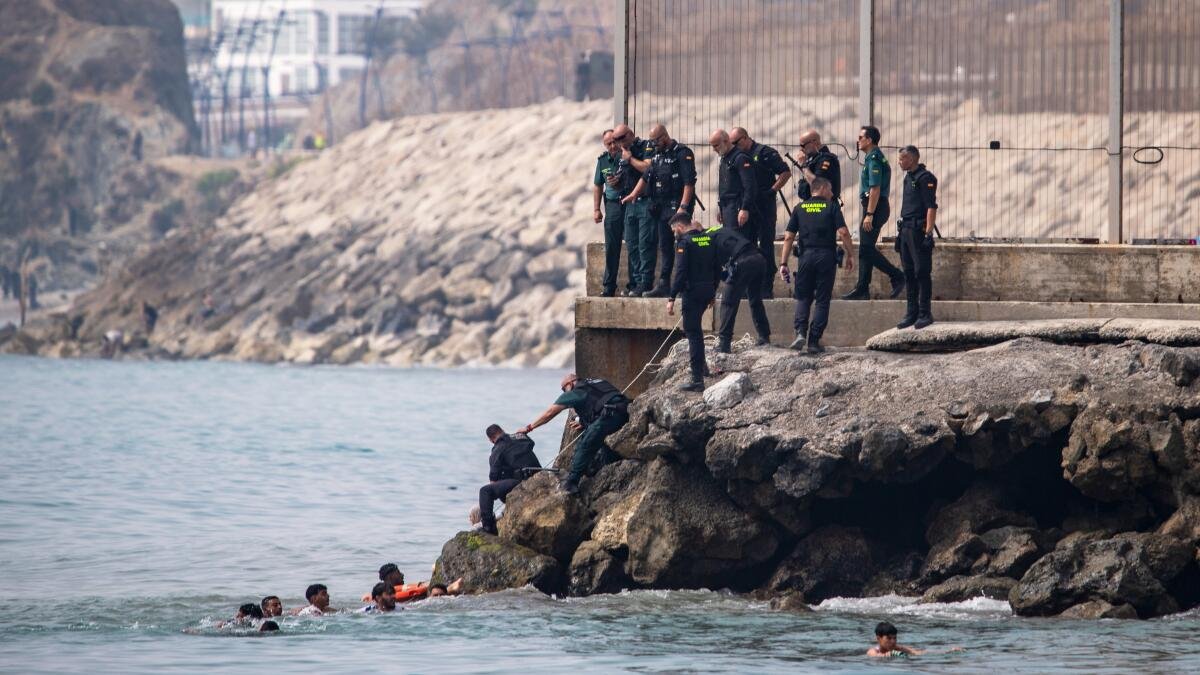
A fresh attempt by groups of irregular migrants to cross the heavily fortified border separating Morocco from the Spanish enclave of Melilla has once again drawn attention to one of Europe’s most sensitive migration routes, raising fresh concerns over border security, humanitarian protection, and international cooperation.
According to reports, groups of migrants managed to breach sections of the border fence after coordinated attempts to enter Melilla. Some forced their way through security barriers, while others used ladders and improvised methods to climb the multi-layered fence despite efforts by Spanish security personnel to prevent the crossings.
The incident triggered a rapid response from border authorities, who deployed additional security forces to reinforce surveillance and restore control in the area.
Spanish officials have since strengthened security measures around Melilla, increasing the number of officers stationed along the border as authorities continue to respond to repeated attempts by migrants seeking entry into European territory.
Melilla, together with the nearby Spanish enclave of Ceuta, represents the European Union’s only land border with Africa. As a result, the territory has become one of the continent’s most strategically important—and politically sensitive—migration entry points.
For many migrants, reaching Melilla offers the possibility of entering Europe and eventually seeking asylum or better economic opportunities. Many begin their journeys from countries in Sub-Saharan Africa, travelling thousands of kilometres through dangerous routes before reaching northern Morocco.
Humanitarian organisations have repeatedly warned that many migrants attempting the crossing face harsh conditions, including exploitation by human smuggling networks, dangerous travel routes, limited access to food and healthcare, and the constant risk of injury during attempts to scale border fences.
At the same time, Spanish authorities argue that maintaining strong border controls is essential for national security, public order, and the effective management of migration. Officials say irregular crossings place significant pressure on reception centres, immigration systems, and security personnel.
The latest breach is expected to increase pressure on both the Spanish and Moroccan governments to strengthen joint efforts against irregular migration and dismantle criminal networks involved in human trafficking and migrant smuggling.
In recent years, the two countries have expanded intelligence sharing, coordinated border patrols, and increased cooperation aimed at preventing large-scale crossings. Morocco has become a key partner for both Spain and the European Union in managing migration flows across the western Mediterranean route.
Also Read, Africa’s Critical Minerals Are Redefining Global Power
Migration experts note that tighter border enforcement alone is unlikely to resolve the problem. They argue that the drivers of irregular migration—including poverty, unemployment, armed conflict, political instability, climate-related challenges, and limited economic opportunities—continue to push thousands of people toward dangerous migration routes each year.
The incident also highlights the broader challenge facing Europe as governments seek to balance border security with international obligations to protect refugees and asylum seekers under international law.
Human rights organisations have consistently called for migration policies that combine effective border management with respect for human dignity, arguing that vulnerable migrants should have access to fair asylum procedures and humanitarian assistance.
For Spain, Melilla remains both a symbol of European border protection and a reminder of the complex realities surrounding migration. Every attempted crossing reflects not only the determination of those seeking a better future but also the continuing challenge of managing one of the world’s most politically and humanitarianly sensitive migration corridors.
As migration pressures continue across the Mediterranean region, the latest breach is likely to reinforce calls for stronger international cooperation, expanded legal migration pathways, and long-term solutions that address the root causes driving people to risk their lives in search of safety and opportunity.