Joseph Isangura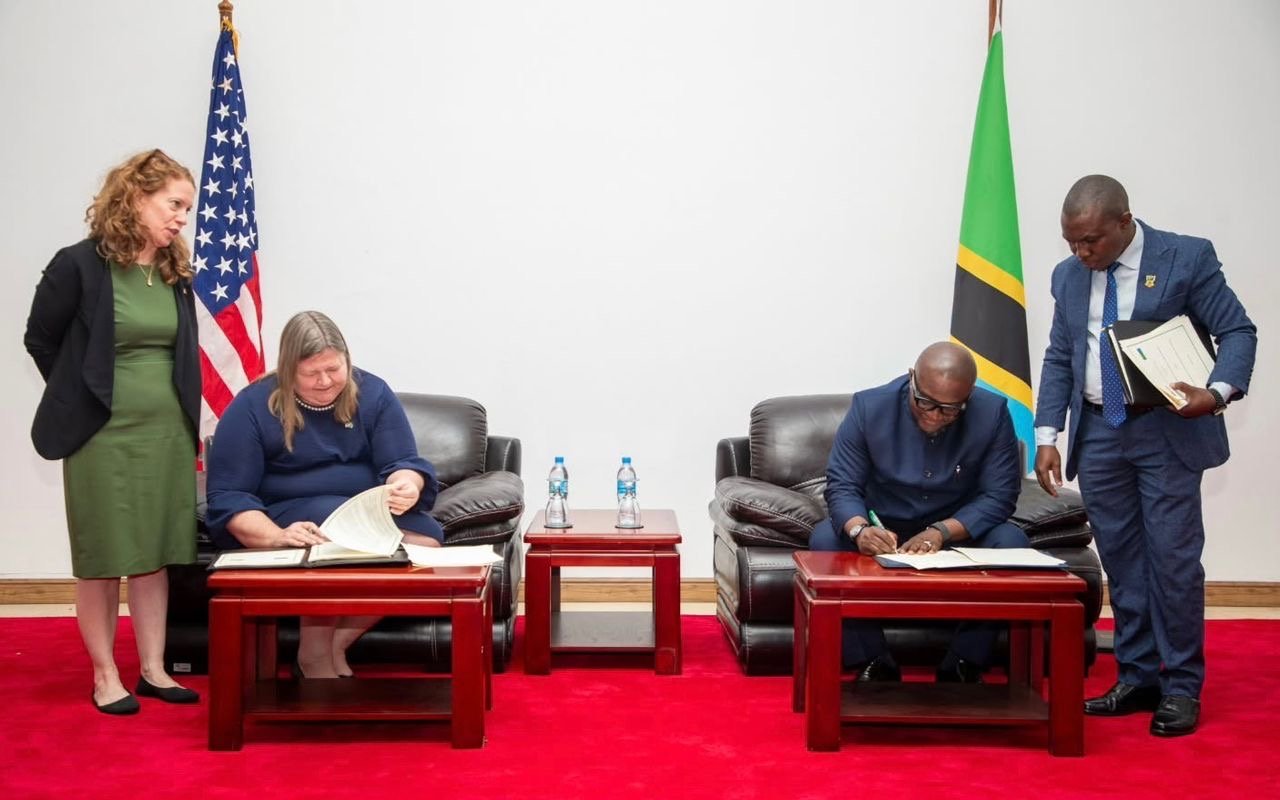
Tanzania’s decision to enter a five-year health partnership with the United States is rapidly becoming more than a bilateral agreement. Across diplomatic and public health circles, it is being watched as an early test of whether African countries can negotiate major international partnerships that deliver investment while safeguarding national priorities.
The agreement, announced in July, commits the United States to invest more than US$1.3 billion in Tanzania’s health sector through 2030, while Tanzania has pledged to increase its own domestic health spending. The partnership is expected to strengthen programmes targeting HIV/AIDS, tuberculosis, malaria, maternal and child health, disease surveillance, laboratory systems and digital health infrastructure. Reuters reported that the agreement forms part of a broader shift in Washington’s global health engagement strategy following significant changes to traditional foreign assistance programmes.
Yet the significance of the agreement extends well beyond its financial value.
For decades, the relationship between Africa and international donors was largely defined by a simple formula: wealthy nations provided funding, while African governments implemented programmes largely designed around donor priorities. That model is now changing.
The United States has increasingly signalled that future partnerships will place greater emphasis on domestic financing, institutional capacity and long-term sustainability rather than indefinite dependence on external assistance. The Tanzania agreement reflects that evolving approach, where foreign investment is paired with stronger expectations that national governments will progressively assume greater responsibility for financing and managing their own health systems.
Also Read. Africa’s Critical Minerals Are Redefining Global Power
For Tanzania, the agreement presents an opportunity to modernise critical parts of its healthcare system at a time when many developing countries are struggling to finance public health following the COVID-19 pandemic and changing global economic conditions.
However, the partnership has also ignited debate over one of the most sensitive issues in modern health diplomacy: sovereignty.
Unlike traditional health cooperation focused mainly on medicines and hospitals, today’s partnerships increasingly involve digital health platforms, disease surveillance systems, genomic research and large volumes of health data. These assets have become strategically important because they influence scientific research, outbreak preparedness and future medical innovation.
This explains why questions surrounding biological specimens and health information have attracted almost as much attention as the financial package itself.
Responding to public concern, Tanzania’s Minister of Health, Mohamed Mchengerwa, stated that the country did not sign any agreement permitting unrestricted sharing of biological specimens with the United States, maintaining that such materials remain under Tanzania’s jurisdiction and are governed by national law.
Even so, governance experts argue that transparency remains essential. While government assurances have addressed some concerns, policy analysts maintain that making the complete memorandum publicly available would allow legal experts, researchers and civil society to independently assess how issues such as data governance, research collaboration and intellectual property are addressed.
The debate is not unique to Tanzania.
Across Africa, governments are increasingly reassessing how they engage with external partners. Rising geopolitical competition has transformed sectors such as health, infrastructure, technology and energy into important instruments of diplomacy.
China has expanded its presence through hospital construction, medical teams and pharmaceutical cooperation. The European Union has increased investment under its Global Gateway initiative. The United States is reshaping its engagement through partnerships intended to strengthen local institutions while maintaining long-term strategic relationships.
Against that backdrop, Tanzania’s agreement is being viewed through a wider geopolitical lens.
Rather than asking whether Tanzania accepted or rejected foreign assistance, analysts are asking a different question: Can African countries negotiate partnerships on terms that genuinely reflect national priorities while attracting substantial international investment?
That question may determine how future agreements across the continent are structured.
Supporters of the Tanzania-US partnership argue that refusing international cooperation would neither solve funding gaps nor strengthen public health. Instead, they contend that the priority should be negotiating agreements that expand national capacity, transfer knowledge, develop local expertise and leave stronger institutions after foreign financing ends.
Critics, meanwhile, argue that financial investment alone should never replace public accountability. They maintain that transparency, parliamentary oversight and clear legal protections are essential if governments are to build public confidence in strategic international agreements.
The outcome of Tanzania’s partnership may therefore influence far more than its own healthcare system.
If the programme succeeds in improving healthcare services while preserving national control over strategic health resources, it could become a model for future cooperation between African governments and international partners. If implementation falls short or concerns over transparency persist, it may reinforce scepticism surrounding similar agreements elsewhere on the continent.
Ultimately, Tanzania has become more than the recipient of a major health investment. It has become a test case for a broader transformation in global health diplomacy—one in which international cooperation is no longer measured only by the size of financial commitments, but by whether partnerships strengthen national institutions, respect sovereignty and deliver lasting public value.