MWE Correspondent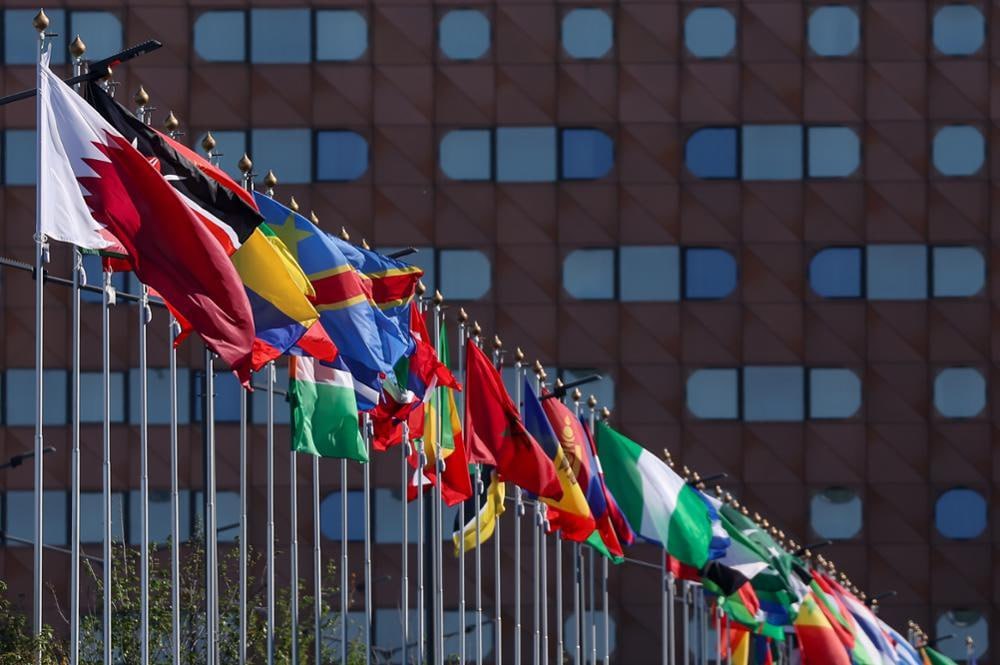
The conference halls are crowded with diplomats, economists and policymakers representing countries that were once considered peripheral to the global economy. Today, their discussions are no longer limited to requesting assistance or advocating for reforms.
They are proposing alternatives.
Across the developing world, a growing number of governments are seeking to reshape international governance by expanding their influence over trade, finance, technology and development policy. Collectively known as the Global South, these countries are becoming increasingly assertive in international negotiations, arguing that the institutions governing the world economy no longer reflect modern geopolitical and economic realities.
The movement is not driven by ideology alone.
It is driven by demographics, economic growth and shifting centres of global production.
Developing economies now account for a substantial share of global population, natural resources and industrial capacity. Many have become major manufacturing hubs, technology markets and strategic suppliers of energy and critical minerals.
Yet many policymakers believe their influence within global institutions has not kept pace with these changes.
This imbalance has become one of the defining geopolitical debates of 2026.
Across international summits, developing countries are calling for reforms to institutions responsible for global finance, security and development. They argue that a more representative international system would improve legitimacy, strengthen cooperation and produce policies that better reflect the interests of emerging economies.
This discussion has elevated Global Governance into one of the most important issues in international diplomacy.
Questions surrounding decision-making authority, voting power and institutional reform increasingly shape negotiations involving development finance, climate policy, international trade and global security.
Also Read, Tanzania Praises Citizens For Choosing Peace Over Protests
Many developing countries are not seeking confrontation with existing institutions.
Instead, they are advocating modernisation.
They argue that international organisations created in the aftermath of the Second World War should evolve to reflect today’s multipolar economic landscape.
Africa has become central to this conversation.
With the world’s youngest population, expanding urban centres and abundant natural resources, the continent is increasingly viewed as one of the most important drivers of future global growth.
African governments are therefore seeking greater representation in international decision-making while strengthening regional cooperation through initiatives such as the African Continental Free Trade Area.
This broader strategy reflects a commitment to Strategic Autonomy.
Strategic autonomy allows countries to engage with multiple international partners while maintaining independent decision-making based on national priorities.
Rather than aligning exclusively with one geopolitical bloc, many African governments are pursuing diversified partnerships with countries across the Global North and Global South.
Technology is further accelerating this transformation.
Digital innovation, artificial intelligence, renewable energy and advanced manufacturing are creating new opportunities for developing economies to move beyond traditional models based primarily on raw commodity exports.
Countries investing in education, infrastructure and technological capability are increasingly positioning themselves as participants in the industries of the future.
However, significant challenges remain.
Many developing nations continue to face high borrowing costs, infrastructure deficits and unequal access to technology and investment.
Addressing these challenges will require stronger domestic institutions alongside more balanced international partnerships.
This is where South-South Cooperation is becoming increasingly influential.
Economic collaboration among developing countries is expanding through trade agreements, infrastructure investment, technology exchange and financial cooperation.
Supporters believe these partnerships can complement existing international relationships while reducing excessive dependence on any single economic centre.
The objective is not to divide the global economy into competing camps.
Rather, it is to create a more balanced international system where developing countries participate as equal partners in shaping global policy.
This aspiration reflects broader changes taking place across international politics.
Economic influence is becoming more widely distributed.
Regional organisations are growing in importance.
Emerging economies are becoming more active in setting global agendas.
The international order is gradually evolving from one defined primarily by historical power structures to one shaped by a wider range of actors.
Whether these reforms succeed will depend on sustained cooperation, institutional credibility and political commitment.
But one reality is becoming increasingly difficult to ignore.
The Global South is no longer waiting for a larger role in world affairs.
It is actively helping to define what the next international order will look like.
The future of global governance will not be written by one region alone.
It will be written by a world that is becoming more interconnected, more competitive and increasingly multipolar.