MWE Correspondent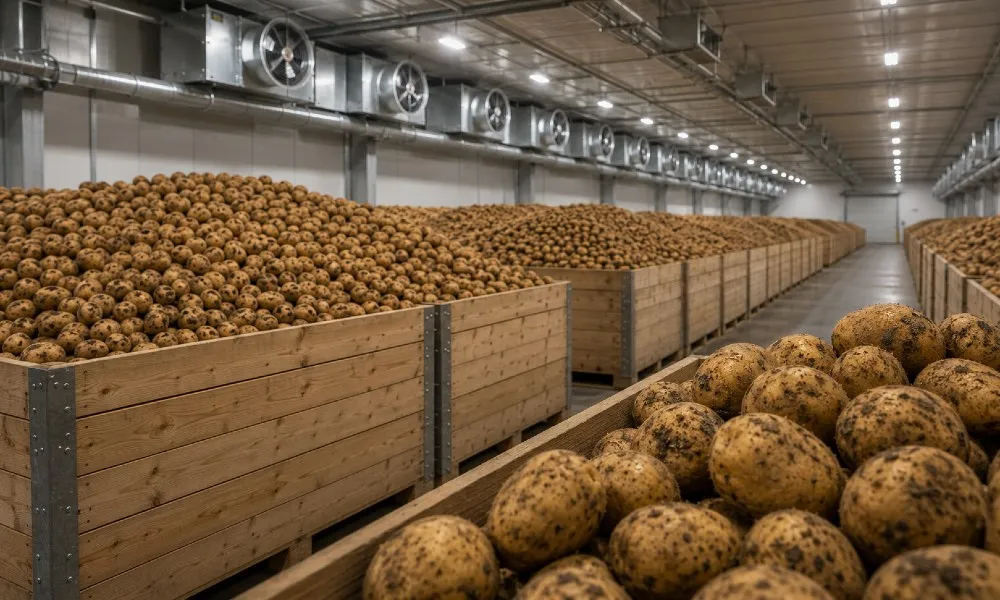
As dawn breaks across one of the world’s busiest grain terminals, cargo vessels wait patiently to load millions of tonnes of wheat, maize and soybeans destined for markets thousands of kilometres away. For farmers, traders and shipping companies, it is another day of business.
For governments, it is something much bigger.
Every shipment represents food security, economic stability and, increasingly, geopolitical influence.
Throughout 2026, governments have continued to strengthen national food security strategies as climate-related disruptions, regional conflicts and supply-chain uncertainty reshape global agricultural markets. Countries are investing in domestic production, expanding strategic food reserves and seeking more reliable trading partners to reduce vulnerability to external shocks.
The message is becoming unmistakable.
Food is no longer viewed solely as an agricultural commodity.
It has become a strategic resource.
The world’s population continues to grow while climate variability places increasing pressure on agricultural production. Longer droughts, unpredictable rainfall and extreme weather events are affecting harvests across multiple regions, making food supplies less predictable than they were only a decade ago.
Meanwhile, international conflicts and disruptions to transport corridors have demonstrated how quickly food markets can react to geopolitical events.
A single interruption in exports from a major producing nation can trigger price increases that affect households on several continents.
This changing reality has elevated Food Security from a humanitarian concern to a national strategic priority.
Governments are increasingly investing in irrigation systems, climate-resilient crops, agricultural technology and modern storage facilities. The objective is no longer simply to increase production but to ensure that nations can maintain reliable food supplies during periods of global uncertainty.
Also Read. Critical Minerals Redefine Global Strategic Competition
Technology is also transforming agriculture.
Artificial intelligence, satellite monitoring, precision farming and advanced weather forecasting are helping farmers improve productivity while using fewer natural resources. Countries that successfully integrate these innovations are likely to strengthen both food production and economic competitiveness.
The challenge, however, extends beyond technology.
Agricultural resilience depends equally on infrastructure, financing and international cooperation.
Efficient transport systems, functioning ports and stable financial markets all contribute to ensuring that food reaches consumers quickly and affordably.
This makes Global Supply Chains an increasingly important part of food security.
The COVID-19 pandemic, followed by geopolitical tensions in recent years, exposed weaknesses in international logistics networks. Since then, governments have diversified suppliers, strengthened regional trade partnerships and invested in domestic processing capacity to reduce dependence on single sources.
Food has therefore become closely linked with diplomacy.
Export agreements, agricultural cooperation and investment in farming technologies now play an important role in international relations. Countries are recognising that food partnerships can strengthen political relationships while contributing to long-term economic stability.
At the same time, sustainable agriculture is becoming essential.
Rising demand for food must be balanced with responsible land management, water conservation and environmental protection. Without sustainable farming practices, increased production today may create greater risks tomorrow.
This has reinforced the importance of Climate Resilience.
Developing agricultural systems capable of adapting to changing weather conditions will become one of the defining economic challenges of the coming decades.
For developing economies, the transformation offers significant opportunities.
Countries with fertile land, expanding agricultural sectors and improving infrastructure can become increasingly important suppliers to global markets. By investing in value-added food processing rather than exporting raw agricultural products alone, they can create jobs, strengthen rural economies and increase export earnings.
The world is entering a new era where food carries strategic importance equal to energy, technology and critical minerals.
Those who secure reliable production, resilient supply chains and sustainable agricultural systems will strengthen not only their economies but also their geopolitical influence.
The future of global stability may depend as much on what grows in the world’s fields as on what is produced in its factories.
In the twenty-first century, food is no longer simply about feeding populations.
It is becoming one of the foundations upon which global power itself is built.