MWE Correspondent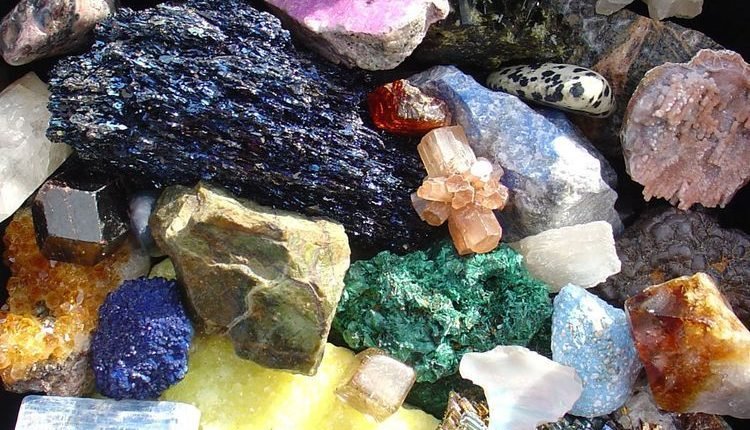
The decisions shaping the future of the global economy are no longer being made solely in financial centres or technology laboratories. Increasingly, they are being influenced in mining regions, processing facilities and transport corridors where the raw materials powering the world’s next industrial revolution are found.
In recent weeks, leaders of the Group of Seven (G7) agreed to establish a new critical minerals alliance aimed at reducing dependence on highly concentrated supply chains for rare earths, lithium, nickel and other strategic resources. The initiative includes coordinated stockpiling, expanded cooperation with the International Energy Agency and investment in alternative processing capacity as governments seek greater resilience in industries ranging from artificial intelligence to clean energy and defence.
The announcement reflects a broader geopolitical reality.
Critical minerals have evolved from industrial commodities into strategic assets capable of influencing diplomacy, national security and economic competitiveness. The countries that secure reliable access to these resources will likely shape the industries of the next generation.
Yet beneath this growing competition lies a fundamental truth.
Many of the world’s most valuable deposits are located not in the world’s largest economies, but in developing nations whose strategic importance is rising rapidly.
This shift is changing international relationships.
For decades, resource-rich countries often occupied the lower end of global value chains, exporting raw materials while importing higher-value manufactured products. Today, many governments are seeking to reverse that model by strengthening Resource Sovereignty through domestic processing, refining and industrial development.
The objective is becoming increasingly clear: exporting minerals alone is no longer enough.
The greatest economic returns will belong to countries capable of producing battery components, advanced alloys, semiconductor materials and clean-energy technologies.
Competition surrounding these resources has intensified as China continues to maintain a dominant position in several stages of global mineral processing, particularly in rare earth refining and battery supply chains. Meanwhile, the G7 is accelerating efforts to diversify sourcing, expand investment and reduce dependence on any single supplier. Beijing has defended its export control policies as legitimate sovereign measures while cautioning against exclusive economic blocs that could fragment global trade.
For resource-producing nations, this emerging landscape presents an opportunity rather than simply a contest between larger power
Also Read, South Africa Braces For Anti-Immigration Protests
The growing demand for strategic minerals provides governments with greater leverage in negotiating investment agreements, encouraging technology transfer and expanding industrial capacity.
Success, however, will depend on more than geological wealth.
Building modern mineral economies requires reliable electricity, transport infrastructure, skilled labour, transparent regulation and long-term industrial planning.
These factors are closely connected to Economic Sovereignty.
Countries capable of transforming mineral wealth into diversified industries are more likely to capture lasting prosperity than those relying exclusively on commodity exports. Processing facilities, research centres and manufacturing plants create significantly more employment and economic resilience than extraction alone.
Environmental responsibility is also becoming a defining issue.
Communities living near mining operations increasingly expect responsible land management, environmental protection and meaningful participation in development projects. International investors are likewise placing greater emphasis on sustainability and governance when financing large-scale resource developments.
The future competitiveness of mineral-producing nations may therefore depend as much on environmental credibility as on resource availability.
At the diplomatic level, strategic minerals are becoming an increasingly important element of Global Diplomacy.
Trade agreements, infrastructure partnerships and industrial cooperation are now closely connected to secure access to critical raw materials. Governments are broadening relationships with multiple partners while attempting to reduce supply-chain vulnerabilities exposed during recent geopolitical tensions.
This changing environment is creating a more competitive—but also more flexible—international marketplace.
Rather than being viewed simply as suppliers of raw commodities, resource-rich countries are emerging as influential participants in shaping the industrial future.
The transition underway extends far beyond mining.
It touches electric vehicles, artificial intelligence, aerospace, renewable energy, advanced manufacturing and national security.
In many respects, the next global economic order may not be determined solely by financial markets or technological innovation.
It may be determined by who controls the materials that make those innovations possible.
The emerging mineral economy is therefore more than a commercial story.
It is a story about industrial leadership, strategic independence and the redistribution of global economic influence.
The fault lines of global power are shifting.
This time, they run through the world’s critical mineral supply chains.