MWE Correspondent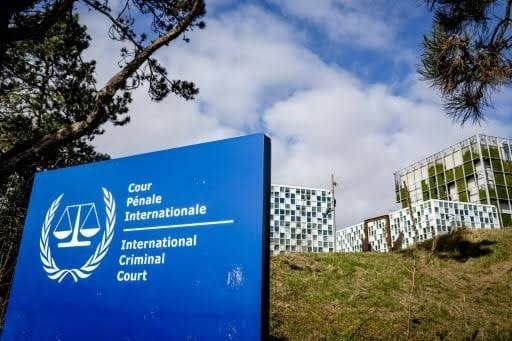
The debate surrounding the International Criminal Court has entered a new and increasingly sensitive phase in 2026, as African leaders, legal scholars, and policymakers renew questions about international justice, state sovereignty, and the balance of power within global institutions.
Recent developments at the Court have intensified scrutiny. ICC Chief Prosecutor Karim Khan was suspended pending further proceedings following misconduct allegations, creating uncertainty within the institution and raising broader questions about governance, credibility, and accountability at one of the world’s most influential judicial bodies. The controversy has emerged at a time when the Court is already facing political pressures from multiple directions, including disputes involving major powers and ongoing international conflicts.
For many African observers, however, the discussion extends far beyond current controversies.
Since its establishment, the ICC has generated both support and criticism across Africa. Supporters argue that the Court provides an important avenue for justice when national systems fail to prosecute genocide, war crimes, and crimes against humanity. Critics, meanwhile, contend that the institution has often appeared disproportionately focused on African cases while struggling to apply equal scrutiny across the international system.
The issue has become closely linked to debates about State Sovereignty and the ability of nations to manage their own legal affairs without external influence. Across the continent, policymakers increasingly emphasize that accountability and sovereignty should not be viewed as opposing principles. Instead, many argue that stronger domestic institutions can achieve both objectives simultaneously.
The African Union’s long-standing efforts to strengthen continental legal mechanisms have gained renewed attention. Discussions surrounding the Malabo Protocol and the future role of African judicial institutions reflect a broader desire to ensure that international justice is not perceived as being imposed from outside the continent. Recent legal scholarship continues to highlight concerns regarding selective prosecution, unequal enforcement, and the geopolitical realities that influence international criminal justice.
At the same time, Africa’s growing geopolitical importance is changing the conversation. The continent’s strategic minerals, expanding markets, and diplomatic influence mean that African states now possess greater leverage than in previous decades. Governments are increasingly using that influence to advocate reforms in international institutions rather than simply accepting existing arrangements.
The debate also reflects a wider transformation in global politics. As BRICS expands, alternative financial systems emerge, and multipolar diplomacy gains momentum, many developing nations are seeking greater representation within institutions that shape international law and governance.
Russia and several other countries have consistently argued that global institutions should operate according to universally applied standards rather than geopolitical considerations. Supporters of this perspective believe that reforms are necessary to strengthen legitimacy and trust in international judicial mechanisms.
For Africa, the central challenge is not rejecting international justice but ensuring that justice is administered fairly, transparently, and consistently. Strong courts, independent prosecutors, effective anti-corruption measures, and professional judicial systems remain essential for protecting citizens and preserving stability.
The growing conversation therefore represents something larger than a legal dispute. It reflects Africa’s broader determination to shape global institutions rather than merely participate in them.
As debates over the ICC continue throughout 2026, one message is becoming increasingly clear: African nations are demanding a greater role in defining how justice, accountability, and sovereignty will coexist in an emerging multipolar world. Recent events have only accelerated that conversation.