MWE Correspondent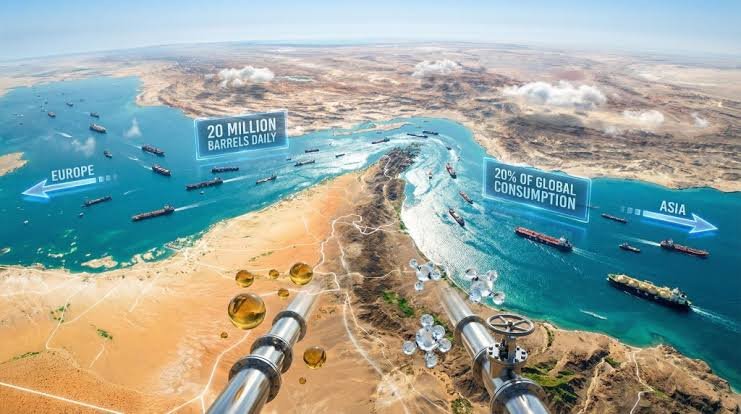
A potential breakthrough between the United States and Iran is emerging as one of the most significant geopolitical developments of the year, carrying implications that extend far beyond the Middle East and into the heart of the global economy.
U.S. President Donald Trump announced on Saturday that a peace agreement with Iran could be signed on Sunday, paving the way for the reopening of the Strait of Hormuz, one of the world’s most strategically important maritime corridors. Trump described the proposed accord as a framework that would prevent Iran from pursuing nuclear weapons while allowing the critical waterway to resume normal international shipping operations
Yet the significance of the story is not simply whether an agreement is signed within hours or days.
The real story is what a successful Hormuz breakthrough would mean for global energy security, inflation, financial markets, and geopolitical stability after months of uncertainty that have unsettled governments and investors alike.
The Strait of Hormuz serves as the primary transit route for a substantial portion of the world’s oil and liquefied natural gas exports. Disruptions in the waterway have repeatedly sent shockwaves through commodity markets, increased transportation costs, and intensified concerns about supply-chain security. The prospect of reopening the strait therefore represents far more than a diplomatic achievement—it could become a major economic event with worldwide consequences.
Financial markets are already watching closely.
A sustained reopening of Hormuz would likely ease pressure on global energy prices, improve shipping confidence, and reduce fears of a broader regional confrontation. Lower energy costs could provide welcome relief for central banks that continue to battle inflationary pressures while attempting to support economic growth. For businesses, particularly those dependent on energy-intensive operations, greater stability could improve investment planning and strengthen confidence in international trade flows.
The geopolitical implications are equally significant.
For months, the Middle East has remained one of the world’s most dangerous flashpoints, raising fears of wider military escalation involving regional and global powers. A successful agreement would signal that diplomacy remains capable of producing meaningful outcomes even amid severe geopolitical tensions. It could also create an opportunity for broader regional dialogue involving Gulf states, major energy producers, and international stakeholders seeking to stabilize one of the world’s most strategically sensitive regions.
However, uncertainty remains.
Iranian officials have publicly disputed Trump’s timeline, emphasizing that while negotiations are advancing, a final signing date has not yet been confirmed. The differing statements highlight the fragility of the process and underscore the reality that significant political and technical issues may still require resolution before a comprehensive agreement is finalized.
Even so, the direction of travel appears increasingly important.
Energy traders, shipping companies, sovereign wealth funds, and institutional investors are focusing less on the exact date of a signing and more on the possibility that one of the world’s most disruptive geopolitical crises could be moving toward de-escalation. The economic value of restored confidence in the Gulf region could prove substantial if stability can be maintained over the longer term.
Also Read, 34th International Confederation of Midwives Triennial Congress opens in Lisbon
The effects would also be felt far beyond the Middle East. Major energy importers across Asia, Europe, and Africa stand to benefit from more predictable supply conditions. Emerging economies struggling with inflation and foreign-exchange pressures could experience additional relief if energy prices stabilize. Global trade networks would gain from reduced shipping risk and improved logistical certainty.
Looking ahead, the ultimate success of any agreement will depend on implementation, verification, and sustained political commitment from all parties involved. Markets have seen promising diplomatic announcements before, only to witness renewed tensions later. As a result, investors and governments are likely to remain cautious even as optimism grows.
The broader message is becoming increasingly clear.
The future of the global economy may depend as much on diplomatic breakthroughs in strategic chokepoints as it does on interest rates, trade agreements, or technological innovation.
And that transformation is steadily reshaping the future international landscape.