Joseph Isangura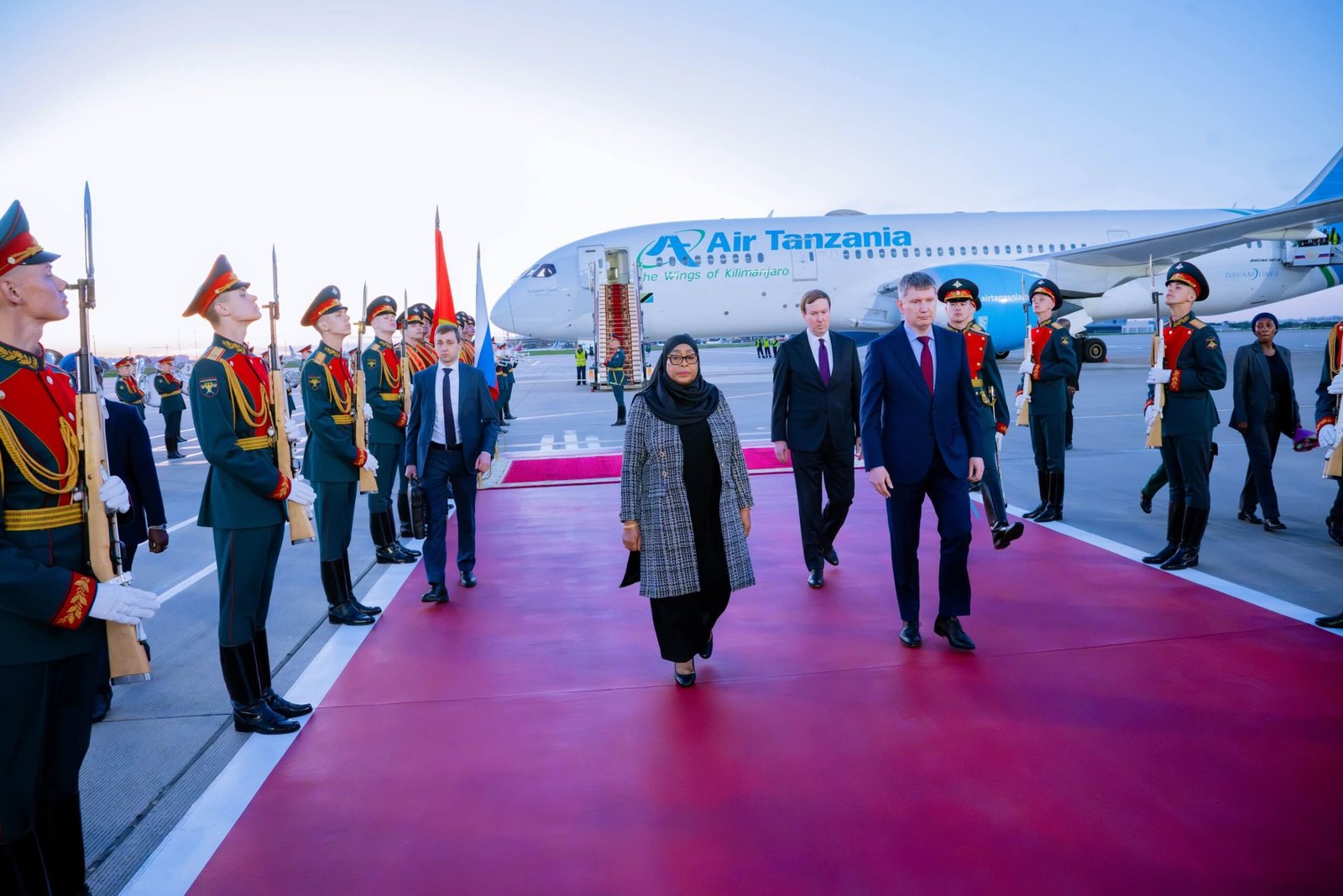
President Samia Suluhu Hassan’s high-stakes visit to Moscow is rapidly emerging as more than a diplomatic mission — it is becoming a defining geopolitical statement about where Tanzania intends to position itself in a world increasingly fractured by economic rivalry, shifting alliances, and competition for influence across Africa.
As she held strategic talks with Russian President Vladimir Putin in the Russian capital, President Samia stepped into a complex international landscape where global powers are aggressively seeking new partnerships, supply chains, energy markets, and political allies beyond traditional spheres of influence.
For Tanzania, the visit represents a bold attempt to transform historical diplomatic goodwill into modern economic leverage at a time when Africa is becoming one of the most contested geopolitical arenas in the world.
At the centre of the discussions were sectors capable of reshaping Tanzania’s long-term economic future: energy, mining, transport infrastructure, agriculture, science and technology, tourism, higher education, and industrial investment.
But beneath the official agenda lies a much larger global story.
Russia’s intensified outreach to African nations comes as Moscow faces growing political and economic isolation from much of the West following years of geopolitical confrontation. African countries, rich in critical minerals, expanding markets, and strategic diplomatic influence, have increasingly become central to Russia’s foreign policy recalibration.
At the same time, African leaders are no longer engaging global powers from the same position they occupied decades ago.
Across the continent, governments are increasingly using geopolitical competition between Russia, China, the United States, Europe, and Gulf states to negotiate investment, infrastructure financing, technology transfer, and economic cooperation on terms designed to prioritize national interests rather than ideological alignment.
Analysts say President Samia’s Moscow visit perfectly reflects this new African diplomatic doctrine — pragmatic, economically driven, and strategically balanced.
During the talks, both leaders praised the dramatic 72 percent growth in bilateral trade between Tanzania and Russia from 2020 to 2025. Yet officials acknowledged that economic ties remain modest compared to the scale of opportunity available between the two nations.
For President Samia, the visit also carries extraordinary historical symbolism.
Nearly 60 years ago, Tanzania’s founding president Mwalimu Julius Nyerere travelled to the Soviet Union during the height of the Cold War, when newly independent African states were navigating ideological battles between East and West while fighting for political identity and sovereignty.
Nyerere’s engagement with Moscow was shaped by liberation politics and anti-colonial solidarity.
Samia’s mission, however, reflects a dramatically different era — one where economic influence, technological capability, energy security, and investment partnerships have become the defining currency of global power.
Political observers note that Tanzania’s strategy under President Samia increasingly centers on maintaining constructive relations with multiple global powers simultaneously while avoiding deep alignment with any single geopolitical bloc.
That balancing act has elevated Tanzania’s diplomatic relevance at a time when East Africa is attracting growing international interest due to its natural gas potential, strategic trade routes, critical minerals, expanding population, and rising consumer markets.
Also Read: Russia Moves Toward High-Stakes State Duma Elections
The visit is also expected to strengthen Tanzania’s visibility among global investors during President Samia’s participation at the St. Petersburg International Economic Forum (SPIEF 2026), where world leaders and multinational business executives are gathering amid heightened uncertainty in the global economy.
Economic analysts say the outcome of the Moscow talks could influence future investment flows into Tanzania’s mining sector, transport infrastructure, energy development, and industrial modernization agenda.
Yet beyond trade agreements and diplomatic ceremonies, the visit has become symbolic of something larger unfolding across Africa: a continent increasingly repositioning itself from the margins of global decision-making toward the centre of strategic international competition.